
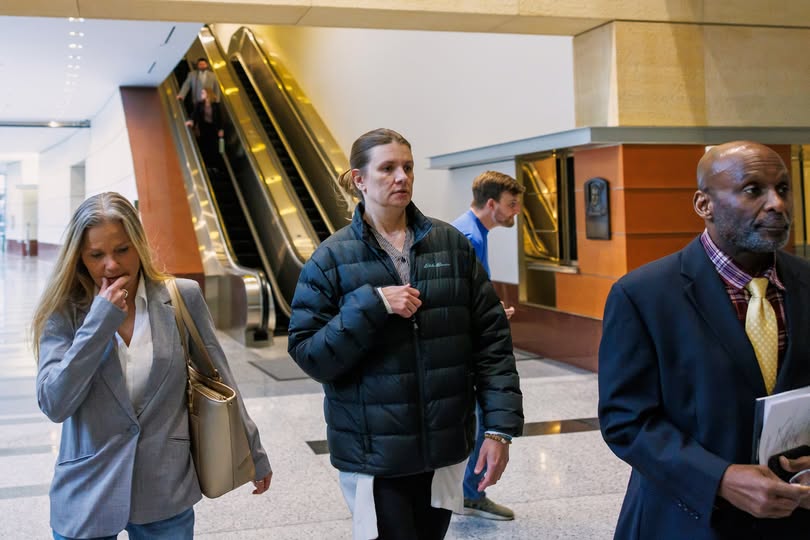
In a landmark case that has rocked Minnesota’s nonprofit community, a federal judge sentenced Aimee Bock, the mastermind behind the infamous Feeding Our Future fraud scheme, to an unprecedented 41.5 years in prison. The ruling, issued Friday, also orders Bock to pay more than $240 million in restitution, marking one of the largest financial penalties in a state-level food assistance fraud case.
The case stemmed from a years-long investigation into Feeding Our Future, a nonprofit organization that was supposed to provide nutritious meals to vulnerable children across Minnesota. Instead, federal authorities uncovered a sprawling embezzlement scheme led by Bock, who exploited the pandemic-era food programs to funnel taxpayer dollars into her own pockets.
According to court documents, Bock and her associates submitted false claims totaling hundreds of millions of dollars, with the scheme eventually being uncovered in 2022. The fraud not only diverted essential food resources from children but also betrayed the trust of donors, local communities, and government agencies that relied on Feeding Our Future’s integrity.
The sentencing hearing drew widespread attention, with prosecutors highlighting the scale of the crime and its devastating impact on families who relied on nutritional assistance programs. “Aimee Bock’s actions undermined vital social safety nets at a time of crisis, causing irreparable harm to countless children and families,” said U.S. Attorney Andrew Luger during the proceedings.
Defense attorneys argued for leniency, emphasizing Bock’s cooperative behavior during the investigation and her efforts to mitigate damages. However, Judge Susan Richard Nelson did not shy away from imposing the maximum sentence available, citing the egregious nature of the offense and Bock’s role as the scheme’s central figure.
The court also ordered Bock to forfeit assets including properties and bank accounts linked to the fraud. Meanwhile, the massive restitution order aims to recover funds that were stolen and diverted, representing a significant financial recovery effort for the impacted communities.
Reaction has been swift and mixed, with many community leaders and advocacy groups applauding the harsh penalty as a message that such abuses will not be tolerated. Critics, however, question whether the sentence will truly serve as a deterrent for future wrongdoing, given the vast sums involved and the complexity of federal food assistance programs.
The case has also sparked broader discussions about oversight and accountability within government-funded programs, emphasizing the need for stricter controls to prevent similar frauds in the future.
As Bock begins her lengthy imprisonment, her case will undoubtedly serve as a sobering reminder of the importance of integrity in managing public resources—especially those aimed at supporting the most vulnerable members of society.