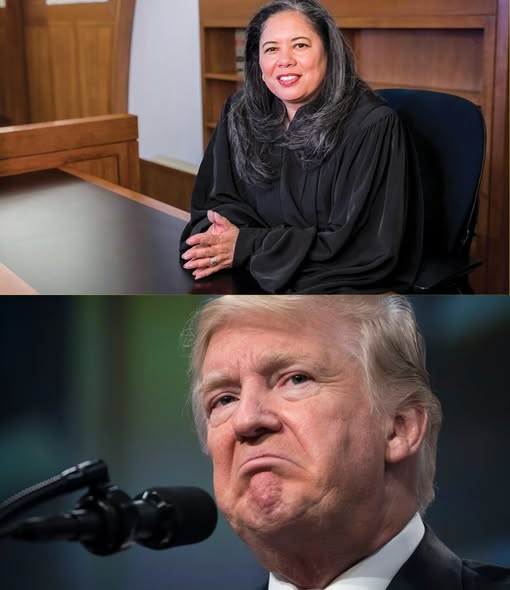
The debate over how America remembers its past took a dramatic turn this week as a federal judge ordered the Biden administration to reinstate a memorial honoring nine enslaved individuals owned by President George Washington. The move comes amid a broader effort by the government to erase parts of history it finds inconvenient, prompting fierce national discussions about whose stories are told—and which are left out.
On Friday, U.S. District Judge Angel Kelley in Boston issued a decisive ruling mandating the Interior Department to restore a memorial at Independence National Historical Park in Philadelphia—a site famously associated with America’s declaration of independence. This memorial commemorated nine enslaved people who worked as cooks, cleaners, and laborers for Washington at his Philadelphia residence, the only site where their names were publicly displayed before the current administration’s actions.
The controversy ignited earlier this year when the Trump administration, via an executive order signed in March 2025 titled “Restoring Truth and Sanity to American History,” launched an aggressive campaign to remove exhibits and memorials deemed politically inconvenient. The order accused these displays of promoting a “revisionist movement” that painted America as inherently racist and oppressive, aiming to “cleanse” what the government called half-truths from national parks and monuments.
Among the targeted sites was the memorial at Independence National Historical Park, where the names of Washington’s enslaved workers had been inscribed on a wall—until government officials decided that visitors should not be burdened with uncomfortable truths. The removal of these names sparked legal challenges, with courts already instructing the government to restore the memorial earlier this year. This week’s ruling extended that order to a broader scope, compelling the government to put back exhibits on abolition, immigration, labor, women’s suffrage, civil rights, and climate change, which had been quietly taken down from various historic sites across the nation.
Judge Kelley condemned the government’s efforts as an attempt to “rewrite the Nation’s history with a white-out pen,” emphasizing that controlling the narrative equates to erasing the foundational truths about America’s past. Her words echoed a stark critique of the administration’s approach: “The government tried to tell half-truths, and it failed.”
The Department of the Interior responded defensively, labeling Kelley a “liberal activist judge” and threatening to appeal the decision. However, it has struggled to provide a convincing justification for the removal of these vital historical markers—especially the names of enslaved individuals who played an integral role in building this country, yet had been systematically obscured from public memory.
As the nation approaches its 250th anniversary, this legal victory serves as a reminder that history cannot be erased or sanitized. The judge’s order ensures that the stories of those enslaved by Washington, and other marginalized groups represented in exhibits nationwide, will once again be part of America’s public narrative—by the Fourth of July, if not sooner.
This decision marks a pivotal moment in the ongoing debate over how America confronts its past. It underscores that the true story of America must include all of its people—honest, complicated, and sometimes painful truths that define the nation as much as its triumphs.
Where to Learn More
- Judge Orders Return of Memorial to Enslaved People at Philadelphia Site – The New York Times
- Legal Battle Over Historical Memorials Highlights Conflict Over American Narrative – The Washington Post
- The Fight Over Which Americans Get to Be Remembered – NPR
- America’s Reckoning With Its Past in Public Memory – Scientific American