
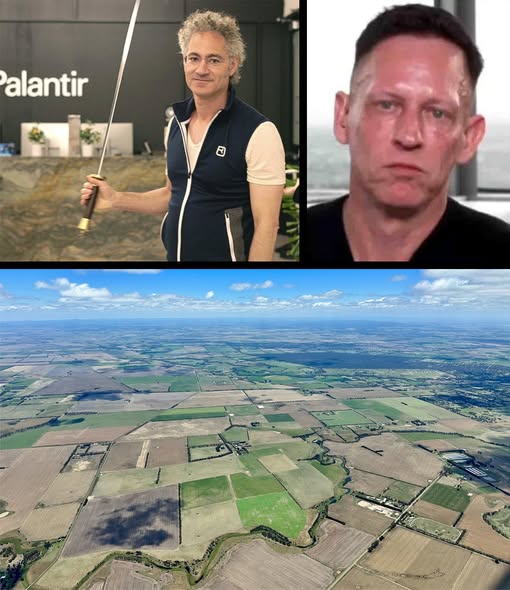
The U.S. Department of Agriculture has awarded a $300 million no-bid contract to the controversial tech firm Palantir, sparking widespread concern over the future of American agriculture and national security. Dubbed the “One Farmer, One File” initiative, this groundbreaking yet opaque project aims to consolidate every facet of a farmer’s life—land, subsidies, supply chains—into a single digital profile managed through Palantir’s proprietary Foundry platform.
Built from the company’s existing infrastructure, which controversially powers ICE deportations and military targeting, the platform will create an unprecedented data reservoir for the USDA—monitoring everything from crop yields and land ownership to disaster relief distribution and foreign land acquisitions. The system is expected to be fully operational by 2028, with years of expansion anticipated, consolidating the power of one dominant tech player over America’s critical food infrastructure.
The deal marks a significant milestone in Palantir’s expanding footprint within the federal government. Since the Trump administration took office, Palantir’s federal contracts have nearly doubled, stretching across agencies such as Defense, Homeland Security, ICE, Treasury, Justice, and Health & Human Services. The USDA deal underscores the company’s penetration into domestic sectors—particularly those affecting the very backbone of American sustenance and sovereignty.
But who is behind Palantir? The company was co-founded by Peter Thiel, a billionaire known for his controversial politics, opaque motives, and close ties to intelligence agencies. Thiel, whose biographer has characterized his ideological stance as longing for authoritarian rule, launched Palantir with CIA seed money. His influence extends into politics and beyond; for instance, he bankrolled JD Vance’s Senate run with $15 million. Thiel’s worldview is often described as skeptical of democracy itself, with some critics arguing his ventures prioritize surveillance and control over democratic values.
Operationally, Palantir CEO Alex Karp has propagated an aggressive—and often disturbing—rhetoric that has raised alarms among employees and watchdog groups. Karp has publicly proclaimed the company’s purpose as “scaring enemies and on occasion killing them,” and has spoken about violent scenarios involving Wall Street analysts. Former staff have condemned his rhetoric as increasingly fascist, while Palantir’s recent manifesto has been dismissed across the political spectrum as cartoonishly authoritarian.
Now, with the USDA contract, Palantir’s data infrastructure will have comprehensive insight into American farmers—tracking what they grow, how resources are allocated, and even foreign land ownership. Critics warn this creates a dangerous consolidation of power in the hands of a company with questionable motives and an unsettling corporate culture rooted in secrecy and surveillance.
Most alarming of all is the lack of transparency and the absence of competitive bidding. This deal not only consolidates Palantir’s grip on agricultural data but also exemplifies a troubling trend: vital infrastructure projects slipping beyond public scrutiny, unnoticed by mainstream discourse. The implications extend far beyond agriculture, raising urgent questions about data privacy, national security, and the future of American democracy.
Where to Learn More
- The Verge — “USDA’s New Palantir Contract Raises Concerns Over Food Data Privacy”
- CNN — “Data, Surveillance, and Power: The Growing Role of Palantir in US Government”
- ProPublica — “Palantir’s Track Record of Controversial Data Projects and Civil Liberties Concerns”
- The Nation — “The Threat of Unchecked Corporate Surveillance in Public Infrastructure”