
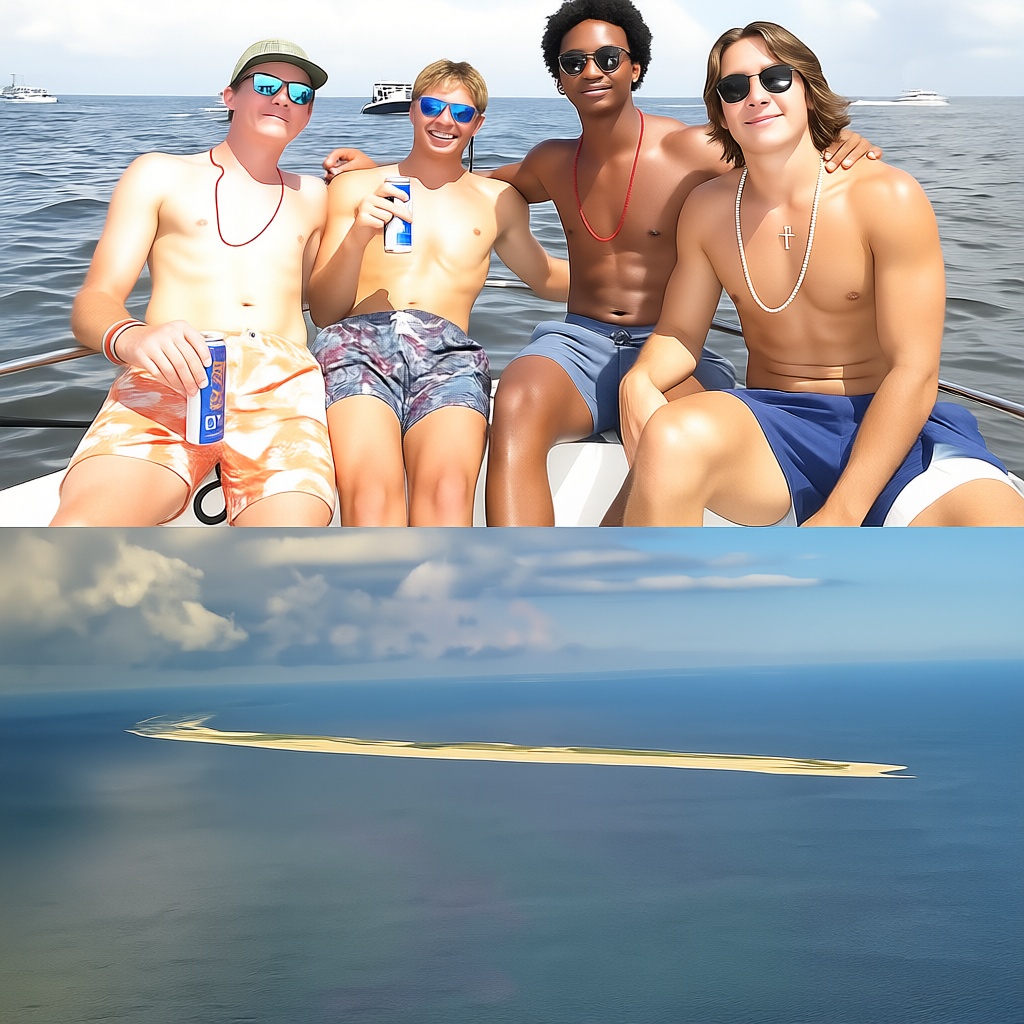
The sudden death of 18-year-old Nolan Wells during a Fourth of July outing on Horn Island, Mississippi, has sparked widespread concern and controversy. Official authorities initially floated a drowning theory mere days after Wells went missing, but his family and community activists are raising serious doubts about the official story, demanding a deeper investigation into the circumstances surrounding his untimely death.
Wells, a promising young football player, disappeared during a trip with friends to the popular island destination known for its beaches and outdoor recreation. Unlike his friends, who initially gave inconsistent accounts of his whereabouts, Wells’ family quickly grew suspicious of the official narrative. His mother, in an emotional interview, revealed that she tracked Nolan’s phone using the app Life360, uncovering a location history that directly contradicted what his friends claimed on social media. While they insisted Nolan chose to stay behind with a young woman, her own account and the phone’s GPS data suggest otherwise—placing his device back on the mainland, far from where the friends claimed he was.
Adding to the family’s distrust, Wells’ Snapchat accounts were mysteriously wiped clean when they finally gained access to his phone. The friends who took custody of his phone and keys after his disappearance have offered shifting explanations, fueling skepticism about their version of events. One claim was that Nolan decided to stay behind voluntarily; yet, the same young woman reported hearing him say he was heading back with the group. The inconsistencies have only deepened the mystery surrounding his death.
Wells’ father, visibly emotional, explained that he had attempted to search for his son himself that night but lacked access to boats or equipment. He waited until morning, when Nolan’s football coach kindly offered to help in the search efforts. This delay, combined with the contradictory accounts and lack of tangible evidence, has led his family to question whether law enforcement’s initial drowning theory is accurate or a rushed conclusion.
Rather than rely solely on local investigators, Wells’ family enlisted an independent autopsy performed by a forensic examiner with no ties to Mississippi authorities. With funding from Colin Kaepernick, a former NFL quarterback known for advocating justice for Black communities, the autopsy seeks to uncover possible causes of death beyond drowning or accident. Kaepernick’s support highlights the wider concern from civil rights activists and families reluctant to trust local law enforcement investigations, especially when such cases involve Black victims.
Reverend Al Sharpton has voiced his concern, emphasizing the racial dynamics at play, noting that Wells was one Black teenager among a group of predominantly white friends. Sharpton pointed out that the community needs transparent investigations that are free from bias—particularly in cases where official narratives seem prematurely settled without thorough evidence.
As the family awaits results from the independent autopsy, their focus remains on uncovering the truth. They are calling for accountability from authorities and demanding answers about what really transpired on Horn Island that night. Nolan Wells’ case has become a symbol of larger issues regarding justice, trust, and the safety of Black youth in similar outdoor recreational settings.
Where to Learn More
- Questions Rise Over Official Cause of Death for Teen Missing in Mississippi – Reputable News Site
- Civil Rights Activists Call for Independent Investigation in Wells Case – National Civil Rights Organization
- Kaepernick Fund Supports Independent Autopsy in Youth’s Mysterious Death – Colin Kaepernick Foundation