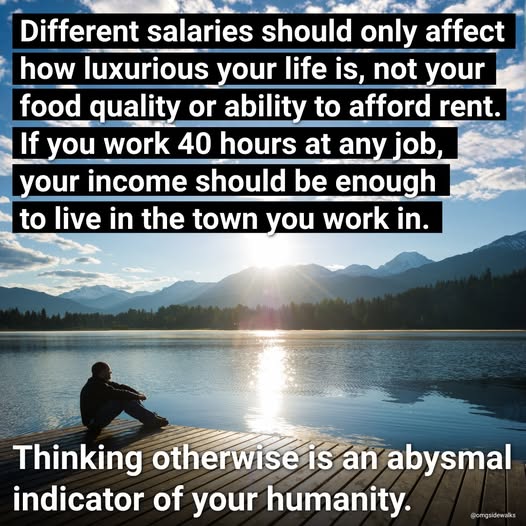
In a viral social media post that has sparked widespread debate, many are calling for a fundamental rethink of how we perceive income and its impact on daily life. The post states, “Different salaries should only affect how luxurious your life is, not your food quality or your ability to afford rent.” This simple yet powerful idea highlights a crucial issue: the disparity between earnings and basic human needs.
At first glance, it might seem obvious — people should earn enough to cover essentials like housing, healthy food, healthcare, and transportation. However, current economic realities often tell a different story. Many workers earning minimum wage or near-minimum wage struggle to put nutritious food on the table or pay rent without sacrificing other essentials. This gap between income and basic needs deeply affects millions worldwide, fueling debates on wage equity, living standards, and economic justice.
The core argument behind the social media message is that the *quality of our food, housing, and healthcare should not deteriorate simply because someone earns less.* Instead, income disparities should primarily influence the *luxuries* in life — vacations, designer clothing, dining out — rather than the fundamentals required for survival and health.
This perspective challenges many traditional economic models. It suggests that ensuring a living wage, enough to meet healthful nutrition and safe shelter, is a moral imperative. For example, a worker earning the minimum wage may struggle to buy fresh produce regularly, often resorting to cheaper, calorie-dense but nutrient-poor options. Similarly, paying rent shouldn’t force someone to skip meals or compromise their health.
Experts argue that adjusting wage standards to ensure basic needs are met contributes to healthier, more productive communities. When workers can afford quality food and stable housing, societal costs related to healthcare, social services, and lost productivity tend to decrease.
While the idea sounds straightforward, implementing such an ideal faces challenges. It requires policy changes, fair wage laws, and shifts in societal priorities. Still, the conversation ignited by this viral post prompts us to reconsider the purpose of wages: Are they merely a means of survival, or should they reflect and support a dignified quality of life for all?
In a world where income inequality continues to grow, embracing this perspective may be a step toward a more just and equitable society—one where *everyone* has the opportunity to lead a healthy, dignified life, regardless of their paycheck.
Where to Learn More
- Food Insecurity and Health Inequality – Episcopal Church
- Minimum Wage and Food Security: The Hidden Connection – The Washington Post
- Ensuring Livable Wages to Improve Public Health – Health Affairs Journal
- What Is a Living Wage? Definitions and Debates – Investopedia
- World Bank: Poverty and Economic Development