
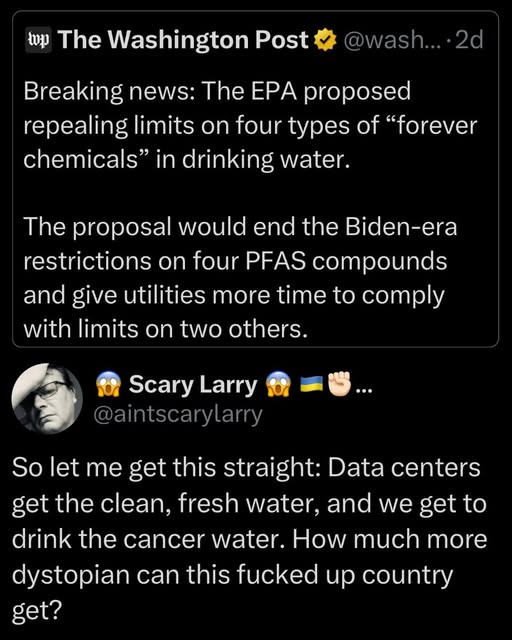
The Environmental Protection Agency (EPA) has announced a controversial proposal to revoke existing regulatory limits on four types of “forever chemicals” in drinking water, a move that has alarmed public health advocates and communities nationwide. The proposed change would effectively end the current restrictions established to protect residents from these persistent and hazardous substances.
These chemicals, known scientifically as per- and polyfluoroalkyl substances (PFAS), are often referred to as “forever chemicals” because of their resistance to degradation in the environment. Commonly found in non-stick cookware, waterproof fabrics, firefighting foams, and various industrial applications, PFAS have been linked by extensive scientific research to a host of health problems, including cancer, hormone disruption, immune system impairment, and developmental issues in children.
Currently, the EPA has set enforceable limits on certain PFAS in drinking water, aiming to reduce exposure and prevent adverse health effects. However, the new proposal seeks to repeal these limits, citing reasons such as regulatory overreach and the need for more scientific data before imposing stricter controls. Critics argue that this move prioritizes industry interests over public safety and environmental health.
Public response has been swift and vehement. Health organizations, environmental groups, and affected communities have voiced strong opposition, emphasizing that the science clearly demonstrates the dangers of PFAS exposure. “Reversing regulatory limits on these chemicals is a dangerous gamble with public health,” stated Dr. Maria Lopez, an environmental toxicologist. “It effectively signals a green light for continued contamination of our water supply.”
The proposed repeal is also expected to complicate ongoing efforts by local governments and water utilities striving to filter out PFAS. Without federal limits, many argue that there will be less incentive for industries to reduce their discharges or for utilities to upgrade treatment facilities, potentially prolonging residents’ exposure to these toxic substances.
The EPA’s move comes amid broader debates over chemical regulation, environmental justice, and public safety. Amid rising awareness of PFAS dangers, regulatory agencies worldwide are reevaluating their policies, with some countries implementing stricter controls and bans.
Federal decision-making on this matter could set a significant precedent. Advocates are calling for increased transparency and a reconsideration of the proposal, urging policymakers to prioritize health protections over industry lobbying. The public comment period is currently open, allowing citizens and organizations to submit their opinions before final decisions are made.
As this story develops, many are left wondering: Will the government listen to scientific warnings and public concerns, or will economic interests outweigh health considerations? The outcome could have lasting implications for water safety and environmental health in the United States.
Where to Learn More
- EPA Announces Proposal to Repeal Limits on PFAS in Drinking Water – U.S. Environmental Protection Agency
- The Toxic Truth About PFAS: How These “Forever Chemicals” Threaten Our Health – Environmental Working Group
- EPA’s Push to Undermine Chemical Safety Regulations: What You Need to Know – Natural Resources Defense Council
- EPA Proposes Repealing Limits on Toxic Water Chemicals – NBC News