
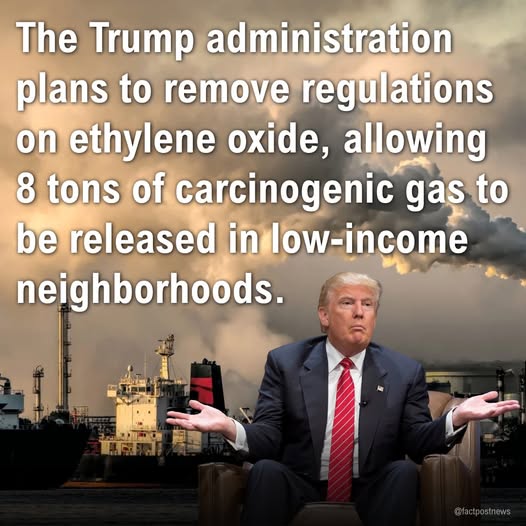
Recent revelations on social media have ignited widespread concern over a proposed regulatory change that threatens to increase the release of **ethylene oxide**, a chemical classified as carcinogenic, into low-income neighborhoods across the United States. The move, allegedly spearheaded by the Trump administration, aims to relax existing safety standards, potentially permitting the emission of **up to 8 tons of ethylene oxide** — a nerve-wracking prospect for communities already burdened by environmental and health disparities.
Ethylene oxide (EtO) is primarily used for sterilizing medical equipment and other industrial applications. However, it is associated with serious health risks, including increased rates of lymphoma, breast cancer, and other malignancies. The chemical easily becomes airborne, and because it can linger for extended periods, residents living near industrial facilities are at heightened risk of chronic exposure.
This regulatory shift reportedly involves removing certain restrictions that currently limit the amount of ethylene oxide that can be released into the environment. Critics argue that such a move prioritizes industrial interests over public health, especially for marginalized populations in low-income neighborhoods and communities of color that often lack the political power to oppose industrial encroachment.
The social media post featuring an image of text has amplified public outrage, with one user @fac writing, “The Trump administration plans to remove regulations on ethylene oxide, allowing 8 tons of carcinogenic gas to be released in low-income neighborhoods.” Social media platforms are buzzing with reactions from activists, residents, and health advocates demanding accountability and transparency.
Environmental and health watchdogs warn that such deregulation could lead to increased incidents of respiratory illnesses, cancers, and other health problems in vulnerable communities. Historically, low-income neighborhoods and communities of color have borne the brunt of industrial pollution, and this move risks deepening existing environmental injustices.
Many experts are calling on federal regulators to uphold strict safety standards, emphasizing that the health and safety of residents should take precedence over corporate profit motives. Public health advocates urge citizens to stay informed and advocate for policies that protect vulnerable populations from harmful chemical exposure.
As this story develops, it underscores the ongoing debate about balancing industry interests with environmental justice. The potential release of millions of pounds of toxic gas into neighborhoods already suffering from environmental inequalities has sparked protests and calls for accountability from policymakers. The decision’s implications could reverberate across communities nationwide, highlighting the urgent need for transparent decision-making processes in chemical safety regulations.