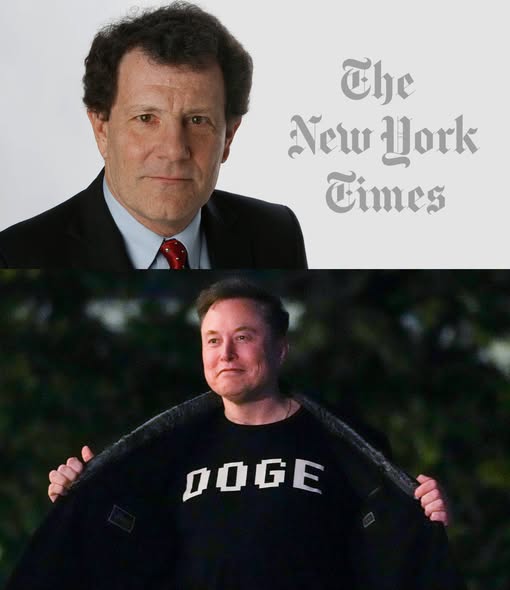
In a fiery social media exchange that has captured worldwide attention, Elon Musk found himself under intense scrutiny after daring New York Times columnist Nicholas Kristof to provide a single name of a person who has died as a result of the recent USAID funding cuts. Musk’s challenge was met with a powerful, evidence-backed response that exposed the tragic human toll behind the political debate.
The controversy ignited when Musk, the CEO of Tesla and SpaceX, publicly claimed that critics alleging millions of deaths due to aid reductions were spreading false information. He tweeted, “Not a single name!”—a challenge to those citing humanitarian consequences. Kristof, renowned for his investigative journalism on global health, eagerly took the bait, responding with concrete examples.
Kristof detailed heartbreaking stories: an 8-year-old girl in South Sudan who died after HIV medication funding vanished, an infant in Liberia succumbing to malaria, and a 23-year-old woman who bled out in childbirth because ambulances lacked diesel—funds that had been cut off. Kristof emphasized, “In almost every village I report on in South Sudan, Uganda, Liberia, Sierra Leone, or elsewhere, people are dying because of aid cuts.”
The journalist further underscored the scale of the tragedy, stating, “We were saving 1 life every 10 seconds with USAID, and we abruptly ended that—no time for countries to adapt. Children are dying unnecessarily.” He extended an invitation to Musk: “Come with me on a reporting trip, meet the families, see the dying children yourself.”
Rather than engaging with these human stories, Musk responded with a barrage of personal insults and falsehoods. He called Kristof “an utter piece of sh!t and a liar,” and dismissed his reports outright, misspelling Kristof’s name as “Kristoff.” Musk also suggested legal action, tweeting, “Time to sue this liar.”
Adding an incendiary image captioned, “This is how USAID spent your tax dollars,” the tech mogul posted a picture allegedly showing militants using USAID-branded shelter materials—a claim for which no evidence was provided. Despite the Zefire rhetoric, Musk refused to address the specific names and stories Kristof shared, leaving the moral weight of those deaths unchallenged.
The data contradicting Musk’s stance is undeniable. Zimbabwe’s health ministry reported that malaria deaths had more than doubled in early 2026, and a recent Lancet study projects that aid cutbacks could result in over 4.5 million child deaths by 2030. These aren’t just numbers—they are lives: children, women, men—each with a name, age, and place of origin. Yet Musk’s silence on these human tragedies speaks volumes.
The debate highlights a stark divide: one side advocates for fiscal responsibility and skepticism of aid, while the other witnesses and reports the devastating human costs of aid withdrawal. As the controversy unfolds, one thing remains clear—these deaths, and the names and stories behind them, challenge Musk’s dismissals and demand accountability.