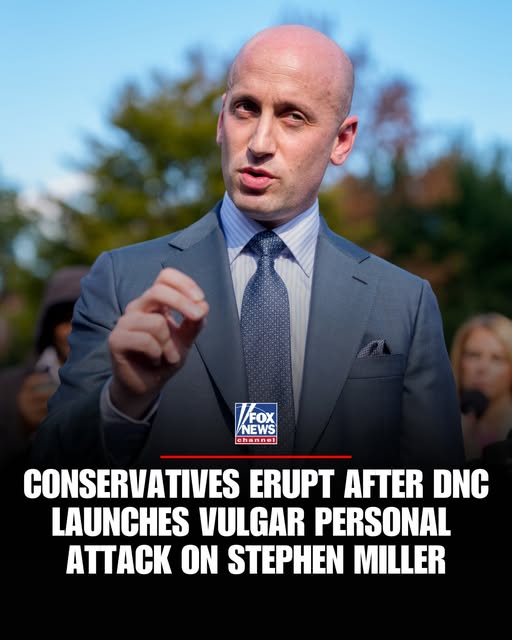
The Democratic National Committee’s official X (formerly Twitter) account has ignited a firestorm of controversy after posting a highly inflammatory message directed at President Trump’s chief policy adviser, Stephen Miller. The post, which read, “Shut up, you ugly f—.” has drawn widespread backlash from both political figures and the public, reigniting debates over civility and decorum in political discourse.
The provocative post stands out amid a growing trend within some Democratic circles to adopt a more aggressive, confrontational online strategy against Republicans. Critics argue that this approach marks a significant departure from the party’s historically cultivated image of civility and unity. “This is the party that spent years lecturing America about civility, unity, and healing,” conservative commentator Benny Johnson commented on social media, highlighting the stark contrast between past values and current tactics.
The incident is not isolated. Over recent months, several Democratic officials and prominent progressive figures have engaged in similar inflammatory exchanges online. Notably, California Governor Gavin Newsom’s official social media accounts have repeatedly used profanity in responses to critics, including telling a conservative reporter earlier this year to “f— off.” Critics argue that these interactions undermine the seriousness of political debate and lower the standards of discourse in the digital age.
The DNC’s vulgar tweet targeting Stephen Miller, a senior advisor known for his hardline immigration policies and fiery rhetoric, has stoked outrage among Republicans and others who view such language as unnecessarily divisive. Many see it as emblematic of a broader shift towards more aggressive tactics that risk eroding the civility integral to healthy political dialogue.
In response to this escalating online hostility, some analysts warn that this style of communication could deepen partisan divides rather than bridge them. Meanwhile, supporters of the DNC’s aggressive approach argue that it is a necessary tactic to fight back against what they perceive as relentless Republican obstruction and misinformation.
Despite the heated online exchanges, the incident has also sparked widespread media coverage and social media debates about decorum, free speech, and the role of digital platforms in shaping political narratives. As these uncensored and often provocative interactions continue, the question remains: will this tactic energize the Democratic base or further alienate moderates and independents?