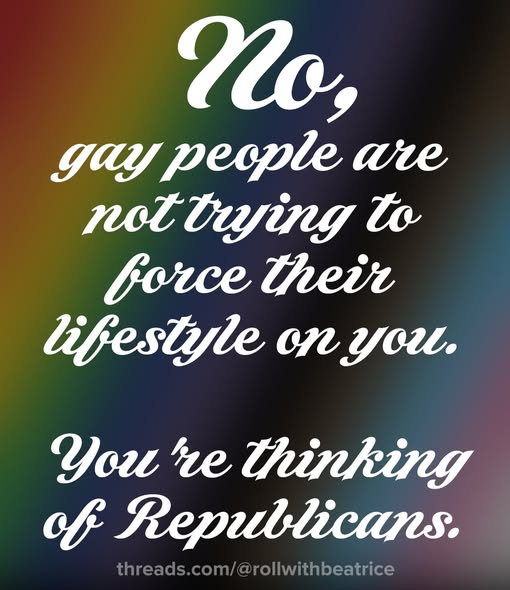
In recent weeks, a viral social media post has sparked widespread discussion around perceptions of LGBTQ+ advocacy and the common misconceptions that often accompany debates on this sensitive topic. An image circulated widely with the message: “No, gay people are not trying to force their lifestyle on anyone. You’re thinking of Republicans.” This statement actively challenges the false narrative that the LGBTQ+ community seeks to impose their identity or lifestyle on others. Instead, it underscores the importance of understanding authentic advocacy versus misinformation.
The phrase highlights a crucial distinction: the efforts of many LGBTQ+ individuals and allies aim to seek equal rights, acceptance, and understanding—rather than to coerce or influence others’ personal lives. In many cases, such misconceptions stem from political rhetoric, misinformation, and societal biases that frame sexual orientation and gender identity as threats to traditional values.
Experts emphasize that the LGBTQ+ community’s primary goal is equality and protection under the law, not to assert influence over personal choices or societal norms. “Advocacy for LGBTQ+ rights is about ensuring dignity, safety, and equal treatment—things that every human being deserves,” explains Dr. Lisa Thompson, a sociologist specializing in social movements. “It’s not about forcing lifestyles but about dismantling the discrimination that prevents those lifestyles from being safely and legally recognized.”
This misrepresentation often feeds into larger political narratives. Some critics, including certain members of the Republican party, have attempted to portray LGBTQ+ advocacy as an invasive effort to “force” lifestyles on others, which studies show to be an unfounded perspective. In reality, most advocacy focuses on ending discrimination—such as protecting against hate crimes, equal employment rights, and access to healthcare—and does not seek to infringe upon anyone’s personal beliefs or freedoms.
The social media post’s message also invites a reflection on how public discourse is shaped. It reminds us that accusations of “forcing” are frequently used as a rhetorical tool to justify resistance to LGBTQ+ rights. Educating oneself about what true advocacy entails can help dismantle these misconceptions, fostering a more inclusive society.
Furthermore, this conversation taps into the broader issue of misinformation online, where simplified or misleading narratives spread quickly. Recognizing that the fight for LGBTQ+ rights is about human rights, not ideological invasion, is vital for fostering understanding and reducing prejudice.
In conclusion, the viral message serves as a reminder that associating LGBTQ+ advocacy with attempts to “force” is both inaccurate and unfair. It’s important to listen to authentic voices from the community and to challenge false narratives that perpetuate division instead of dialogue.
Where to Learn More
- Your Legal Rights as an LGBTQ+ Person – Human Rights Campaign
- Advocacy & Activism – GLAAD
- LGBTQI+ Discrimination and Awareness – Amnesty International
- The Rise of Misinformation About LGBTQ+ People – The New Yorker
- Understanding LGBTQ+ Advocacy in Modern Society – BBC News