
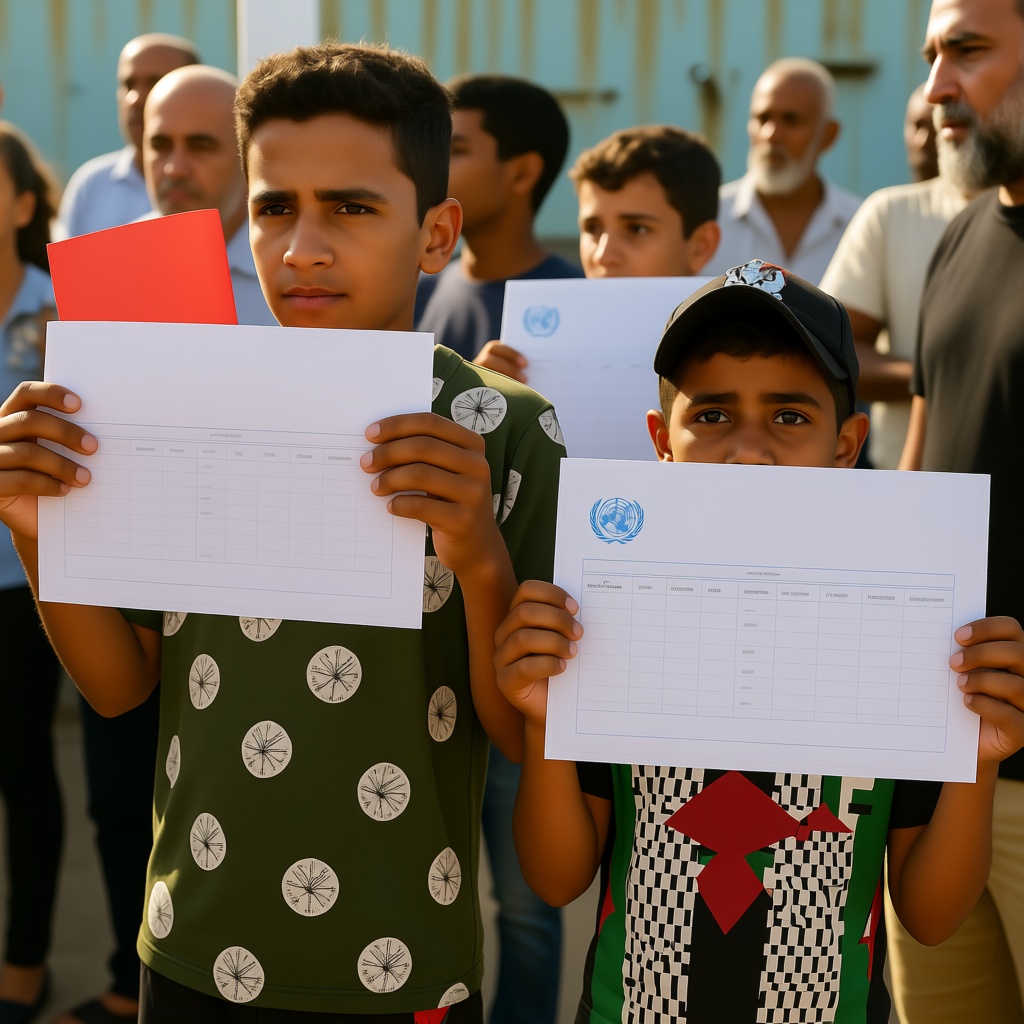
Amid ongoing debates in Washington, a recently proposed bipartisan bill aiming to abolish the United Nations Relief and Works Agency for Palestine Refugees in the Near East (UNRWA) has sparked fierce opposition from humanitarian organizations, critics, and even some policymakers. The bill’s supporters argue it would streamline U.S. aid and eliminate what they perceive as inefficiencies, but opponents warn that such a move could have devastating consequences for hundreds of thousands of vulnerable Palestinians.
UNRWA, established in 1949, plays a critical role in providing education, healthcare, social services, and humanitarian aid to Palestinian refugees across the Middle East, primarily in Gaza, the West Bank, Jordan, Lebanon, and Syria. According to recent estimates, UNRWA supports over 5 million Palestinian refugees, many of whom depend entirely on the agency for basic necessities essential to survival.
Critics of the bill argue that abolishing UNRWA would be a “death sentence” for these vulnerable populations. “UNRWA is vital to keeping hundreds of thousands of the most vulnerable Palestinians alive,” said Khaled Elgindy, a senior fellow at the Middle East Institute. “Ending this assistance abruptly would plunge many into poverty, homelessness, and without access to essential services.”
The proposed legislation, introduced by a coalition of bipartisan lawmakers, claims that UNRWA perpetuates a cycle of dependency and fails to promote long-term solutions. However, experts contend that the agency’s work addresses urgent humanitarian needs that cannot be ignored or deferred, especially given the ongoing regional instability and economic hardships in Palestinian territories.
Humanitarian groups such as the Palestinian Human Rights Organization and numerous UN officials have issued warnings against the bill, emphasizing that the agency’s support stabilizes communities and helps prevent a humanitarian disaster. Many note that the United States has historically been one of UNRWA’s largest donors, but recent political shifts threaten to cut off this vital source of aid.
Opponents also highlight that removing UNRWA without offering alternative support mechanisms risks exacerbating poverty, increasing displacement, and destabilizing the fragile peace process in the region. Rachel Levine, a policy analyst specializing in Middle Eastern affairs, stated, “This legislation could undo years of work aimed at improving living conditions and fostering stability among Palestinian refugees.”
As the debate heats up, international voices are calling on U.S. lawmakers to reconsider. Human rights advocates warn that the move could undo decades of progress and lead to increased humanitarian suffering in a region already beset by conflict.
While supporters of the bill argue for accountability and efficiency, critics maintain that the immediate needs of millions of Palestinians should take precedence. The outcome of this legislative proposal could significantly impact the lives of millions and reshape U.S. foreign aid policies in the Middle East moving forward.