
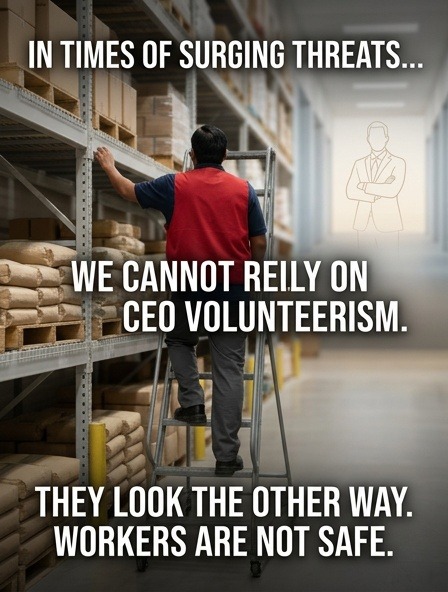
In recent months, a disturbing trend has emerged that underscores a deeper crisis in the American labor landscape. Despite mounting reports of threats, intimidation, and violence faced by low-wage workers—particularly in sectors like retail, hospitality, and food service—many corporate CEOs continue to look the other way. This indifference is revealing a harsh reality: a sense of corporate apathy that suggests relying on voluntary action alone is no longer sufficient to protect vulnerable workers.
Social media users and worker advocacy groups have brought widespread attention to the surge in threats faced by low-wage employees. From intimidating customers to outright violence, the incidents are becoming increasingly common, yet many corporations seem to respond with silence or minimal action. Instead of implementing stricter safety protocols or standing against abusive customer behavior, some CEOs are choosing to avoid heated debates that might inconvenience their bottom line.
Experts argue that this corporate silence signals an alarming indifference to worker safety—a stark contrast to the rhetoric many companies promote about their commitment to employee well-being. “When CEOs turn a blind eye to violence and threats, it sends a message that profits take precedence over human dignity,” says labor rights advocate Maria Rodriguez. “It’s a clear indication that they do not see their employees as essential stakeholders deserving of protection.”
The repercussions extend beyond the individual workers. When low-wage employees face unchecked threats, their mental health suffers, and their ability to perform diminishes, leading to higher turnover rates and lower service quality. As public consciousness around workplace safety grows, consumer advocacy groups are urging companies to take responsibility, enforcing strict anti-violence policies and providing proper training.
However, critics argue that relying solely on corporate goodwill—expecting CEOs to voluntarily safeguard their workers—is a flawed strategy. The recent passivity demonstrates that without external pressure, many corporations remain unmoved by the human toll of neglect. Policymakers and labor organizations are increasingly calling for stronger regulations to ensure worker protections are legally enforced, rather than left to corporate discretion.
Ultimately, the message from social media and worker advocacy groups is clear: **we cannot depend on corporate leaders to voluntarily prioritize worker safety**. The rising wave of threats faced by low-wage workers is a stark reminder that systemic change is needed. Workers deserve more than occasional corporate promises—they need enforceable protections that hold companies accountable when they fail to act.
As the debate intensifies, one thing remains certain: continued activism, public pressure, and legislative action are crucial in creating workplaces where safety and dignity are non-negotiable. The shadow cast by corporate silence must be confronted, and only through collective effort can we ensure that low-wage workers are protected from harm.