
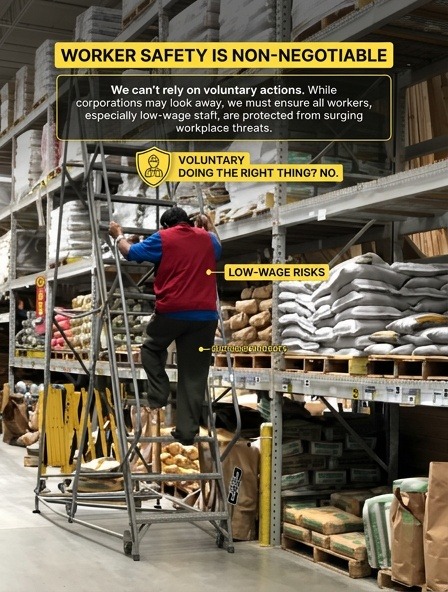
In recent months, a troubling pattern has emerged within the corporate landscape: while economic pressures and rising threats loom over low-wage workers, many corporate CEOs choose to look the other way rather than take tangible steps to safeguard their employees. This growing complacency has intensified concerns that relying solely on corporate goodwill is no longer sufficient to ensure workplace safety and dignity for America’s most vulnerable workers.
Across industries—from retail and hospitality to warehouse and food service sectors—workers report surging threats, harassment, and violence that often go unaddressed. Despite some companies issuing vague statements on worker safety, the reality on the ground paints a stark picture: many low-wage employees face hostile environments with little institutional support. Meanwhile, CEOs and corporate executives prioritize profit margins and shareholder returns, often at the expense of employee well-being.
Social media campaigns and union drives have amplifies stories of workers facing intimidation for raising safety concerns or demanding fair treatment. An alarming number of these workers cite a lack of enforcement of existing protections, and some face retaliation when speaking out. As these issues proliferate, critics argue that corporate leaders are abandoning their moral responsibility, demonstrating that voluntary compliance alone is inadequate in addressing systemic problems.
“Look, we’ve seen time and again that corporations will not voluntarily implement the meaningful reforms needed to protect their employees,” says Dr. Maria Lopez, a labor rights expert. “Without robust legal safeguards or government intervention, workers are left vulnerable, and this pattern of neglect only deepens inequality and insecurity in the workplace.”
The failure of corporate leaders to act comes at a time when federal and state lawmakers are under increased pressure to pass legislation that mandates workplace safety standards, anti-retaliation measures, and protections against violence and threats. Advocates argue that relying solely on corporate goodwill is naïve, especially in a climate where short-term profits often take precedence over ethical considerations.
Recent high-profile incidents shed light on this troubling trend. In one case, warehouse workers at a major logistics company reported heightened threats from management amid increased productivity targets, yet the company remained silent. Similarly, retail employees have spoken out about widespread harassment that goes unchecked—highlighting the urgent need for stronger policies and enforcement mechanisms.
As public awareness grows, many believe that meaningful change requires robust government intervention. Policymakers are called to pass comprehensive legislation to protect low-wage workers and hold corporations accountable for neglecting their duties. It’s clear that voluntary measures are insufficient, and that relying solely on corporate morality does not serve justice or secure the safety of our workforce.
In the end, the message is clear: **if we want a safe, fair workplace for all, we must demand accountability and proactive policies from both government and the corporate sector.** Widespread worker threats and harassment cannot be ignored any longer.
Where to Learn More
- Corporate Neglect and Worker Safety: A Growing Crisis – The New York Times
- The Rise of Threats Against Low-Wage Workers and Corporate Inaction – Washington Post
- Worker Safety in the Crosshairs of Corporate Profit Margins – Al Jazeera
- The Role of Legislation in Protecting Vulnerable Workers – Industrial Relations Research Network