
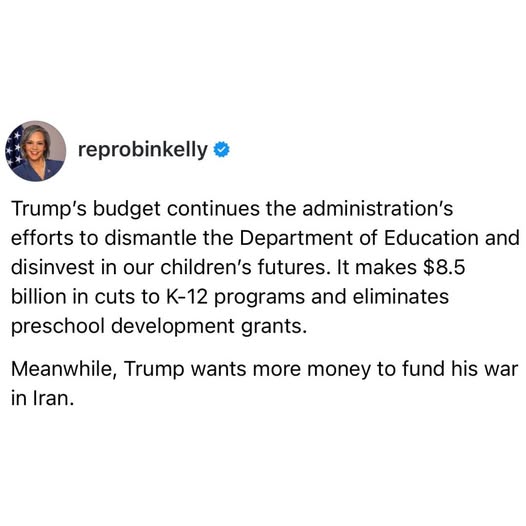
In a move that has ignited fierce debate across political and educational communities, President Donald Trump’s recent budget proposal has come under intense scrutiny for its apparent focus on dismantling key parts of the Department of Education. In a powerful social media statement, Rep. Robin Kelly (D-IL) voiced her concern, asserting that the budget “continues the administration’s efforts to dismantle the Department of Education and disinvest in our children.”
The proposed budget, unveiled earlier this week, seeks significant reductions in funding allocated to public education programs nationwide. Critics argue that these cuts threaten to undermine decades of progress in educational equity, access, and quality, particularly for vulnerable populations. Many view the proposal as part of a broader agenda to weaken federal oversight and shift more responsibility onto local communities and states, potentially widening the gaps that already persist in education.
“This isn’t just about numbers on a page,” Kelly emphasized on her social media platform. “It’s about the future of our children—whether they’ll have clean schools, well-trained teachers, or the resources they need to succeed.” The Congresswoman’s statements echo widespread concern among educators, parents, and advocacy groups who fear that the proposed disinvestment could lead to larger class sizes, reduced access to special programs, outdated learning materials, and fewer support services for students with disabilities and English Language Learners.
The administration defends the budget as a measure to prioritize efficiency and reduce federal spending, but opponents argue it disproportionately impacts public education at a time when many districts are already struggling with funding shortages. Critics also point out that if enacted, these cuts could have long-term repercussions on the nation’s economic growth, considering the vital role education plays in workforce development and social mobility.
Legislators across party lines have expressed concern, with Democratic leaders promising to fight the proposal in Congress. Meanwhile, education groups and union organizations have launched campaigns urging constituents to oppose the funding reductions, arguing that investing in education is investing in the country’s future.
The controversy highlights a broader debate about the role of federal government in maintaining robust, equitable public education systems. As hearings and negotiations unfold in Congress, the coming weeks will be pivotal in determining the final shape of federal education funding for the next fiscal year.