
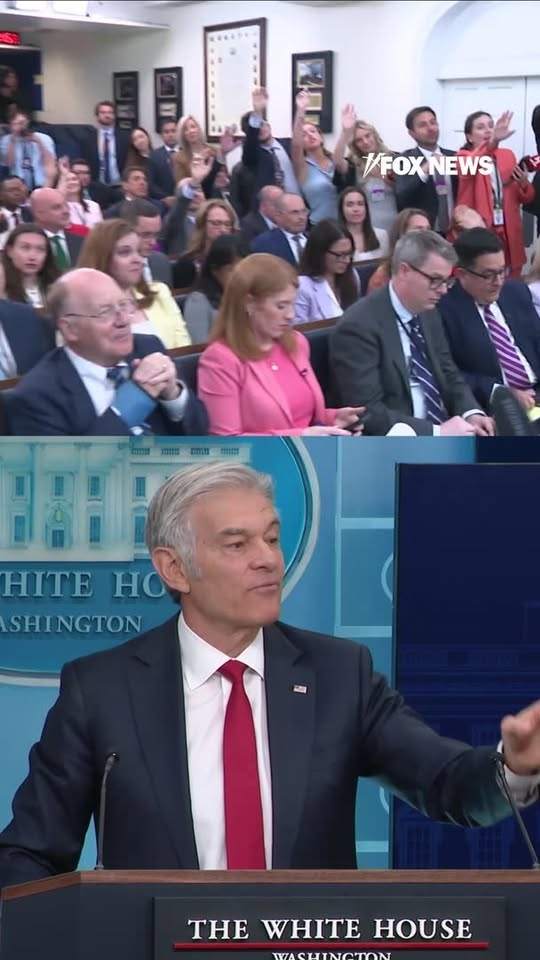
In a provocative social media post that has quickly gone viral, CMS Administrator Dr. Mehmet Oz, better known as Dr. Oz, made a bold claim about a condition he described as “Trump Derangement Syndrome,” suggesting it is an especially difficult “ailment” to treat. His comments have sparked a heated debate across various online platforms about political polarization and the challenges of addressing deeply rooted biases.
Addressing his followers, Dr. Oz stated, “Treating stupid is really hard.” This stark remark was part of a broader commentary on the perceived cognitive and emotional challenges posed by intense political partisanship in the United States. Critics quickly noted that his choice of words was provocative, and some questioned whether this was a genuine medical diagnosis or a political jab cloaked in health terminology.
According to the CMS Administrator, the so-called “very serious ailment” of Trump Derangement Syndrome (TDS)—a term popularized by critics to describe strong anti-Trump sentiments—has seen a rise in both intensity and prevalence over the past few years. Dr. Oz expressed concern that such ideologically driven perceptions hinder productive dialogue and impair individuals’ ability to think objectively.
While some have lauded Dr. Oz for speaking candidly about the difficulties of overcoming entrenched beliefs, others have criticized his approach as dismissive and overly simplistic. The controversy raises important questions about how media figures and health professionals address complex psychological and social phenomena, especially when they intersect with politics.
Medical experts are divided on whether TDS or similar phenomena constitute a diagnosable condition or are more accurately described as political rhetoric and emotional reactions. Many psychologists argue that while strong political biases can influence behavior, framing them as a “serious ailment” may trivialize mental health issues and diminish the nuanced understanding required to address such social dynamics.
Nonetheless, Dr. Oz’s comments highlight an ongoing societal challenge: how to reconcile differing political views without resorting to ridicule or oversimplification. The idea that some individuals are “hard to treat” when it comes to ideological stubbornness underscores the importance of fostering dialogue rooted in empathy, understanding, and critical thinking.
As the nation continues to grapple with polarization, voices like Dr. Oz’s add fuel to the fire—prompting reflection on whether our cultural landscape needs more compassion or clearer boundaries around discussing mental health and political beliefs.