
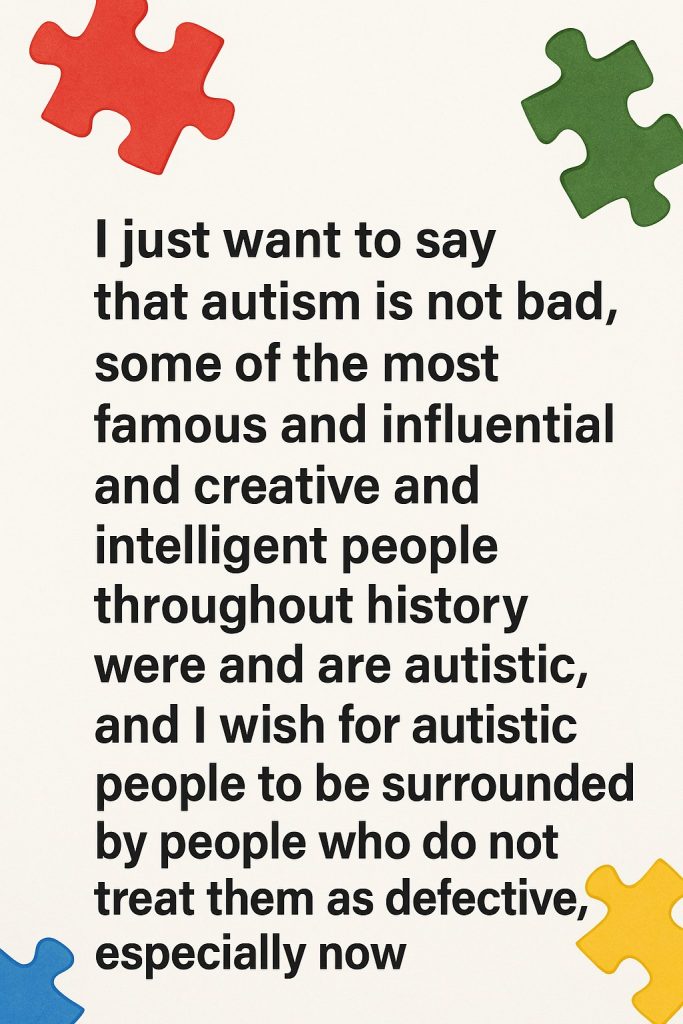
In a world where acceptance and understanding of neurodiversity are gaining momentum, a recent viral social media post is sparking discussion about the positive aspects of autism. The text resonated with many, proclaiming, “I just want to say that autism is not bad; some of the most famous, influential, creative, and intelligent people throughout history were and are autistic.” This statement opens up a crucial dialogue about the extraordinary contributions of autistic individuals to society.
Historically, numerous figures recognized for their phenomenal achievements have been identified as autistic or displayed traits associated with autism spectrum disorder (ASD). Visionaries such as Albert Einstein, Leonardo da Vinci, and Charles Darwin are often cited as examples. These luminaries reshaped their respective fields, showcasing how neurodiverse minds can lead to groundbreaking ideas and innovations.
More recently, modern icons like Bill Gates and Steve Jobs have also been speculated to have autistic traits, providing a contemporary frame of reference. Their contributions to technology and innovation have revolutionized the world, underscoring the immense potential that can be harnessed through different neurological perspectives.
The viral post serves as a reminder that autism should not be viewed through a lens of stigma or negativity. Instead, it highlights the unique strengths that many individuals on the spectrum can offer. Creativity, deep focus, and exceptional memory are just a few of the attributes that can stem from autistic traits. In various fields—be it science, art, mathematics, or technology—individuals with autism often display extraordinary levels of expertise and passion.
Moreover, the increasing visibility of autistic individuals in media and advocacy pushes forward the conversation around acceptance. Artists, actors, and activists like Dan Aykroyd, Greta Thunberg, and Daryl Hannah have openly discussed their experiences with autism, framing it as an integral part of their identity rather than a limitation. This shift is paving the way for younger generations to embrace their differences and pursue their passions without fear of discrimination.
The focus on autism’s strengths rather than its challenges aligns with the broader movement toward inclusion. Schools, workplaces, and communities are encouraged to foster environments that celebrate diversity, ensuring that neurodiverse individuals can thrive both personally and professionally. Employers are increasingly recognizing the value of varied thought processes and problem-solving skills that neurodiverse individuals can bring to the table.
As more individuals share their stories and experiences, the stigma surrounding autism continues to diminish. This empowers those on the spectrum to express themselves authentically and encourages the general public to foster empathy and understanding. It’s a critical time to dismantle outdated perceptions and to celebrate the wide spectrum of human experience and capability.
In conclusion, as discussions surrounding autism evolve, it is essential to advocate for a culture of appreciation rather than limitation. The next time you come across the narrative that paints autism in a negative light, remember the remarkable contributions of those on the spectrum who have made transformative impacts throughout history and continue to do so today.
Where to Learn More
- Autism History and Facts – Autism Speaks
- The Essence of Human Diversity – Scientific American
- Autism and Leadership – Forbes
- Strengths of Individuals with Autism – National Institute of Child Health and Human Development
- Creativity and Autism – National Institutes of Health