
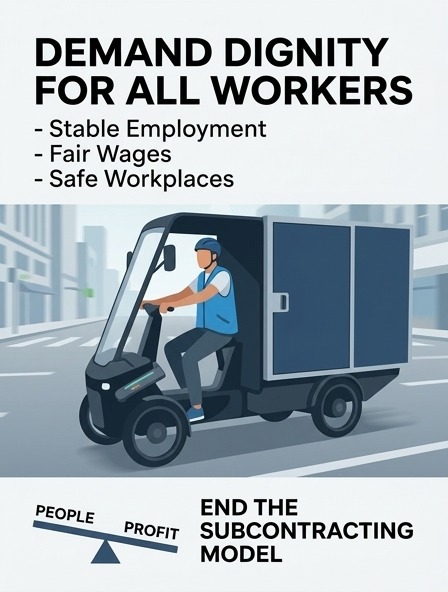
In a powerful surge of social media activism, workers, labor advocates, and everyday citizens are voicing a growing demand: it is time to put an end to the subcontracting model that prioritizes profits over people. This approach, critics argue, strips workers of dignity, stability, and safety—all essential for a fair and sustainable economy.
The subcontracting system, often referred to as “outsourcing” or “contract work,” has become a common practice among major corporations across industries ranging from manufacturing to retail and logistics. While it may offer companies short-term financial gains, critics say it comes at a significant human cost. Workers employed through subcontractors frequently face unpredictable schedules, lower wages, limited access to benefits, and a lack of job security, creating a precarious environment that undermines their well-being and safety.
“The people who make these companies operate every day deserve dignity,” says labor activist Maria Gonzalez. “Instead of exploiting workers for profits, corporations should recognize their contributions by providing stable, safe, and respectful workplaces.” Gonzalez’s message echoes around social media platforms, sparking widespread discussions about the need for reform.
Many workers have shared personal stories illustrating the disparities. A former subcontracted warehouse worker recounts how constant pressure to meet quotas was compounded by inadequate safety equipment, increasing the risk of injuries. Others describe how irregular schedules make it difficult to maintain family life or access healthcare. These testimonials highlight systemic issues embedded within the subcontracting model.
Advocates argue that companies benefit tremendously from subcontracting, but their workers often bear the hidden costs. By outsourcing labor, firms can dodge responsibilities related to wages, benefits, and workplace safety regulations. This practice has drawn criticism for incentivizing a race to the bottom, where the pursuit of profit trumps fundamental rights and protections.
Calls for change are gaining momentum. Several grassroots campaigns and labor unions are pushing for legislation that restricts or bans the widespread use of subcontracting in sensitive industries. They argue that genuine stability, dignity, and safety for workers should no longer be sacrificed for corporate gain.
Legal experts note that shifting away from subcontracting requires comprehensive policy reforms, including stronger enforcement of existing labor laws and incentives for companies to hire directly. Meanwhile, consumers and shareholders are increasingly demanding accountability, making it clear that sustainable business practices must include fair treatment for the workforce.
The message from social media is clear: it’s time to rethink the priorities of the modern economy. The future should be one where workers are valued not just as cogs in a machine but as essential partners in economic success—worthy of dignity, stability, and safe working conditions.
Where to Learn More
- Subcontracting and Worker Rights: Challenges and Reforms – Economic Policy Institute
- Ending the Subcontracting Culture: A Path Toward Worker Justice – Cornell ILR School
- The Fight to End Subcontracting and Restore Worker Dignity – The Guardian
- How Subcontracting Harms Workers—and What Can Be Done – The New York Times