
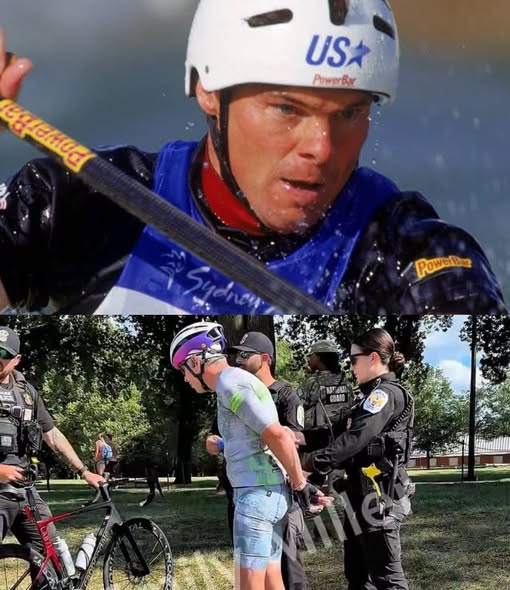
In a dramatic twist amid ongoing political and legal turmoil in Washington, 67-year-old Olympian David Hearn faces a federal felony charge after supposedly damaging a historic reflecting pool near the Lincoln Memorial. Prosecutors, associated with the Trump administration, have requested a sentence of **up to ten years in prison** for Hearn, a lifelong waterman who represented the United States in three Olympic canoeing events.
The incident, which took place on June 19, has ignited widespread controversy. Hearn, who was on a long bike ride that day, stopped at the iconic memorial when he noticed a fragment of the pool’s peeling liner floating loose. Concerned, he reached in to feel it, an act he insists was neither vandalism nor malicious—simply an individual investigating potential damage. “I didn’t vandalize anything,” Hearn told the Washington Post.
He explains that by the time he realized what was happening, he was quickly handcuffed and detained by National Guard troops and Park Police, held for five hours.
This arrest stands in stark contrast to the pool’s troubled history. Originally renovated as part of Donald Trump’s ambitious project to beautify Washington for the city’s 250th anniversary, the $14 million facelift was plagued from the start. Weeks after its reopening, the pool turned green with algae and began shedding its sealant, reportedly after crews introduced hydrogen peroxide to combat the bloom. Photographs of the peeling liner circulated widely, but instead of accepting fault, Trump and his administration blamed “sabotage,” claiming vandalism involving a razor and a 350-foot gash—stories that the authorities later dropped.
Fast forward to Thursday, and the narrative took a sharply different turn. Trump-installed Washington prosecutor Jeanine Pirro announced a grand jury indictment, charging Hearn with damaging roughly two square feet of the pool’s liner—a less-than-$2,000 repair—despite evidence suggesting the liner had been deteriorating long before Hearn’s visit. Pirro described the incident as a “violent, two-handed, bare-handed attack,” a characterization strongly disputed by Hearn’s defense.
Hearn’s lawyers condemned the case as a “concocted narrative” designed to scapegoat an innocent man while failing to address the government’s own neglect of the pool. During a press conference, Pirro repeatedly insisted that Hearn caused the damage, despite being confronted with video footage showing the peeling liner before June 19. When pressed about the disproportionate focus on the individual, Pirro pivoted, asking, “Are you really talking about January 6?”
Ironically, on the night of Hearn’s arrest, the U.S. government prepared to celebrate American freedom with a record-breaking 860,000 fireworks illuminating the same pool area—the scene of this controversial indictment. Critics argue that the authorities’ emphasis on prosecuting Hearn exemplifies a troubling double standard, especially given the pardoning of many January 6 rioters who caused millions in damages at the Capitol.
This incident raises critical questions about justice, accountability, and political motives in a polarized nation. As Hearn’s legal fight continues, the story remains a stark reminder of how missteps in government projects can escalate into politicized criminal cases.