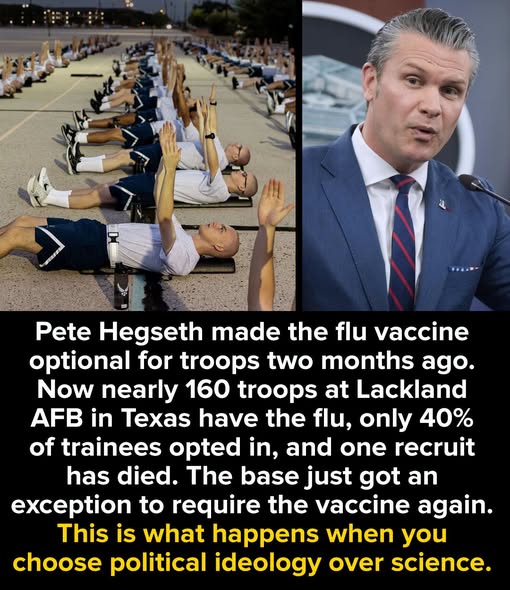
In a striking development at Lackland Air Force Base in Texas, nearly 160 military personnel have contracted the flu within the past two weeks, raising alarms among health officials and commanders. The surge in illness comes just months after the Air Force’s decision to make the flu vaccine optional for new recruits, a move that appears to correlate with a significant decline in vaccination rates.
Two months ago, Pete Hegseth, a prominent military advocate and commentator, highlighted this policy change via social media, noting that the Air Force had made the influenza vaccine optional for its troops. While the decision was touted as a step toward personal choice and autonomy, critics warn that it may be inadvertently fueling preventable outbreaks among service members.
According to recent reports, only about 40% of the approximately 400 trainees at Lackland AFB opted to receive the flu shot. This low vaccination rate is being closely scrutinized by public health officials, especially as the current flu season intensifies across the country. The outbreak has led to the quarantine of several units and the temporary postponement of training exercises, highlighting the serious impact that vaccine hesitancy can have within military communities.
Military health experts emphasize that vaccines are a critical component of disease prevention, especially in close-quarter living environments like military training facilities. The lack of immunity among a significant portion of the trainees leaves these populations vulnerable to severe illness, and potentially, the spread of the flu to other military bases and civilian communities.
Commander of Lackland AFB, Colonel James Peterson, stated, “Our priority is the health and readiness of our personnel. While personal choice is a fundamental right, we also have an obligation to ensure a safe environment. The low vaccination uptake has unfortunately contributed to the current outbreak.” He further emphasized that ongoing health protocols, including increased sanitation and medical support, are being implemented to curb the spread.
This situation underscores a larger debate about vaccine mandates versus individual choice within military and civilian populations. Critics argue that making vaccines optional amid significant disease outbreaks could undermine collective health efforts, particularly in environments where infection spreads rapidly.
As the flu season continues, military officials and health authorities are urging service members to consider vaccination seriously. The recent outbreak at Lackland serves as a stark reminder of the risks associated with lower vaccination rates and the importance of herd immunity in maintaining readiness and protecting lives.
Where to Learn More
- Air Force Makes Flu Vaccine Optional Amid Outbreaks – Military.com
- CDC: Flu Prevention in Military Populations – Centers for Disease Control and Prevention
- NPR: Flu Outbreak Raises Concerns at Lackland AFB – National Public Radio
- Health.mil: Vaccination and Readiness in Military Settings – U.S. Department of Defense