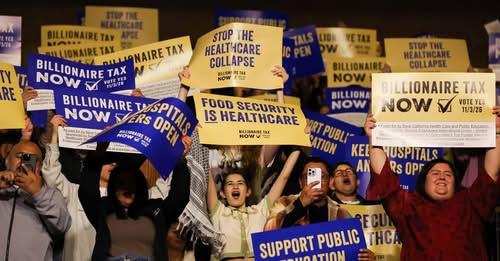
In a startling turn of events, efforts led by billionaire-backed politicians like California Governor Gavin Newsom nearly succeeded in blocking crucial wealth tax legislation aimed at addressing economic inequality and funding vital public services. This recent development has ignited a fierce debate about the influence of the ultra-wealthy in shaping policy and the pressing need to impose taxes on the richest Americans.
Proponents of the proposed wealth tax argue that simply asking billionaires to contribute a fair share is essential for a functioning democracy and a fair economy. However, opponents—many backed by billionaire interests—argue that such taxes are harmful to economic growth and competitiveness. What’s revealing in this debate is the fact that billionaire influence appears to sway legislation, often to the detriment of ordinary citizens.
This episode underscores a critical point: the ultra-wealthy and the politicians they back wield significant political power to shape legislation that preserves their interests. When initiatives designed to curb inequality nearly get thwarted by billionaires’ influence, it becomes a compelling argument for why we must implement progressive taxes on the wealthiest Americans.
The recent legislative battle illustrates how difficult it is to pass meaningful wealth taxes without significant opposition. Wealthy donors and billionaires often fund political campaigns, lobby efforts, and political groups that seek to block policies seen as threatening to their amassed riches. Critics argue that without taxing billionaires, addressing income disparity and funding essential social programs will remain out of reach.
Counter to claims of economic harm, evidence suggests that equitable tax policies can bolster the economy by providing governments with funds needed for infrastructure, healthcare, education, and climate initiatives. These investments, in turn, benefit society at large, creating jobs and fostering sustainable growth. Yet, the resistance from billionaire-backed factions shows how entrenched opposition remains.
This controversy reveals a fundamental truth: billionaires have an outsized role in shaping policies that affect everyone. Their ability to influence legislation effectively shields their fortunes from fair taxation. This is precisely why proponents argue that abolishing loopholes and imposing a fair, progressive wealth tax is essential for a just society.
In essence, the near-success of efforts to block wealthy taxation adds fuel to the call for reform. It demonstrates that if we are to truly address inequality, the influence of money in politics must be curbed, and the ultra-wealthy must contribute their fair share. This confrontation between economic fairness and political influence underscores the urgency of implementing robust tax policies targeting the ultra-rich.
Where to Learn More
- How Billionaires Use Loopholes to Avoid Taxes – ProPublica
- The Fight Over Wealth Taxes in State Legislatures – The New York Times
- Why a Wealth Tax Is Critical for Reducing Inequality – Council on Foreign Relations
- The Case for Taxing the Ultra-Rich – The Economist