
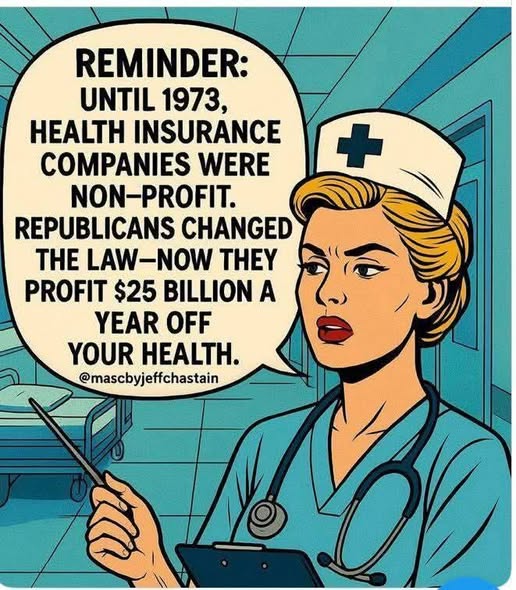
Imagine a healthcare system where the primary goal was *care*, not *profit*. Surprisingly, that was the reality before 1973, when health insurance companies operated as non-profit organizations. Back then, their purpose was to help Americans protect themselves from medical expenses, not to maximize shareholder dividends. But a pivotal legal shift changed the landscape dramatically, paving the way for today’s multi-billion-dollar industry built on patients’ suffering.
According to social media recounting and historical accounts, until 1973, health insurance companies were largely non-profit entities. Their goal was to pool risk and provide financial security for policyholders, much like other community-focused organizations. They earned enough to cover administrative costs and modest profits, but they weren’t driven by the relentless pursuit of profit that characterizes modern insurance giants.
The turning point came with legislative changes championed by various political forces, notably attempts to deregulate the industry. The motivation, critics argue, was to create an environment where profit could flourish, aligning the healthcare industry’s incentives with shareholder value rather than patient well-being. Since then, the industry has ballooned into a roughly $25 billion-a-year enterprise, fueled by premiums, administrative fees, and the denial of claims—often at the cost of patient care.
Today, health insurance companies are often criticized for prioritizing profits over people. Plenty of examples highlight policies that deny coverage, inflate costs, and promote unnecessary treatments—all practices that tend to inflate profits but diminish the quality and accessibility of healthcare. Many wonder: what if compassion, not profit, was the guiding principle of healthcare?
The social media post that ignited this discussion urges us to reconsider the status quo: “Imagine what healthcare could look like if compassion came before profit.” It’s a compelling question, especially as millions face skyrocketing medical bills and limited access to essential services.
Understanding the history helps clarify how profit motives became embedded in the healthcare system. Some advocates argue that systemic reforms, such as moving toward universal healthcare or non-profit models, could restore the original intent—prioritizing patient well-being over profits.
As public awareness grows, discussions around the best path forward continue to gain traction. Whether through policy reform or grassroots activism, many believe that a healthcare system rooted in compassion could offer better outcomes for all, rather than lining the pockets of big corporations.
Where to Learn More
- History of Health Insurance in America – History.com
- Why Profit Matters in Health Insurance – NBC News
- The Profit Motive in Health Insurance – Commonwealth Fund
- How the Profit Motive Shapes Healthcare – Health Affairs