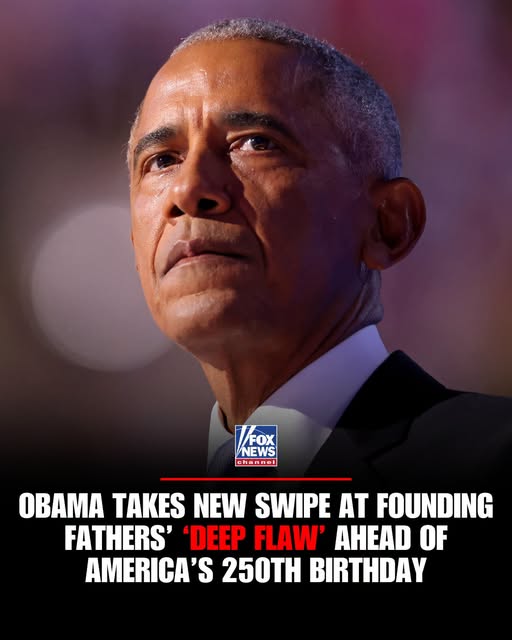
As the United States approaches its historic 250th Independence Day, former President Barack Obama has sparked renewed discussion on a complex and often uncomfortable aspect of America’s founding. In a recent interview, Obama emphasized that the nation’s revered founders, including George Washington, were individuals of great achievement but also flawed by their participation in slavery.
“I think sometimes we get confused in thinking that these two stories are separate,” Obama said. “They’re intertwined, right? Which is why it’s possible for me to be a great admirer of George Washington, and also acknowledge he was a slaveholder.” Obama’s comments come at a time when national conversations about the legacy of slavery and systemic racism are increasingly prominent, especially in light of recent debates over statues, historical memory, and how America teaches its foundation stories.
In the interview, Obama pointed out that many of the founding fathers, revered for their roles in establishing the United States as an independent nation, were also part of a society built upon the institution of slavery. He described this contradiction as a “deep flaw” at the heart of America’s founding principles.
“Our founders laid down ideals of liberty, equality, and justice,” Obama said. “But they also owned slaves, and that contradiction has shaped our history and continues to influence our society today.”
As part of his message, Obama indicated that understanding this complex history is crucial for Americans seeking to reconcile the nation’s ideals with its historical realities. He argued that recognizing the flaws in the founding story does not diminish its importance but instead provides an honest foundation for growth and progress.
With Independence Day just days away, Obama’s reflections have sparked conversations across social media and news outlets. Many see his remarks as an important reminder that celebrating America’s founding must include grappling with its imperfections—not ignoring them. The discussion resonates especially with younger Americans, many of whom are demanding a more comprehensive view of history that includes the voices and experiences of marginalized communities.
The timing of Obama’s comments underscores the ongoing debate about how history should be remembered and taught. As the nation prepares for its 250th birthday, these reflections serve as a reminder of America’s ongoing journey to live up to its founding ideals.