
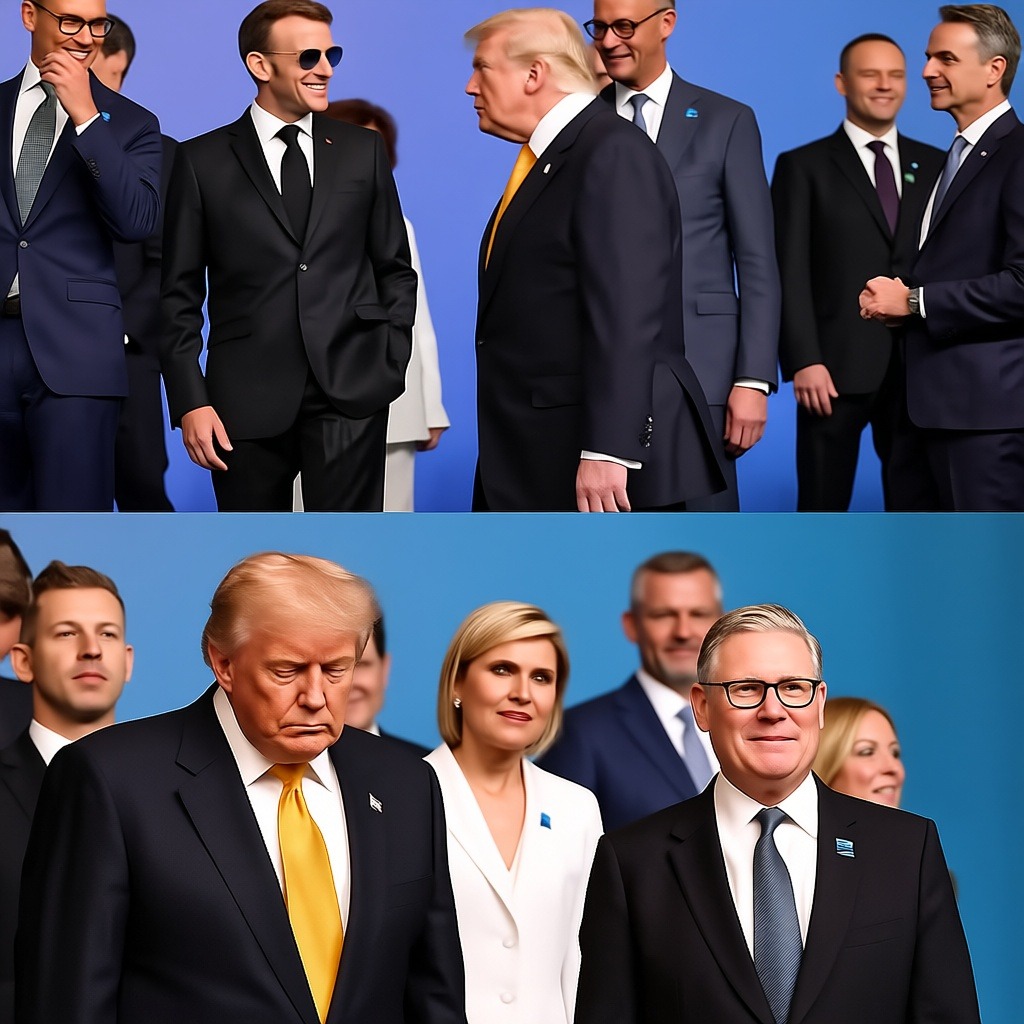
In what many observers are calling a display of unprecedented chaos, former President Donald Trump dominated the recent Ankara summit with a series of outbursts and provocations that left U.S. allies scrambling to manage a leader perceived as unpredictable and difficult to govern.
From the outset, Trump’s behavior was anything but diplomatic. He arrived at the summit in Turkey reportedly touting his close relationship with Turkish President Recep Tayyip Erdoğan, even calling their “chemistry” a reason he showed up at all. Expressing unwavering admiration, Trump announced he had lifted U.S. sanctions on Turkey and dangled the prospect of selling F-35 fighter jets—an open display of diplomatic favoritism that seemed to elevate Erdoğan’s autocratic stance while dismissing the democratic values of many other allies.
More startling were Trump’s comments directed at other NATO partners. Before the summit even began, he posted a social media image mocking Italy’s Giorgia Meloni with a caption suggesting she needed a “RESTRAINING ORDER.” He labeled Spain a “terrible partner in NATO” and threatened trade ramifications, demonstrating a blatant disregard for longstanding alliances.
Perhaps most egregiously, Trump reiterated his bizarre desire for the U.S. to take control of Greenland from Denmark, a nostalgic echo of conspiracy theories and reckless diplomacy. Danish Prime Minister Mette Frederiksen responded firmly, asserting that her country would defend every inch of its territory and that Greenland was off-limits to American acquisition. Her unequivocal stance visually reinforced that some allies would push back against Trump’s provocative rhetoric, even as the cameras rolled.
Meanwhile, European leaders resorted to damage control. Dutch Prime Minister Mark Rutte, dubbed “the alliance’s chief Trump flatterer” by European reporters, spent much of the summit feeding Trump compliments about defense spending. His role seemed to be keeping the American president distracted enough to stay within the confines of the summit, a strategy highlighting how the usual diplomatic dance was replaced by a high-stakes game of appeasement.
On a more strategic level, the Pentagon quietly informed allies of plans to review U.S. troop levels in Europe over the coming six months—a move seen as an attempt to quietly withdraw or reduce American military commitments in the region, potentially leaving a void that European nations and Canada are beginning to fill themselves. A coalition emerged among European members and Canada to initiate a NATO naval mission independent of U.S. forces, signaling a shift toward regional self-reliance amid the uncertainty.
Amidst the chaos, French President Emmanuel Macron’s calm and confident demeanor stood out starkly. Worn-in aviator sunglasses accompanying him throughout the summit, Macron appeared composed and in control, turning what could have been a tense gathering into a display of European maturity. His nonchalant attitude served as a stark contrast to Trump’s petulance—Macron moved through Ankara like a leader who believes he’s shaping the continent’s future, not merely reacting to it.
While Trump sat pouting and complaining to reporters, the other leaders quietly laid plans to handle regional security without American intervention, hinting at a reshaping of NATO’s future—one less dependent on the whims of a single leader, however influential he may be. The summit made clear that the old alliance diplomacy is evolving, perhaps irreversibly, as the world’s multiple power centers realign in the face of American unpredictability.