
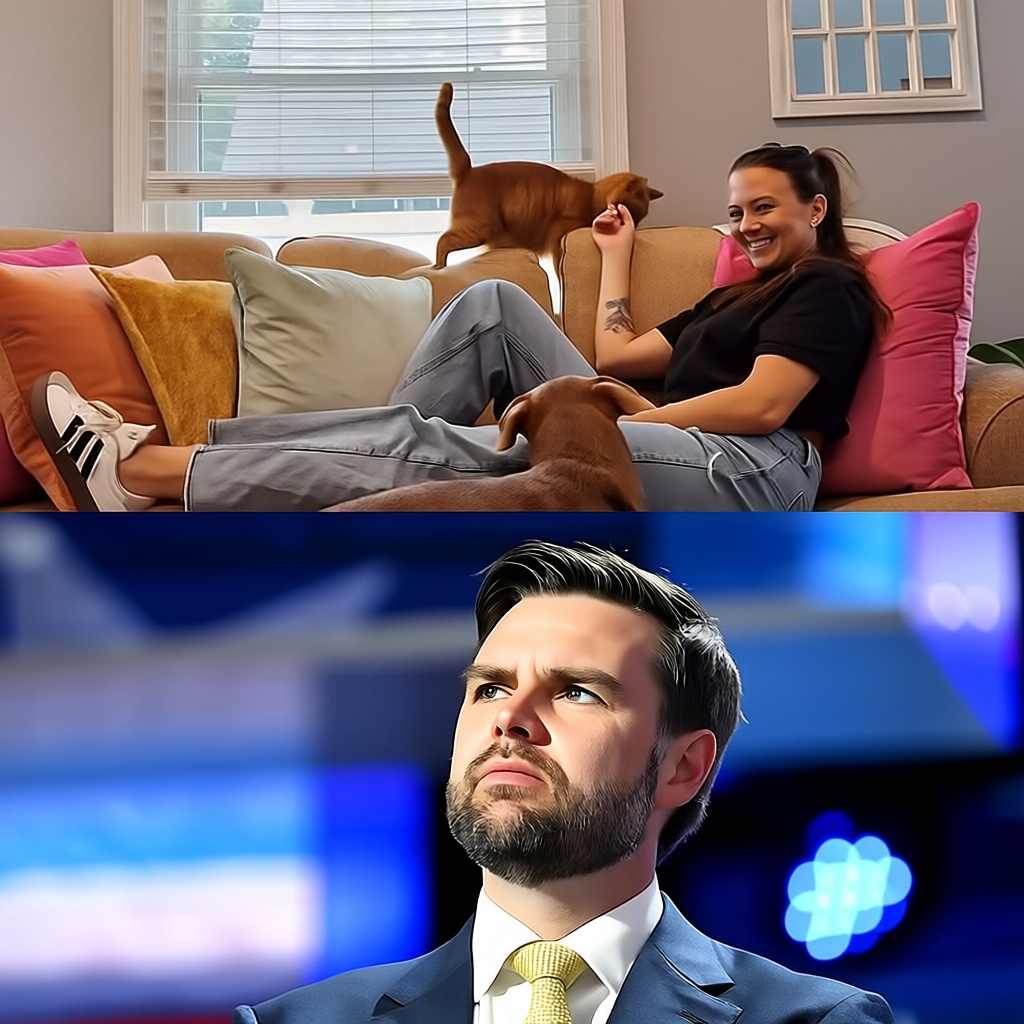
In a development that has quickly gone viral on social media, a Massachusetts woman’s attempt to attend a White House event turned bizarrely confrontational, leading to a federal lawsuit and raising questions about free speech and government overreach. Amanda McGonigle, 37, known for her popular Instagram account CatsOnACouch, which mockingly targets Vice President Kamala Harris, alleges she was unlawfully targeted and detained by the Secret Service simply for attending a public event as a joke.
The controversy stems from her participation in an anti-fraud task force event in Bangor, Maine, on May 14. McGonigle, an outspoken cat meme enthusiast, followed all rules and received confirmation from Vice President Vance’s office, with event materials bearing the White House seal. Yet, as she approached the airport line, things took a dramatic turn.
According to her account, five heavily armed Secret Service agents stepped forward, knowing her by name. They pulled her aside, prevented her friend from entering, and informed her that the event had suddenly become “private.” The agents reportedly told her, “We know where you stand,” a phrase now central to her federal lawsuit.
McGonigle’s case has captured national attention, not just for its bizarre spectacle but for its implications on First Amendment rights. The American Civil Liberties Union of Maine has filed suit against the White House and the Secret Service, alleging that McGonigle was discriminated against based on her viewpoint—the content of her speech and her online persona.
The lawsuit, filed Tuesday, describes the incident as viewpoint discrimination and First Amendment retaliation, arguing that a taxpayer-funded public event was closed off to McGonigle solely because she expressed her opinions anonymously and humorously through her memes. The ACLU’s legal team pointed out that her posts about Vance are “purr-tected speech” within the bounds of the First Amendment, emphasizing that humor and satire are protected expressions.
Lawyers took the opportunity to include cat-themed puns, stating in their filing, “The Secret Service’s actions have cat-aloged an unacceptable breach of free speech—no joke is too small for scrutiny.” Furthermore, they seek a federal order preventing any future blacklisting or monitoring based on her political parody posts.
Remarkably, McGonigle remains undeterred. She declared, “It’s well within my rights to say, ‘I think JD Vance is an unlikeable idiot.’” She noted she was nearly a million followers short of overtaking Vance’s online presence when the incident occurred, suggesting the event may have inadvertently catapulted her to even greater visibility.
The Secret Service declined to comment publicly on the matter, and the White House has yet to respond. Yet, the episode underscores mounting concerns about government overreach, especially when federal agencies appear to deploy armed agents for issues that seem far removed from national security—like memes and online satire.
Analysts warn that if such actions are allowed to stand, it could set a dangerous precedent for suppressing dissent and free expression in digital spaces. As McGonigle’s case unfolds, it may serve as a litmus test for free speech rights against government intimidation—proving once again that in the age of social media, even jokes can get you into hot water with the authorities.
In the meantime, McGonigle’s fight highlights a broader debate about the limits of government power and the importance of protecting online satire, meme culture, and political humor. As she continues her legal battle, her story reminds us that sometimes, a good laugh can be a powerful act of resistance.
Where to Learn More
- Federal Lawsuit Over Secret Service Menace: The Full Complaint – LegalNews Daily
- Social Media, Free Speech, and Democracy: When Memes Matter – The Verge
- Secret Service and Online Satire: The New Frontline? – Politico
- First Amendment Under Fire: Government’s Role in Censorship – The Atlantic