

UPDATED Nov. 21, 2026, 12:39 p.m. ET: Added details from the court’s opinion on what the ruling means for pregnant workers, what else in the $1.7 trillion law could now face challenges, and what comes next at the Supreme Court.
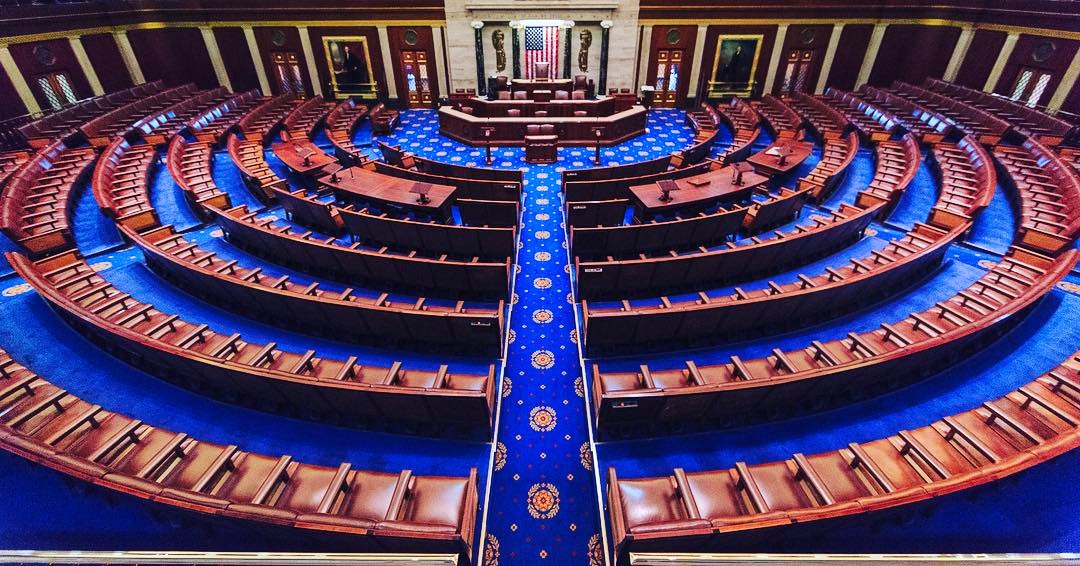
A federal appeals court ruled Friday that the House of Representatives violated the Constitution when it passed a $1.7 trillion government funding bill in December 2022, because hundreds of lawmakers were counted as “present” by proxy instead of showing up in person.
The full New Orleans-based 5th U.S. Circuit Court of Appeals split 9-8 in the case, State of Texas v. Blanche. The majority held that the Constitution’s Quorum Clause requires a majority of House members to be physically present to do business, and that a pandemic-era rule letting absent members record their presence through a colleague did not count.
What the court decided
The ruling upholds an injunction that outgoing Republican Texas Attorney General Ken Paxton won in 2024. It bars the Justice Department and the Equal Employment Opportunity Commission from enforcing one part of that 2022 spending package, the Pregnant Workers Fairness Act, against the state of Texas.
That law requires employers to provide reasonable accommodations to pregnant workers, such as access to water, more bathroom breaks and limits on heavy lifting. The court’s order covers only Texas and only that provision, not the entire funding bill.
Judge Cory Wilson, a Trump appointee, wrote for the majority that the Quorum Clause’s “text, context, original understanding, and unbroken historical application all indicate that Members of Congress must be present for quorum purposes.”
“Proxy presence” does not count. While the chambers of the legislature have much discretion regarding their rules of procedure, the Quorum Clause’s constraints on congressional power cannot be circumvented by congressional fiat.
Judge Cory Wilson, writing for the majority
How the House got here
In May 2020, early in the COVID-19 pandemic, the House adopted a rule allowing members to vote and record their presence by proxy. Democrat Nancy Pelosi, then the speaker, helped put the emergency rule in place, Reuters reported. The House renewed it in 2021, and it was dropped when Republicans took control of the chamber after the November 2022 elections. The Senate never used proxy voting; senators kept voting in person.
Before that handover, the House used the rule to pass the Consolidated Appropriations Act of 2023 on Dec. 23, 2022. The vote was 225-201, with one member voting “present.” According to the dissenting opinion, 205 of the votes were cast by members in person and 226 were cast by proxy, meaning fewer than the 218 members needed for a quorum were physically on the floor.
At the time, Rep. Chip Roy of Texas noted that a physical quorum was not present and reserved the right to object. The presiding officer answered that members voting by proxy were counted toward the quorum under House rules. The Senate passed the bill, and President Joe Biden signed it into law.
A sharp dissent
Judge James Graves, an Obama appointee, wrote the main dissent, joined by six other judges. He called the ruling “illogical, inexplicable, and invalid,” Reuters reported, and said the majority read a physical-presence requirement into the Constitution that is not there.
Graves also questioned why, if the whole law was passed unconstitutionally, the court would only block one piece of it.
There is no explanation offered to explain why, if the entirety of the statute was unconstitutionally passed, this court’s judgment should be limited only to one small sliver of the multi-trillion dollar bill.
Judge James Graves, in dissent
Judge Catharina Haynes dissented separately, saying in a brief note that she did not think it was appropriate to “throw out the Federal House of Representatives in this arena.”
Why it could matter far beyond Texas
The 2022 spending package was enormous. Beyond funding the government, it carried a long list of other measures, including the ban on TikTok on federal government devices and the Electoral Count Reform Act, which rewrote the rules for how Congress counts presidential electoral votes.
Bloomberg Law reported that the ruling could lead to new challenges to other parts of the package and is certain to be appealed to the Supreme Court. Legal scholar Jonathan Adler, writing at the Volokh Conspiracy, said the court’s reasoning “would provide a basis for invalidating everything else in the omnibus bill,” but added: “I doubt this decision will stand.”
What happens next
Earlier in the case, a three-judge 5th Circuit panel had sided with Congress and found the proxy rule was within the House’s authority. That decision was wiped away when the full court agreed to rehear the case.
There is also a political wrinkle. Paxton leaves office in January after losing his U.S. Senate race, and a Democrat won the election to succeed him as Texas attorney general. That means Republicans will no longer control the office that brought the challenge, and it is not clear whether the state will keep pressing the case if it reaches the Supreme Court.
The Justice Department, which defended the law, and Paxton’s office did not respond to Reuters’ requests for comment Friday.
What it means for pregnant workers
The Pregnant Workers Fairness Act requires employers to provide reasonable accommodations to pregnant workers. Texas is covered by the law as an employer, and a lower court found the state was harmed by “unrecoverable compliance costs it bears as a regulated employer,” along with the burden of defending federal investigations and lawsuits.
Under Friday’s ruling, federal officials remain barred from enforcing the law against the state of Texas. The court stressed that its decision “extends no further than affirming the relief awarded by the district court,” which applied only to the PWFA and only to Texas. U.S. District Judge James Wesley Hendrix had first ruled for Texas in 2024.
Judge James Graves Jr., writing for seven dissenting judges, said Texas was “attempting to veto Congress’s protections for pregnant workers and new parents while retaining millions in federal funding” from the very same law. Texas, he wrote, had “accepted the vast majority of the funds that Congress appropriated to it” while challenging only “the portion of the bill providing protections for pregnant women and workers.”
What else is in the $1.7 trillion law
That is what worries critics most. If the House did not validly pass the Consolidated Appropriations Act of 2023, the same reasoning could be aimed at the rest of it. In his dissent, Graves pointed out that the package also includes health, mental health and education benefits for veterans, including the GI Bill National Emergency Extended Deadline Act and the Joseph Maxwell Cleland and Robert Joseph Dole Memorial Veterans Benefits and Health Care Improvement Act.
There is no explanation offered to explain why, if the entirety of the statute was unconstitutionally passed, this court’s judgment should be limited only to one small sliver of the multi-trillion dollar bill.
Judge James Graves Jr., in dissent
Bloomberg Law reported that the ruling could lead to new challenges to other parts of the fiscal 2023 spending package. Graves also noted that the majority did not explain how Texas could block the pregnant workers law while keeping the money it received under the same act.
Next stop: the Supreme Court
The decision is widely expected to be appealed to the U.S. Supreme Court. The vote among the 17 judges was 9-8: Judge Cory Wilson wrote for the majority, Graves wrote the main dissent joined by six colleagues, and Judge Catharina Haynes dissented separately. Only the House used proxy voting during the pandemic; the Senate kept voting in person.
Who carries the case forward on Texas’s side is now an open question. A Democrat won the race for Texas attorney general this month, and starting in January Republicans will no longer control the office that brought the challenge.
Viralnado will keep updating this story as it develops.
This report draws on the 5th Circuit’s opinion and dissents, with reporting from Reuters, Bloomberg Law and The Washington Post.