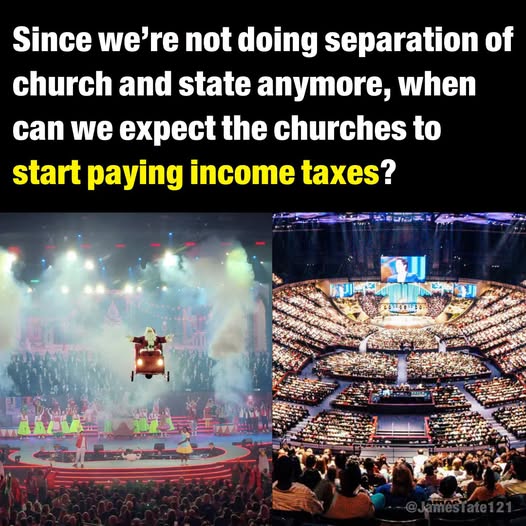
The longstanding principle of separation of church and state has been a cornerstone of American constitutional law and societal values for over two centuries. However, recent social media discussions have ignited a debate questioning whether this separation is still being upheld fully in practice. A viral post asking, “Since we’re not doing separation of church and state anymore, when can we expect the churches to start paying income taxes?” reflects a growing buzz around the complex relationship between religious institutions and government regulation.
Historically, religious organizations in the United States have enjoyed significant tax-exempt status under Section 501(c)(3) of the Internal Revenue Code. This exemption recognizes their charitable purposes and considers their contributions as nonprofit entities. Nonetheless, critics argue that these religious institutions benefit from considerable financial advantages without the same tax obligations faced by other non-profit or for-profit organizations.
The debate hinges on whether religious groups should be subject to income taxes, especially given that many large churches, mosques, and synagogues generate substantial revenue through donations, events, and associated enterprises. While some advocates contend that removing tax exemptions could fund essential public services or reduce government subsidies, others defend religious institutions’ rights to financial privacy and their roles in community service.
The viral social media question touches on broader concerns about the erosion of the constitutional principle that led to the establishment and reinforcement of separation of church and state. Critics argue that in recent decades, religious organizations have gained influence on policy-making and public opinion, blurring the lines of neutrality. The conversation intensifies when political figures suggest reevaluating the tax-exempt status of churches or advocate for increased scrutiny and regulation of religious nonprofits.
Legal experts note that revoking tax-exempt status would require legislative action and face significant legal challenges. The First Amendment protections for religious freedom and free exercise are often cited as barriers to such measures. Moreover, many religious leaders and organizations emphasize their volunteer-driven missions and social contributions, arguing that taxation could impede their community work.
Public opinion remains divided. Some see the potential for fairer taxation as a step towards equality among all organizations benefiting from tax breaks, while others perceive it as an infringement on religious freedom. As the social media discourse continues to spread, policymakers are also paying attention, weighing the economic and constitutional implications of any reforms.
Ultimately, the question remains: *When—and if* — the U.S. will revisit the tax status of religious institutions? The ongoing debates highlight the delicate balance between respecting religious freedoms and ensuring equitable contributions to public resources.
Where to Learn More
- IRS Charitable Organizations – Understanding Tax-Exempt Status – Internal Revenue Service
- The Future of Religious Tax Exemptions – Brookings Institution
- Should Churches Be Taxed? – Constitution Center
- Debate Grows Over Tax-Exempt Status of Religious Organizations – NPR