
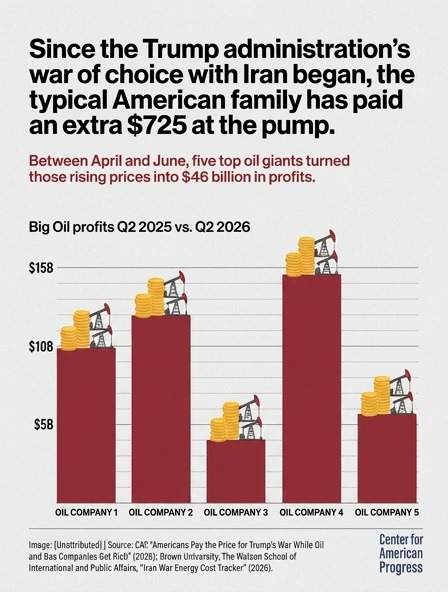
As millions of Americans continue to grapple with soaring gas prices at the pump, a new wave of scrutiny targets the source of this pain: Big Oil. Despite widespread hardship faced by everyday families, the world’s largest oil corporations are celebrating unprecedented profits, fueling concerns of economic inequality and corporate greed.
Recent financial reports reveal a startling trend: five major oil companies—ExxonMobil, Chevron, Shell, BP, and ConocoPhillips—have more than doubled their second-quarter profits compared to the same period last year. This surge comes amid ongoing global tensions and geopolitical conflicts linked to policies and actions during the Trump administration, which many analysts argue have contributed to the instability in energy markets.
But what does this mean for the average American? For many, the hike in gas prices has reached a point where it impacts daily life—commuting, groceries, family vacations, and even essential services are all affected. Meanwhile, the profits of Big Oil companies continue to skyrocket, leading critics to accuse these corporations of exploiting the current circumstances for maximum financial gain.
According to the recent earnings reports, ExxonMobil’s profits soared by over 150%, while Chevron, Shell, BP, and ConocoPhillips each posted gains exceeding 100% compared to last year’s figures. These astonishing numbers starkly contrast the financial strain felt by consumers. Meanwhile, these companies have also announced record share buybacks and dividend payouts, reaffirming their commitment to rewarding shareholders at a time when average Americans are paying the price at the pump.
Many experts point to the ongoing geopolitical conflicts, including tensions in the Middle East and Russia-Ukraine war, which have disrupted global energy supplies. Additionally, critics argue that some policies initiated during the Trump era—such as deregulation and strategic energy independence efforts—have contributed to volatile markets and the current energy crisis.
Political voices across the spectrum are calling for a reevaluation of energy policies and more transparency around corporate profits. Some propose windfalls taxes on these record-breaking earnings, redistribution measures, or increased investment in renewable energy to prevent future crises rooted in fossil fuel reliance.
For everyday Americans, the rising costs at the pump are more than just inconvenient—they’re a reflection of a larger economic imbalance. As Big Oil continues to record massive profits, questions about corporate accountability, government regulation, and the future of energy equity remain at the forefront of public discourse.
Where to Learn More
- Major Oil Companies Post Record Profits in Second Quarter – Associated Press
- Analysis: Why Oil Major Profits Are Booming While Consumers Pay More at the Pump – Reuters
- The Rising Cost of Gas and Corporate Greed: What Americans Need to Know – The New York Times