
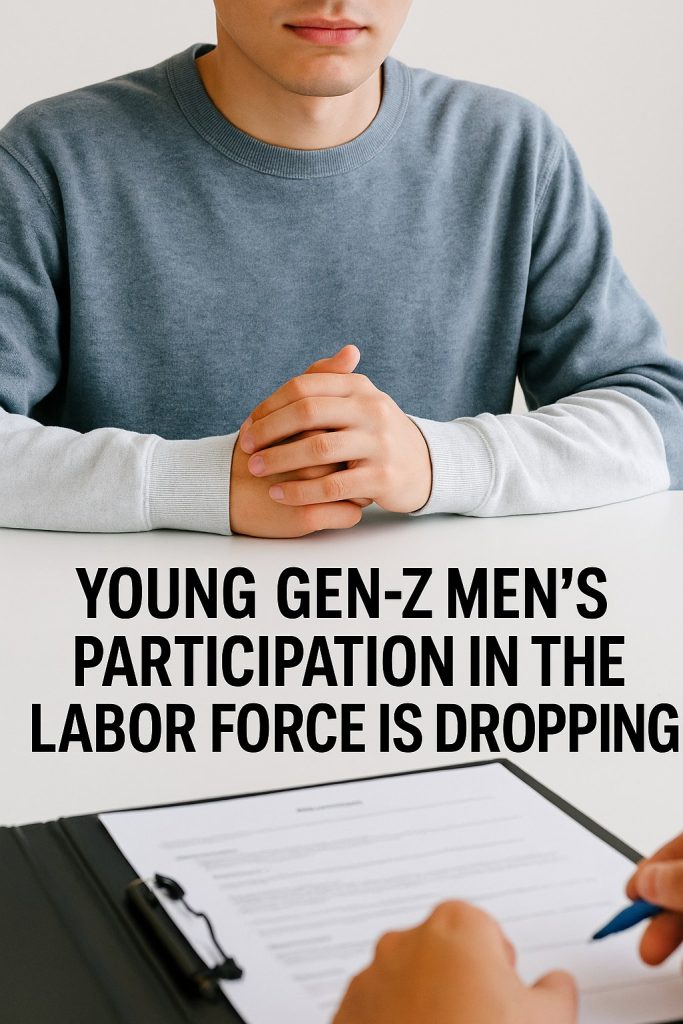
In an alarming trend emerging from recent statistics, young Gen-Z men are withdrawing from the American labor force at a pace faster than any other age or gender group. According to a report by Sara Estep for MSNBC, this decline has been evident since the early 2000s and raises questions about the broader implications for the economy and society.
The data reveals that the labor force participation rate among men aged 18 to 24 has dropped significantly, with many young individuals opting to forgo traditional employment paths. But why are these young men stepping back from work just as the economy is expected to rebound?
One major factor, as outlined by Estep, is the shifting societal expectations surrounding masculinity and work. Today’s young men are increasingly prioritizing personal well-being and mental health over financial achievement. The high pressure to succeed in a competitive job market can lead to anxiety and burnout, prompting some to disengage from the very workforce that once seemed indispensable.
Furthermore, the rise of technology and the gig economy has given young people unprecedented choices. Flexible work schedules and remote opportunities provide alternatives that appeal more resolutely to their lifestyle aspirations. Many individuals are exploring side hustles that allow for greater personal autonomy instead of conventional jobs that may seem unfulfilling.
Another critical issue to consider is the educational landscape. With increasing numbers of young men pursuing higher education, particularly in fields that may not have a direct correlation with immediate employment opportunities, there’s a continued hiatus from entering the workforce right after high school. The pursuit of degree paths often leads to prolonged educational experiences, especially in a society that now values advanced qualifications over just a high school diploma.
Moreover, shifting economic realities, coupled with lingering effects from the COVID-19 pandemic, have altered how many young people view work and stability. The pandemic disrupted traditional employment structures, driving many young individuals to rethink their career trajectories. With an increasing focus on sustainability and passion-driven work, young men are less likely to be drawn to full-time positions that they perceive as uninspiring.
Experts warn that this trend may have lasting economic consequences. As fewer young men engage in traditional labor, there could be a strain on industries that rely heavily on this demographic. Consequently, businesses may face challenges in recruitment and retainment, forcing them to adapt to a labor market that is rapidly evolving.
As this generational shift unfolds, society must consider how to bridge the gap between personal aspirations and economic necessity. Employers can encourage young men to join the workforce by fostering inclusive environments that prioritize mental health and work-life balance. By addressing these changes, the workforce can become a space where young Gen-Z individuals feel engaged, valued, and eager to contribute.
Where to Learn More
- Understanding the Decline of Young Men in the Labor Force – MSNBC
- The Effects of COVID-19 on Young Workers – Brookings Institution
- The Gig Economy: A New Work Paradigm – National Geographic
- Young Adults and Mental Health in the Workplace – Pew Research Center
- Rethinking Masculinity in the Modern Job Market – The Atlantic