
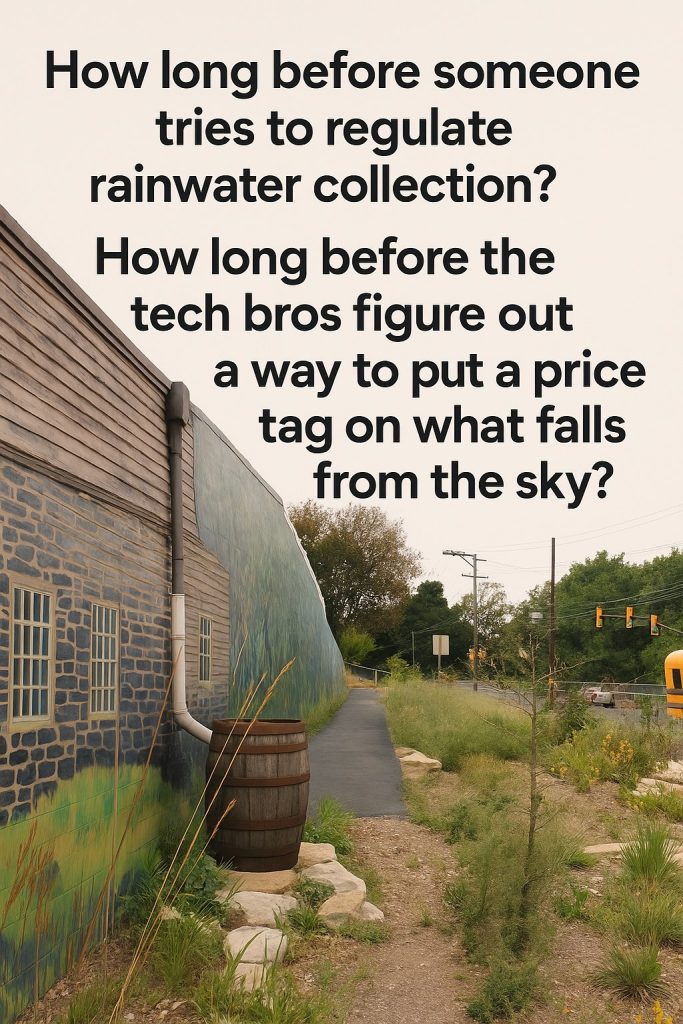
As climate change reshapes our weather patterns and water scarcity becomes a pressing issue in many regions, the conversation around rainwater collection is intensifying. A viral social media topic has sparked speculation and debate: How long before someone tries to regulate rainwater collection? And more provocatively, how long before “tech bros” figure out a way to put a price tag on what falls from the sky?
This discussion comes on the heels of increasing urban development and technological advancements that alter the very fabric of how we interact with our natural resources. In cities like Los Angeles and Seattle, where rainfall can be frequent but water shortages exist, residents have turned to rainwater harvesting as a sustainable solution. However, complications arise when regulatory frameworks attempt to keep pace with individual efforts.
Currently, regulations on rainwater collection vary significantly by state and locality. For example, in Colorado, it has only recently been legal for residents to collect rainwater, provided they comply with specific regulations. Other states have more lenient policies, while some municipal codes discourage or outright prohibit such practices.
This discrepancy raises a fundamental question: are we preparing to face a future where the collection of something as essential as rain could be subject to regulation or taxation? Social media users express their skepticism and concern, prompting discussions around environmental ethics and potential exploitation by profit-driven entities.
The fear isn’t unfounded; as private companies innovate within the water industry, there is an ever-present threat that they will seek to capitalize on natural resources, including rain. The rise of blockchain technology has enabled asset tokenization, which could offer entrepreneurs ways to monetize water collection effectively. Already, discussions resonate within tech circles about “water credits” or using decentralized ledgers to track usage and ownership of water rights, raising anxiety over future accessibility.
Supporters of rainwater harvesting argue that such regulations can bring about sustainability and conservation practices critical in managing water resources. However, critics warn that overregulation may lead to further privatization of natural resources, shifting control from the public sector into the hands of a few powerful entities, including tech innovators.
“The thought of needing a permit to collect rainwater is absurd,” shared one Reddit user in a popular thread discussing the topic. “Are we to pay for what nature provides? It’s a slippery slope.”
As the dialogue grows, some states are beginning to reflect on their rainwater policies in light of sustainability goals and public pressure. A balance must be struck between encouraging responsible resource utilization while safeguarding public access to essential supplies.
In the meantime, individuals searching for alternatives may need to consider how their local regulations fit into this larger narrative, as the relationship between nature and technology continues to evolve. The looming specter of monetizing rainwater is spurring debate on environmental ethics and regulation, ensuring this topic remains ripe for discussion.
Where to Learn More
- Rainwater Harvesting: A Guide for Homeowners – Natural Resources Defense Council
- How Tech is Revolutionizing Our Water Supply – Water Rhythms
- The Ultimate Guide to Rainwater Harvesting – TreeHugger
- The Future of Water: Collect and Sell It? – Progressive Forum