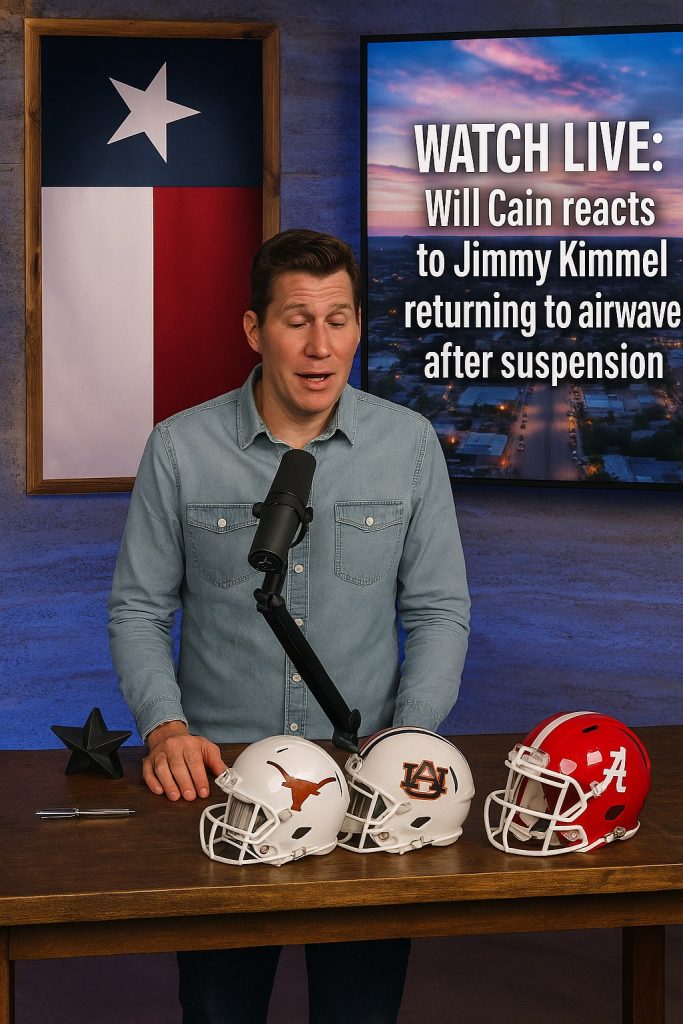
In a highly anticipated rebroadcast, comedian and late-night host Jimmy Kimmel made his return to the small screen this week after a brief suspension, drawing a flurry of reactions from fans and critics alike. Among those reacting is Will Cain, the outspoken commentator known for his sharp insights and often controversial opinions. Cain’s live commentary on Kimmel’s comeback has sparked discussions across social media platforms, making it a trending topic.
Kimmel’s return follows his decision to step back from hosting duties amid an ongoing controversy sparked by a comedy skit that many deemed inappropriate during a heated political climate. However, last night, the host brought his trademark humor back to the audience, delivering a monologue that mixed current events with self-deprecating jokes. For many, Kimmel’s style is synonymous with late-night television, making his hiatus feel unexpectedly long.
Will Cain took to his platform to discuss the implications of Kimmel’s return. In a live segment, he offered his perspective on the evolving landscape of comedy and audience tolerance. “Kimmel’s humor has always danced on the edge of controversy, but it’s intriguing to see how he navigates these waters post-suspension,” Cain commented. “It raises questions about what audiences are willing to accept from their comedians in this hyper-sensitive culture we live in.”
Cain’s insights resonated with many, pointing out that Kimmel’s approach often mimics the societal pulse. Observers noted that the late-night host adapted his comedic tactics during contentious times, striving for humor that bridges divides while still invoking critical thinking among his viewers.
The live watch party for Cain’s commentary quickly attracted an audience eager to dissect Kimmel’s first night back, leading to heated discussions on the kinds of jokes that are off-limits and those that still garner laughter. Cain suggested that while Kimmel’s return was celebrated, it was a reminder of the thin line comedians often walk. “Everyone loves to laugh, but the question remains: at what expense?” he added thoughtfully.
National opinion seems divided; while some appreciate Kimmel’s return and resilience in the face of backlash, others worry that comedians might hold back to avoid offending. Cain, a staunch advocate for free speech in comedy, argued that these tensions often lead to richer comedic material rather than censorship. “Great humor often comes from discomfort; it’s a reflection of real life,” he said.
As Kimmel settles back into his hosting role, conversations like the one sparked by Cain’s reactions underscore the ongoing dialogue about comedy, responsibility, and societal norms. Today, comedians everywhere continue to adapt to the shifting sands of cultural acceptance, ensuring that the landscape remains vibrant, albeit more contentious.
For many fans, Kimmel’s humor offers a sense of relief during today’s tumultuous times, while Cain’s commentary adds a layer of depth to the conversation about what we value in comedy. Will Cain’s thoughts serve as a significant piece in understanding how audiences might respond to Kimmel’s new comedic trajectory in the wake of his suspension.