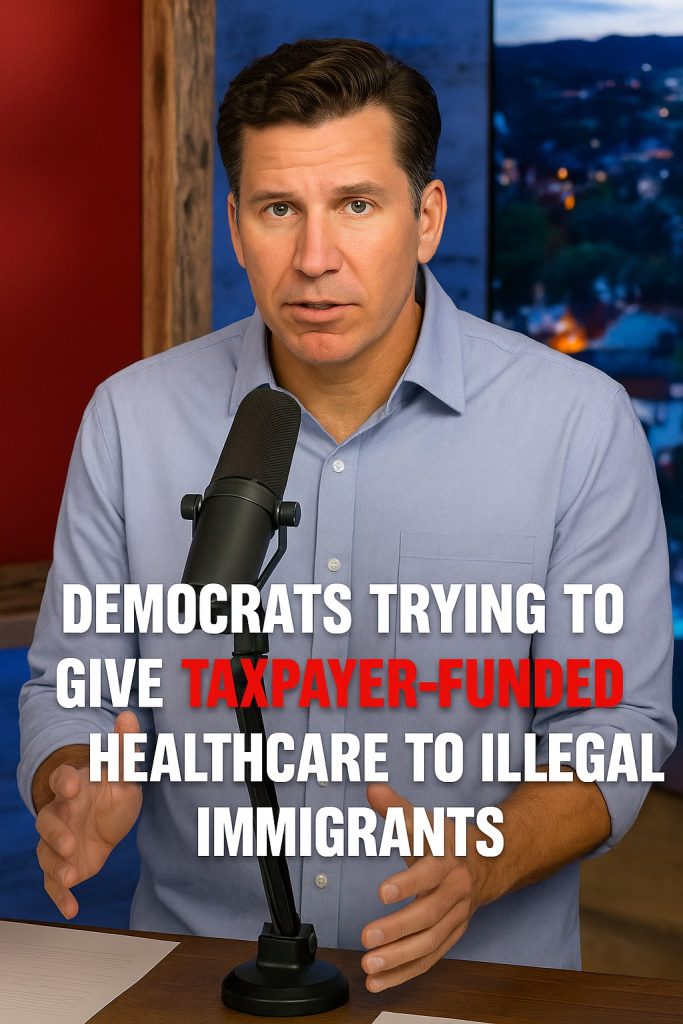
With the U.S. government facing the impending threat of a shutdown, media personality Will Cain is calling out Democrats, insisting they must “face the music” regarding federal funding for healthcare services supporting illegal immigrants. This controversial topic has stirred significant debate across social media platforms, igniting a conversation about the intersection of immigration policy, healthcare funding, and fiscal responsibility.
On a recent episode of his podcast, “Will Cain Country,” Cain emphasized that if Congress allows the government to shut down over tax dollars being allocated for healthcare for undocumented immigrants, the political responsibility lies squarely with the Democrats. “They need to own it,” he asserted, reflecting on the potential fallout from a government shutdown that could disrupt vital services and affect millions of Americans.
The debate over taxpayer money funding healthcare for illegal immigrants has been a hot-button issue for years, with opponents arguing that such funding diverts critical resources away from American citizens. Proponents, however, contend that universal healthcare access can lead to better public health outcomes, ultimately benefiting society at large.
Social media has been buzzing since Cain’s remarks, with clips from the podcast quickly going viral. Supporters of Cain’s perspective have taken to platforms like Twitter and TikTok to express their agreement, often using hashtags like #FaceTheMusic and #GovernmentShutdown to amplify their messages. Conversely, critics argue Cain’s framing oversimplifies a complex issue, insisting that healthcare should be treated as a humanitarian right regardless of immigration status.
The government shutdown looms as Congress must decide on budget allocations that include provisions for healthcare among various other funding needs. With the deadline approaching, the stakes are especially high as public opinion sways on issues of immigration and taxpayer spending. If a deal is not reached, essential services could be jeopardized, impacting millions who rely on government funding for healthcare.
Felipe Garcia, an undocumented immigrant and healthcare worker, stated in an interview, “It’s not just about us; it’s about the community. We are all interconnected, and my ability to provide care shouldn’t be a political football.” These voices, often overshadowed in the debates led by prominent figures like Cain, emphasize the human element of the issue.
As political maneuvering continues, the outcome remains uncertain. Will Cain’s strong stance is likely to resonate with conservative audiences, but the overall impact will depend on whether lawmakers can navigate this contentious landscape successfully. As discussions unfold, the American public will be watching closely, eager to see how their representatives respond to their constituents’ needs amidst these polarizing times.
In an age of urgent social media conversations, the question remains: will Democrats heed Cain’s call to “face the music,” or will the complexities of the issue lead to prolonged gridlock, further complicating the healthcare landscape for both citizens and undocumented immigrants alike?