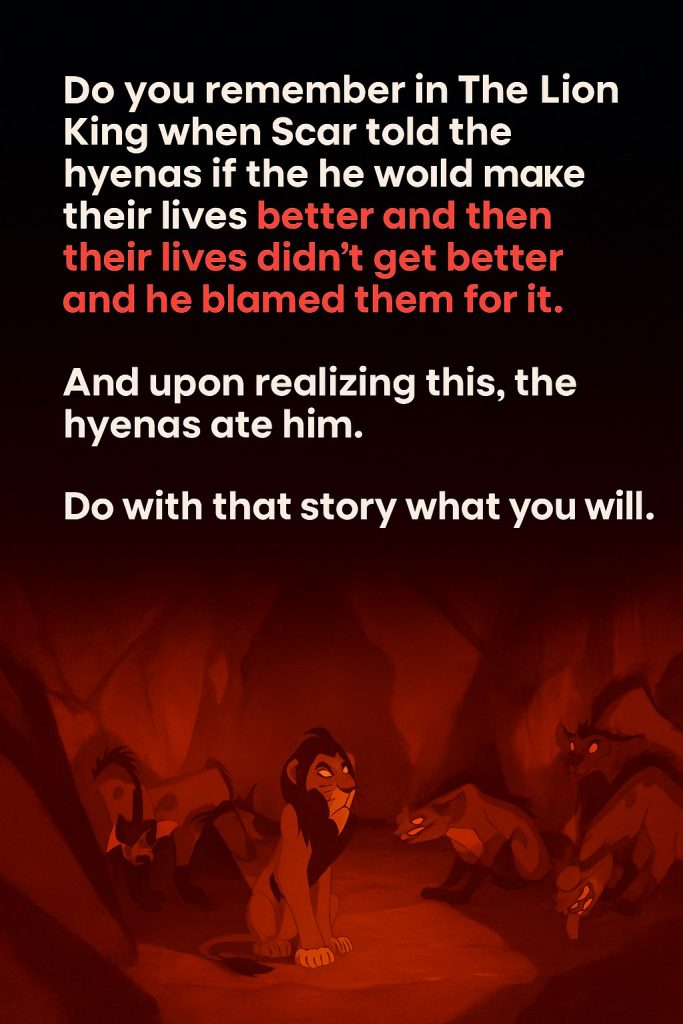
The Lion King is an iconic film that has captivated audiences for decades, not only for its stunning animation and memorable music but also for its complex characters and compelling storylines. One particular moment that has sparked viral conversation across social media is the infamous promise Scar makes to the hyenas: “Help me become king, and I’ll make your lives better.” But as many fans know, the hyenas’ lives didn’t improve—in fact, they arguably worsened under Scar’s reign. This aspect of the movie has become a powerful metaphor for broken promises and manipulative leadership.
In the movie, Scar, driven by jealousy and ambition, strikes a deal with the hyenas to overthrow Mufasa and ascend the throne. The hyenas, marginalized and living on the outskirts of the Pride Lands, see this alliance as a path to power and prosperity. However, once Scar becomes king, he exploits the hyenas instead of empowering them, leaving them starving and desperate in a degraded environment. The promised “better life” never materializes.
This dynamic has resonated far beyond the movie’s context. On social media platforms such as Twitter and TikTok, users are drawing parallels between Scar’s betrayal and real-world examples where promises of improvement—whether by political leaders, corporations, or influential figures—result in prolonged hardship or exploitation for their followers or constituents.
What makes Scar’s duplicity particularly striking is how it encapsulates the dangers of blind loyalty and the importance of critical scrutiny when evaluating promises from those in power. The hyenas’ initial hope turns to disillusionment and suffering, mirroring the experience of many who have felt let down by false promises. This narrative warns audiences to be vigilant about who they support and to question whether a leader’s interests truly align with those they claim to serve.
Additionally, Scar’s story serves as a cautionary tale about the consequences of unethical alliances. His willingness to manipulate the hyenas leads not just to their suffering but ultimately to his downfall. The balance of power in the Pride Lands deteriorates, the ecosystem collapses, and the film’s heroes must intervene to restore harmony. This narrative arc reinforces a timeless lesson: leadership based on selfishness and deceit is unsustainable.
Fans appreciate how The Lion King doesn’t just entertain but also offers subtle social commentary through its storytelling. The viral discussion around Scar’s empty promise to the hyenas is a testament to the film’s enduring relevance and depth. It invites reflection on the nature of leadership, loyalty, and the cost of broken trust—topics as relevant today as they were when the movie first premiered.
Ultimately, the tale of Scar and the hyenas encourages viewers to look beyond surface-level claims and to consider the broader implications of leadership choices. It reminds us that genuine improvement cannot be achieved through exploitation or betrayal, but rather through respect, integrity, and shared prosperity.