
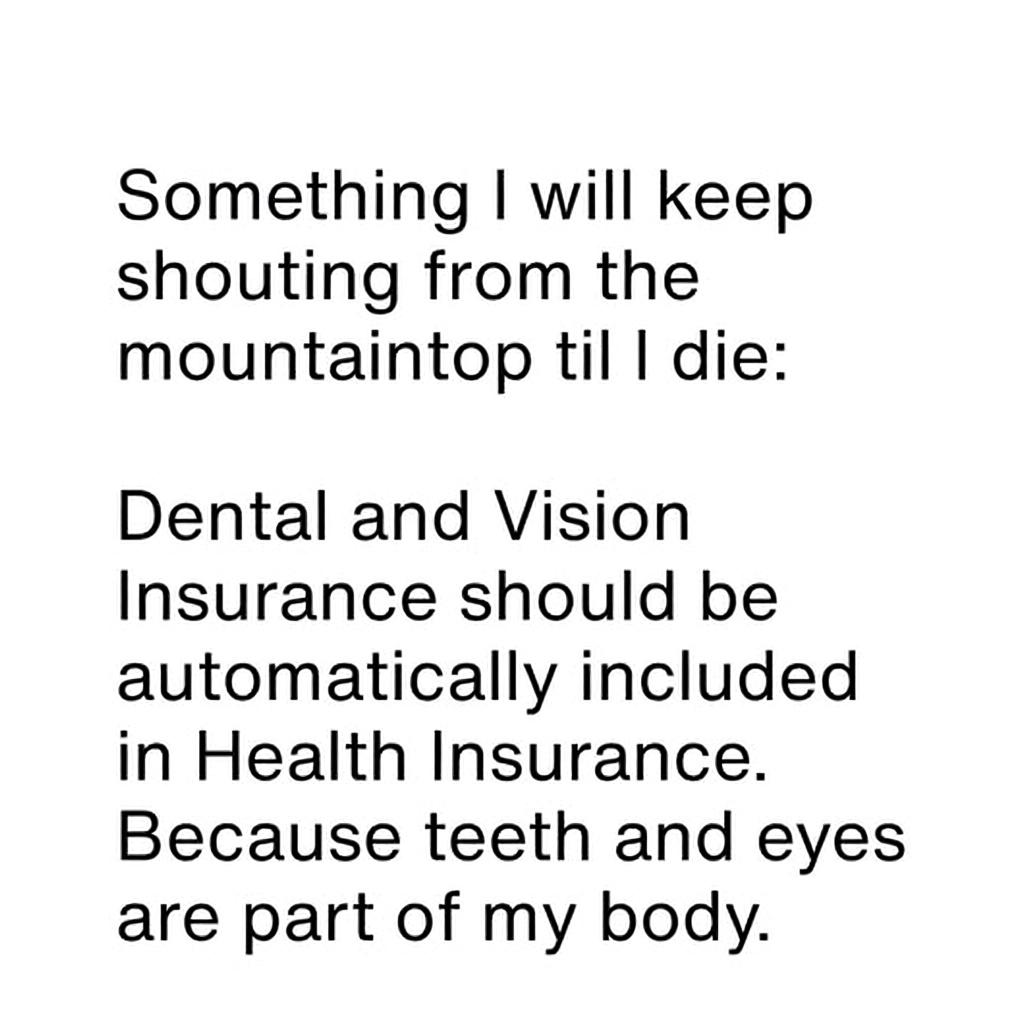
As healthcare debates continue to dominate policy discussions nationwide, a compelling voice has emerged from social media urging reform: dental and vision insurance should be automatically bundled into standard health insurance plans. This idea, championed passionately by users like thevonada, highlights a long-overlooked gap in our healthcare system that affects millions.
While health insurance typically covers hospital stays, surgeries, and general medical treatments, dental and vision care often remain separate, optional add-ons requiring additional premiums. This fragmented system has led many Americans to delay or ignore necessary dental and vision checkups—costly choices that can exacerbate health problems over time.
Why should dental and vision be included in standard health coverage? Advocates argue that oral and eye health are integral to overall well-being. Poor dental health has been linked to serious issues such as heart disease, diabetes, and respiratory infections. Similarly, untreated vision problems can impair daily functioning, affect mental health, and reduce quality of life.
Dr. Lisa Nguyen, a healthcare policy expert, explains, “Integrating dental and vision coverage into health insurance plans could lead to earlier detection, preventative care, and ultimately, lower long-term healthcare costs. It’s about addressing health holistically, not in silos.”
Supporters also cite economic benefits. They point out that avoiding unnecessary dental and vision emergencies can reduce emergency room visits, which often come with high costs passed onto consumers and taxpayers alike. Moreover, including these essential services in standard plans could eliminate the bureaucratic hassle of enrolling in separate policies, making comprehensive care more accessible.
Despite the clear benefits, challenges remain. Critics argue that including dental and vision in all health plans could increase premiums, potentially pricing out some consumers. However, many experts believe that the long-term savings from preventative care and early intervention outweigh the initial cost hikes.
This conversation is gaining momentum in the wake of recent social media posts and advocacy campaigns. The movement calls for policymakers and insurance providers to rethink how healthcare coverage is structured—moving toward a more integrated, equitable system that acknowledges the vital role of dental and eye health.
As the dialogue unfolds, one thing is certain: integrating dental and vision coverage into standard health plans isn’t just a convenience—it’s a necessary step toward holistic, accessible healthcare for all Americans.
Where to Learn More
- Why Dental and Vision Coverage Should Be Part of Essential Health Benefits – Health Affairs
- The Impact of Oral Health on Overall Well-Being – Centers for Disease Control and Prevention
- Integrating Vision and Oral Health into Healthcare – National Center for Complementary and Integrative Health
- Why Dental Coverage Should Be Mandatory in Health Insurance – HealthLine