
In today’s rapidly evolving digital landscape, technology influences almost every aspect of our lives—from how we communicate to how we access healthcare, education, and financial services. Yet, as these systems become more complex and integral, an unsettling truth remains: the very individuals designing these systems are often not representative of the communities they serve.
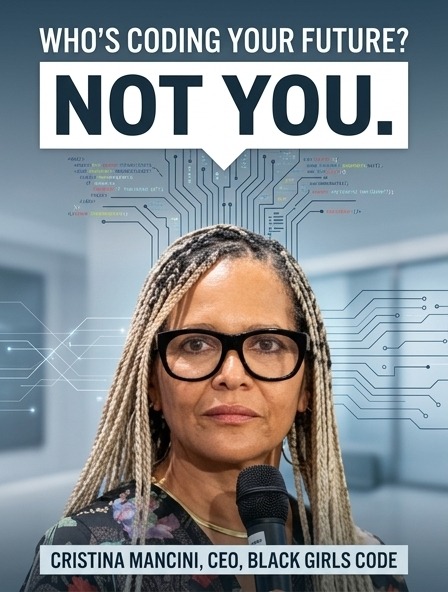
Recently, Cristina Mancini, the CEO of Black Girls Code, delivered a powerful message that resonated widely: “Who’s coding your future? Not you.” This provocative question underscores a critical issue facing the tech industry: the lack of diversity and representation among developers and decision-makers shaping technology’s trajectory.
Black Girls Code, an organization dedicated to increasing the number of young women of color in technology, advocates for equitable access to coding education and tech career opportunities. Mancini emphasizes that meaningful inclusivity in tech isn’t just about fairness; it’s essential for creating systems that actually serve the diverse needs of society.
“When the people designing technology don’t reflect the communities using it, we risk perpetuating biases—whether racial, gender-based, or socio-economic—that can have real-world consequences,” Mancini explains. “The algorithms running our social media feeds, healthcare apps, and financial tools are often built by a homogenous group, which means they can overlook or misinterpret the needs of marginalized groups.”
Her remarks follow a broader conversation about the importance of representation—highlighting that when marginalized communities are included in the creation process, the resulting technologies are more equitable and effective. Mancini advocates for actively investing in education and mentorship programs that empower underrepresented groups to enter tech fields, ensuring they have a seat at the table when decisions are made.
Many experts agree that increasing diversity isn’t just a moral imperative; it’s necessary for innovation. Diverse teams are more likely to identify unique problems and develop inventive solutions, leading to products that better serve a global and varied audience.
As the tech industry grapples with issues around bias, privacy, and equity, voices like Mancini’s are pushing for a future where who codes your future is as diverse as the society it aims to serve. For individuals and companies alike, the message is clear: if we want inclusive technology, we must actively ensure that the creators of that technology reflect the communities they aim to benefit.
Where to Learn More
- Black Girls Code Official Website
- How Diversity Drives Innovation in Tech – TechRepublic
- Why Diversity in Tech Matters – The New Yorker
- Tech Diversity Initiatives Are Paying Off – CNBC
- The Case for Diversity in Tech – BBC News