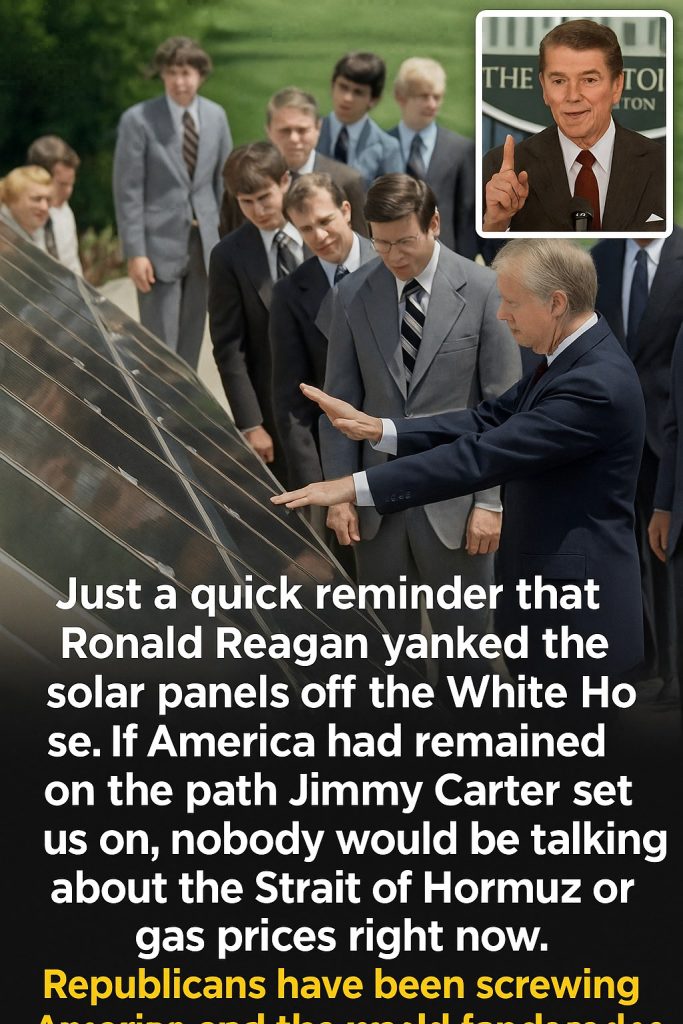
In recent weeks, a viral social media post has reignited discussions about America’s energy trajectory, highlighting a pivotal moment in environmental history: Ronald Reagan’s decision to remove solar panels from the White House—a move that reversed former President Jimmy Carter’s pioneering push for renewable energy. The post reminds us of “Just a quick reminder that Ronald Reagan yanked the solar panels off the White House If America had remained on the path Jimmy Carter set us on, no…” prompting reflection on what could have been if the country had stayed the course.
The Moment That Changed the Solar Narrative
In 1979, President Jimmy Carter installed solar panels on the White House roof as part of his broader commitment to reducing American dependence on foreign oil and expanding clean energy resources. This installation was more than symbolic; it was a bold endorsement of solar energy at a time when the technology was still emerging. Carter’s energy policy aimed to encourage innovation, conservation, and a shift away from fossil fuels, reflecting the growing concern over environmental sustainability during the 1970s energy crisis.
However, the trajectory dramatically shifted following Carter’s presidency. When Ronald Reagan took office in 1981, he removed the solar panels from the White House roof and de-emphasized renewable energy initiatives. Reagan’s administration focused instead on expanding fossil fuel production, advocating deregulation, and cutting funding for energy efficiency programs. This reversal has since been viewed by many as a critical setback for the development and public perception of renewable energy in the United States.
“What if America had stayed on Carter’s path?” This question is at the heart of the ongoing debate. Advocates argue that if the U.S. had consistently invested in solar energy starting from that moment, the country might have emerged as a dominant leader in clean energy technology decades ago, drastically reducing carbon emissions and lessening the impacts of climate change.
The Ripple Effects on America’s Energy Policy
Reagan’s rollback arguably contributed to slower adoption of renewable energy across the country. The solar industry, which could have benefitted from early large-scale government support, instead faced a challenging environment for development. It wasn’t until the 2000s that solar technology became economically viable and politically popular enough to see rapid growth again.
Today, as the world faces urgent climate challenges, Carter’s early vision feels prescient, with solar panels now commonplace on homes, businesses, and government buildings. Moreover, the White House reinstalled solar panels during Barack Obama’s presidency, symbolizing a renewed commitment to clean energy innovation.
Lessons and Reflections
The viral post serves as a reminder of how political choices impact environmental progress and national energy security. It highlights the importance of sustained policy support for renewable energy technologies rather than abrupt reversals that can hinder momentum. Although Reagan’s decisions reflected the political and economic priorities of his time, the question lingers: How much sooner could America have reaped the benefits of clean energy had Carter’s solar initiatives not been dismantled?
As the country strives to meet ambitious climate goals, this historical episode underscores the strategic value of early investment and political will in shaping a cleaner, more sustainable future.
Where to Learn More
- The History of Solar Panels on the White House – National Geographic
- Presidents and Energy Policy: Jimmy Carter’s Lasting Impact – U.S. Department of Energy
- How Reagan Shaped U.S. Energy Policy – Brookings Institution
- Climate Change and Clean Energy Transitions – Council on Foreign Relations