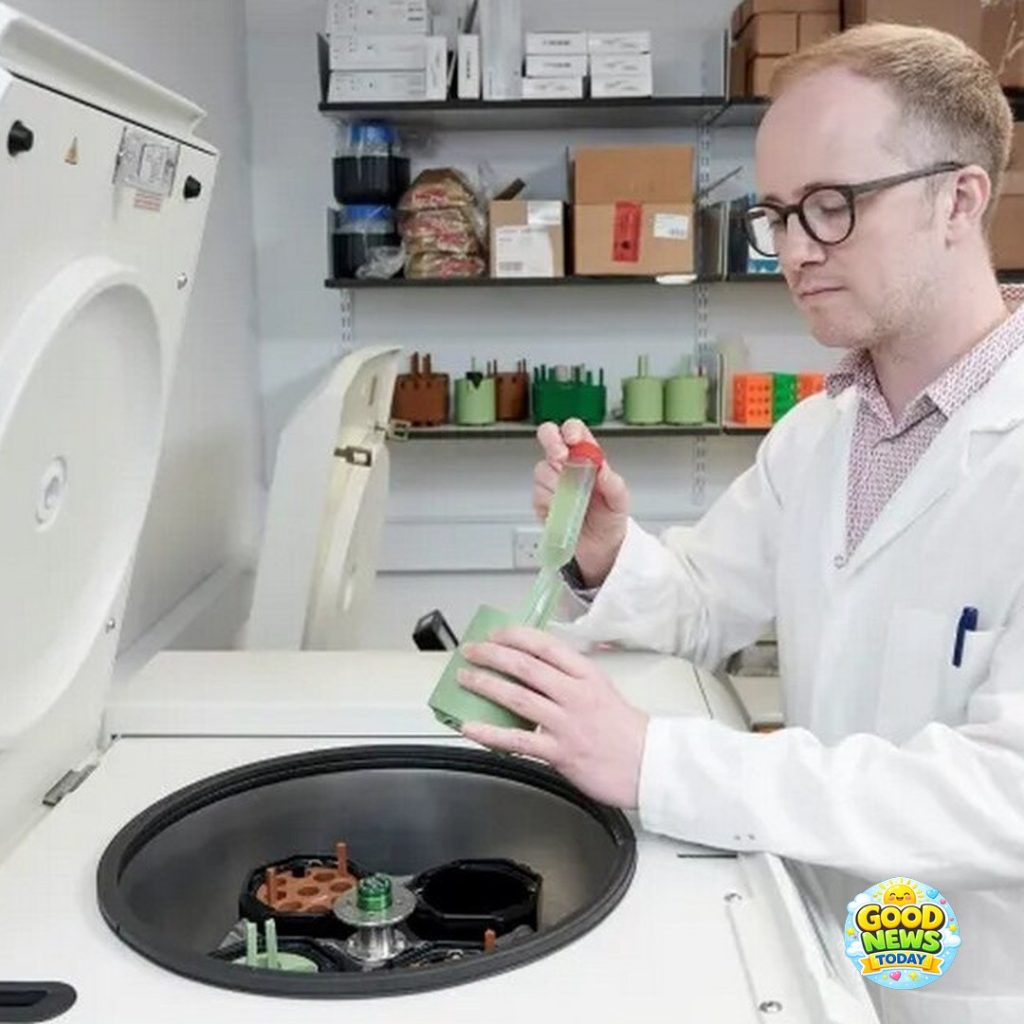
A groundbreaking study reveals that waste plastic bottles can be transformed into a medication for Parkinson’s disease, thanks to an innovative method developed by scientists at the University of Edinburgh.
This revolutionary approach utilizes the capabilities of bacteria to convert post-consumer plastics into L-DOPA, a crucial treatment for this neurological condition. This achievement marks the first instance of a biological process being employed for such a purpose, offering a more sustainable alternative to the traditional pharmaceutical manufacturing methods that typically depend on limited fossil fuels.
Under the leadership of Dr. Stephen Wallace, the research team engineered E. coli bacteria to convert polyethylene terephthalate (PET), a commonly used plastic in food and beverage packaging, into L-DOPA. With around 50 million metric tons of PET produced each year, the process begins by breaking down the plastic into its chemical building blocks, specifically terephthalic acid. Subsequently, the engineered bacteria carry out a series of biological reactions to transform these molecules into L-DOPA.
Dr. Wallace, a professor at the University’s School of Biological Sciences, expressed his enthusiasm by stating, “This feels like just the beginning. If we can create medicines for neurological diseases from a waste plastic bottle, it’s exciting to imagine what else this technology could achieve. Plastic waste is often seen as an environmental problem, but it also represents a vast, untapped source of carbon.”
The research team emphasizes the urgent need for new recycling methods for PET, as current processes are not entirely efficient and continue to contribute to global plastic pollution.
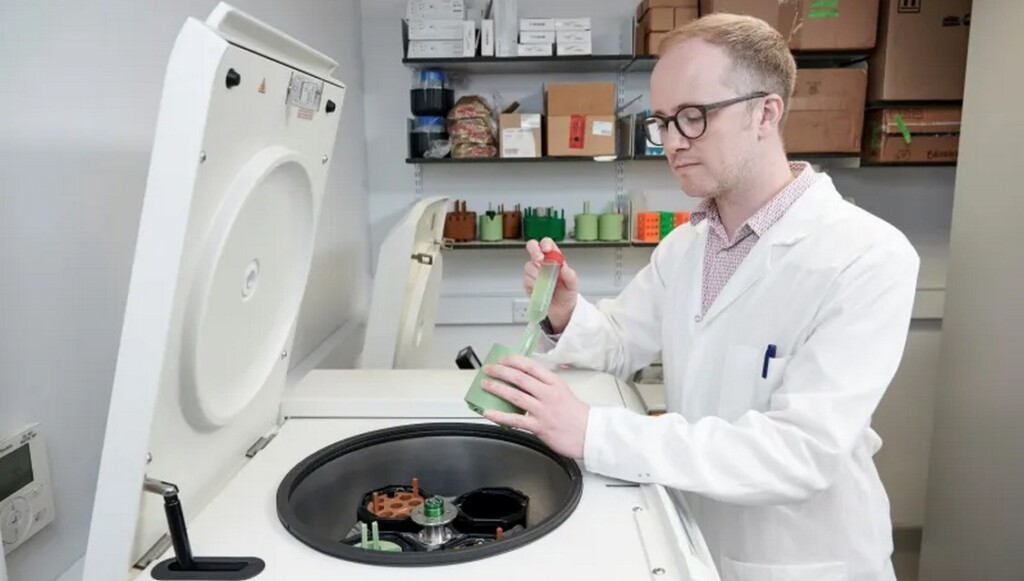
L-DOPA serves as a precursor to essential neurotransmitters such as dopamine, norepinephrine, and epinephrine. In addition to its use in treating Parkinson’s disease, it is available over the counter as a supplement and is also effective for managing Restless Leg Syndrome.
“By engineering biology to transform plastic into an essential medicine, we show how waste materials can be reimagined as valuable resources that support human health,” commented Dr. Wallace.
The team has successfully demonstrated the production and isolation of L-DOPA at a preparative scale and is now focused on advancing this technology toward industrial application. This includes further optimizing the process, enhancing scalability, and evaluating its environmental and economic impacts.
Professor Charlotte Deane, Executive Chair at UK Research and Innovation, who did not participate in the study, noted, “This research shows the huge potential of engineering biology to tackle some of society’s most pressing challenges.”
By converting discarded plastic into a treatment for Parkinson’s disease, the University of Edinburgh team has illustrated how carbon that would otherwise be lost to landfills can be repurposed into something that promotes human health and well-being.