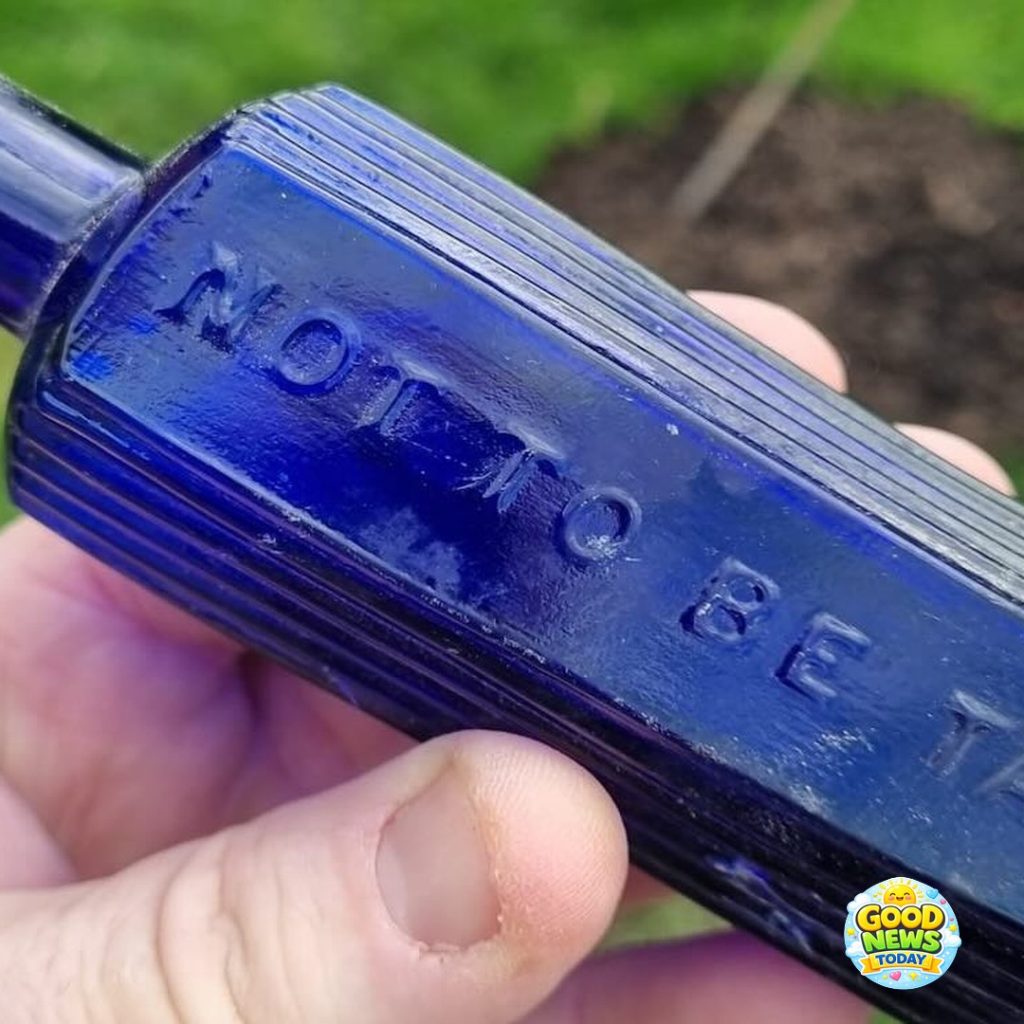
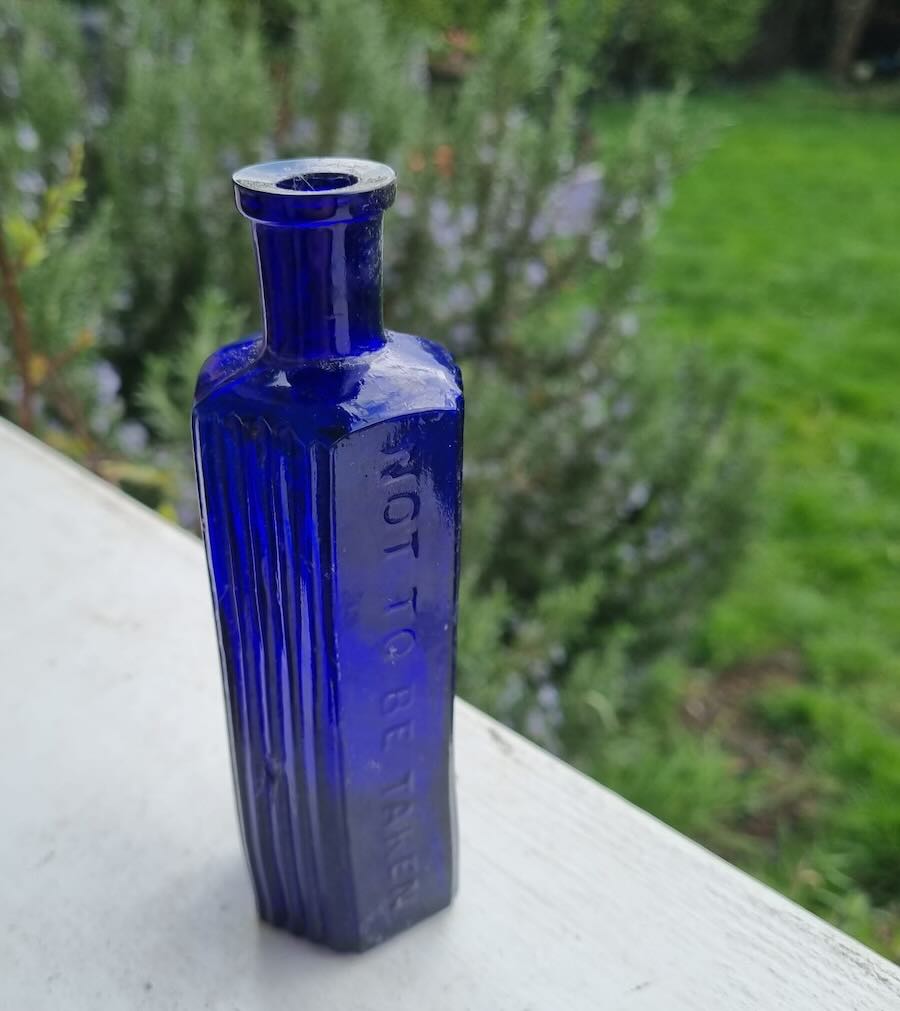
A family’s beloved dog may have uncovered a remarkable piece of history related to a notorious murder from 160 years ago. While digging in the garden, the Labrador unearthed a blue vial that his owner, Paul Phillips, initially thought was simply a pipe. However, upon closer inspection, he noticed the words ‘Not To Be Taken’ embossed on the glass.
Paul, 49, soon discovered that a woman named Mary Ann Ashford had lived nearby and was involved in the murder of her husband, William, in 1865. In a bid to access his money and pursue her affair with a younger lover, she poisoned his tea.

Living in the modern-day town of Clyst Honiton, Paul believes his dog has inadvertently revealed significant evidence of this historic crime. “My dog, Stanley, kept digging in the same spot in our garden. We tried patching it up and even placed a paving slab over it, but he was determined to uncover something,” Paul shared. “When I finally saw the bright blue bottle in pristine condition, I was astonished.”
After conducting some research, Paul learned that such bottles were commonly used for poisons in the mid-19th century. This discovery sparked a memory of a murder he had read about in the village over a century ago. “I found an old newspaper article about the Ashfords, who lived in Clyst Honiton. Mary was having an affair with someone from a local bakery. I suspect our property was once part of a large cider barn,” he explained. “The coincidence of finding a murder weapon just down the street is hard to ignore!”
Paul also uncovered that Mary Ashford’s case had significant implications in the national debate surrounding the death penalty. After tests revealed traces of arsenic and strychnine on her clothing, she was sentenced to execution for the murder of her husband of 20 years. The public hanging, witnessed by a crowd of 20,000, was particularly gruesome, taking several minutes for her to die.
This incident sparked widespread criticism of public executions, playing a pivotal role in the movement to abolish them across the country. “It’s incredible to think we’ve discovered a piece of history tied to someone who influenced the end of corporal punishment 160 years ago,” Paul exclaimed. “My family and friends are completely captivated by this story!”
Interestingly, since the discovery, Stanley has lost interest in that particular digging spot. Paul now hopes that a local historian will come forward to help the family delve deeper into this fascinating tale.
Feel free to share the incredible Wag-atha Christie story with fellow dog lovers on social media!