
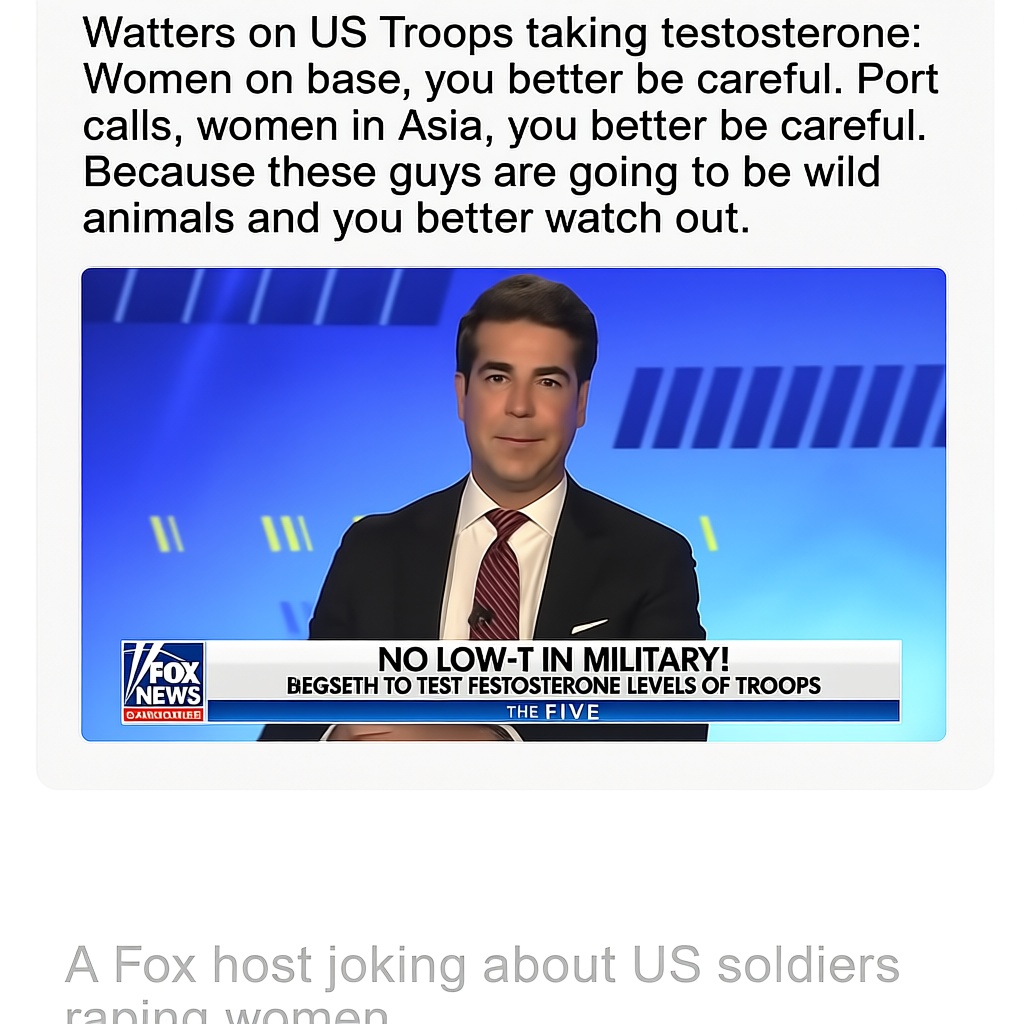
A recent social media post has ignited a heated debate across online platforms, claiming that U.S. military personnel are taking testosterone supplements, which allegedly leads to increased aggression and risky behavior, especially in environments like military bases and overseas ports. The post, which includes a provocative message, warns women stationed on bases and in Asian port visits to be cautious around American troops, suggesting they might become more “wild” or unpredictable due to hormonal enhancements.
The message, accompanied by an image of text reading “Watters on US Troops taking testosterone: Women on base, you better be careful. Port calls, women in Asia, you better be careful. these guys are going to be wild ani,” has rapidly gained traction on social media, resulting in widespread speculation and concern about the physical and mental well-being of service members, as well as the safety of women in sensitive environments.
While some users interpret the post as a genuine warning, others contend it is a sensationalized exaggeration or misinformation. The military has yet to officially confirm any such widespread use of testosterone or related substances among active-duty troops. Experts point out that while hormonal therapy and enhancement are common in various medical contexts, claims suggesting a direct link to increased aggression or uncontrollable behavior require careful scrutiny and verified evidence.
Historically, discussions about hormone supplementation and its effects on behavior have been complex. Medical professionals emphasize that individual reactions to testosterone vary, and behavioral changes are influenced by multiple factors, including mental health, environment, and personal history. The military routinely conducts health assessments and drug testing to maintain service readiness and safety.
Security analysts also emphasize caution when interpreting social media posts, especially those that may spread misinformation or incite unnecessary concern among communities and military families. Experts suggest that the best approach is to rely on official statements from military officials and trusted news outlets for accurate information.
Additionally, the post raises broader questions about the impact of social media on perceptions of military personnel, highlighting how viral content can shape narratives, sometimes inaccurately. As discussions continue, it is crucial for the public and media alike to differentiate between rumor and verified fact while respecting the service members’ privacy and dignity.
Where to Learn More
- U.S. Department of Defense Official Website – Official information on military health and operations
- Military.com – News and updates on military-related topics
- American Psychological Association – Research on hormones and behavior
- Centers for Disease Control and Prevention – Information on testosterone therapy and health effects