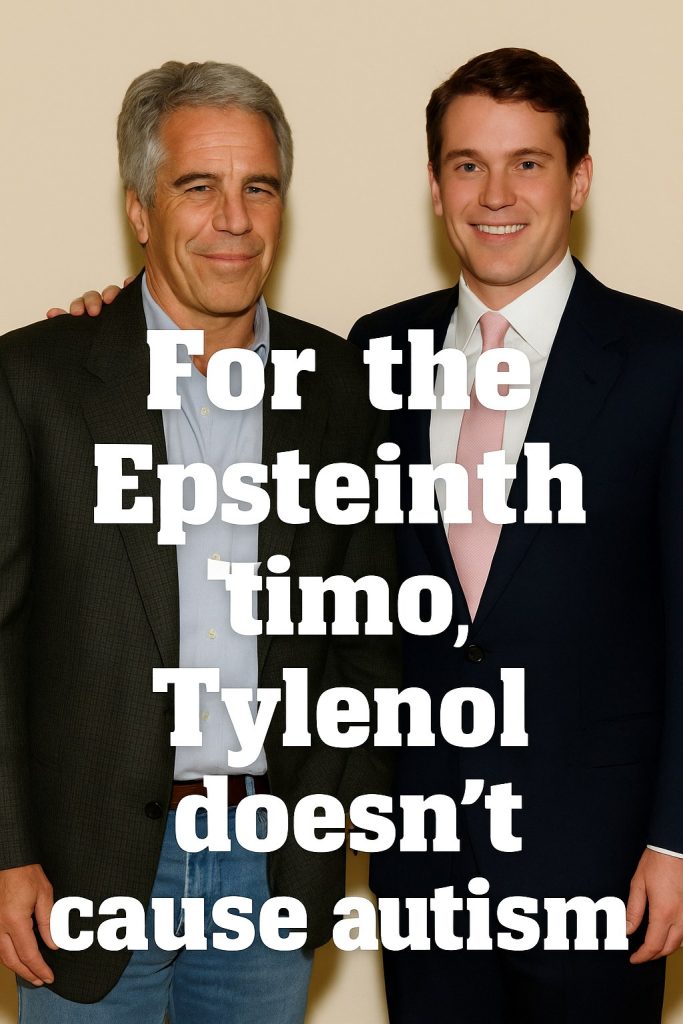
In a world where misinformation about health and well-being spreads like wildfire on social media, a recent meme has sparked renewed conversations and laughter while addressing a serious issue. A viral image featuring two people and the text, “For the Epsteinth time, Tylenol doesn’t cause autism,” has made waves across platforms like Twitter and Threads, courtesy of comedian Jackie Kashian. The meme cleverly pokes fun at the persistence of false claims linking the common pain reliever acetaminophen, found in Tylenol, to autism—a debate that has been debunked by scientific research.
The origins of these claims can be traced back to a 2009 study that suggested a correlation between prenatal exposure to acetaminophen and the risk of autism spectrum disorder (ASD). Since then, various studies have emerged, many conducted by reputable institutions, disproving this link and reinforcing that no credible scientific evidence supports the idea that Tylenol or its active ingredient causes autism. Yet, myths continue to circulate, positioning Tylenol as a scapegoat in discussions about autism prevalence.
In 2020, a comprehensive analysis published in the journal Paediatric and Perinatal Epidemiology synthesized data from numerous studies and found no causal relationship between Tylenol use during pregnancy and an increased risk of ASD. The research highlighted that the potential association was likely due to confounding factors rather than the medication itself.
Kashian’s meme has resonated widely, drawing in both laughter and serious conversations about this long-standing myth. The humor in the phrase “for the Epsteinth time” cleverly references the numerous times false claims about various substances have been repeated, much like the conspiracy theories surrounding the late Jeffrey Epstein, which have also sparked debate about misinformation.
The viral response highlights an urgent need to address how misleading information can impact parental choices and child health. Misunderstandings regarding medications like Tylenol can lead parents to avoid necessary treatments for conditions such as fever or pain, inadvertently putting their children’s health at risk. Experts encourage seeking medical advice from qualified professionals and relying on peer-reviewed research when considering the impact of medications.
Social media platforms are often breeding grounds for health myths, with high visibility and shares giving rise to misleading notions. Kashian’s meme serves as both a humorous reminder and a critical lesson in the importance of verifying information before accepting it as fact. “Humor can be a powerful tool to communicate scientific truths,” Kashian remarked in a follow-up post, emphasizing the need for continued dialogues on these topics.
As discussions around vaccines, medications, and their implications continue to unfold online, it remains crucial for parents and caregivers to stay informed. Engaging with reliable sources of information can help clarify misconceptions about public health and foster a better understanding of conditions like autism.
Where to Learn More
- Acetaminophen use during pregnancy and neurodevelopment outcomes: a systematic review – PubMed Central – National Institutes of Health
- Tylenol Does Not Cause Autism, Study Shows – Novo Nordisk Foundation – Novo Nordisk Foundation
- Healthcare Provider Resources – CDC – Centers for Disease Control and Prevention
- Update on COVID-19 Vaccination Safety Evidence – WHO – World Health Organization