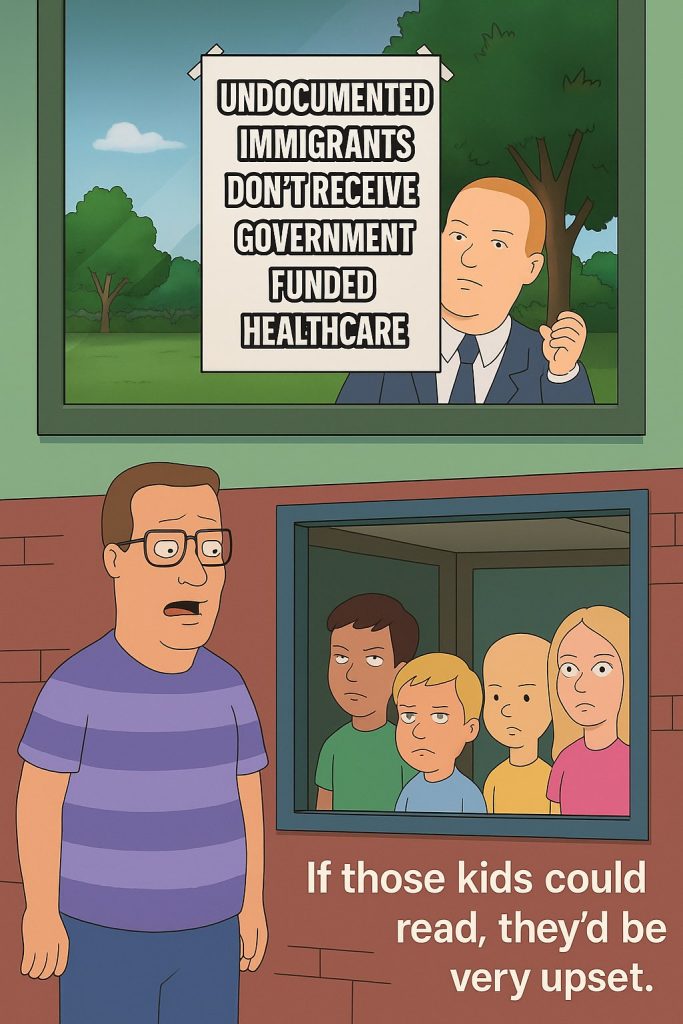
In the ever-polarizing realm of social media, a recent image has sparked widespread discussions and debates surrounding immigration and healthcare in the United States. The image, which features six individuals and the text “UNDOCUMENTED IMMIGRANTS DON’T RECEIVE GOVERNMENT FUNDED HEALTHCARE If those kids could read, they’d be very upset,” has gone viral, gathering thousands of shares and comments.
The underlying message of the image raises questions regarding access to healthcare for undocumented immigrants, particularly children. Opponents of expanding healthcare access argue that government resources should be prioritized for citizens, while supporters highlight the necessity of providing basic healthcare services to all individuals, regardless of immigration status.
Contextually, the conversation is not new. According to the Kaiser Family Foundation, many immigrants, regardless of documentation status, have limited access to government-funded health programs. Notably, some children of undocumented immigrants are eligible for programs like Medicaid and the Children’s Health Insurance Program (CHIP), yet others remain in the shadows, fearing interactions with government agencies.
As social media platforms amplify this discourse, it reveals deeper societal divides concerning immigration policy and healthcare rights. Critics of the image argue that it sensationalizes a complex issue, simplifying the plight of those seeking a better life. “It’s important to remember that healthcare is a human right, and many undocumented individuals contribute significantly to our communities,” noted one social media user, illuminating the often-overlooked contributions of immigrant populations to the U.S. economy and society.
Furthermore, public health experts warn against ignorance in the healthcare sphere. A highly contagious disease could spread more rapidly in communities where undocumented immigrants lack access to healthcare, adversely affecting public health overall. A report by the Centers for Disease Control and Prevention (CDC) emphasizes that universal healthcare accessibility is critical to not only protecting individual health but also ensuring community safety.
The debate highlights a crucial intersection of policy, ethics, and human rights, calling for a balanced approach that considers the complexities of immigration and healthcare access. As more individuals engage in this discussion online, it is evident that sentiments are mixed, with many advocating for inclusive health policies that consider the needs of all community members.
As the viral image continues to circulate, it is essential for communities to engage in constructive dialogue, acknowledging the nuances of policy-related healthcare access while also considering the human aspect of these contentious issues.
Where to Learn More
- The Coverage and Provision of Health Care for Immigrants – Kaiser Family Foundation
- Public Health and Immigration – Centers for Disease Control and Prevention
- The Importance of Access to Health Care for Undocumented Children – NPR
- Health Coverage for Immigrants – Center on Budget and Policy Priorities


