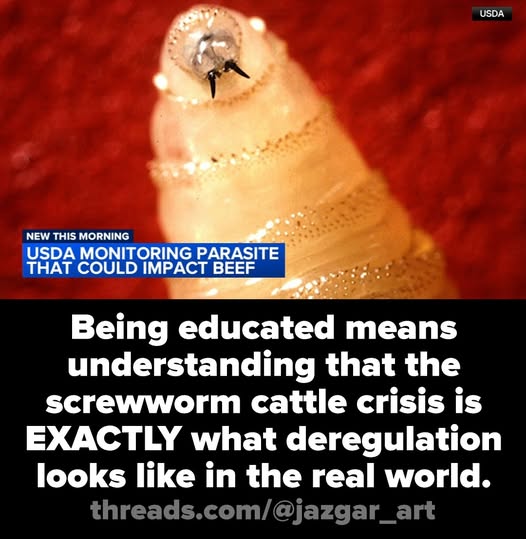
In a recent development that has caught the attention of both industry insiders and consumers, the United States Department of Agriculture (USDA) issued a warning this morning about the monitoring of a parasitic threat that could potentially impact the nation’s beef supply. This alert underscores ongoing concerns about the effects of deregulation policies on animal health and food safety.
The USDA’s announcement highlights ongoing efforts to track a parasite known as the screwworm, which has historically devastated livestock by causing severe infestations. While the threat has been historically managed through strict control measures, recent shifts toward deregulation have raised questions about whether these initiatives are sufficiently robust to prevent outbreaks.
Understanding the Threat
The screwworm, a parasitic fly whose larvae feed on living tissue, is notorious in tropical and subtropical regions. In the past, outbreaks in the United States have been contained quickly due to stringent regulatory measures. However, recent policy changes, emphasizing reduced oversight and deregulation, are now being scrutinized for potentially creating vulnerabilities in livestock health management.
“Being educated means understanding that the screwworm cattle crisis is exactly what deregulation can inadvertently cause,” commented an industry analyst. “Without proper monitoring and quick response, a parasite infestation could spread rapidly, affecting thousands of animals and causing significant economic losses.”
The USDA’s monitoring efforts are designed to catch any signs of the parasite early, but critics argue that diminished regulatory oversight could hamper these efforts, allowing outbreaks to grow undetected. Such outbreaks could lead to increased use of pesticides and other measures that might further impact both animal and human health.
This development comes amid ongoing debates about the balance between regulatory oversight and industry freedom. Proponents of deregulation argue that reducing bureaucratic hurdles promotes innovation, lower costs, and economic growth. Conversely, public health advocates warn that such policies might compromise safety standards, especially in sectors like livestock and food production.
The potential impact extends beyond the immediate health risks to livestock. A widespread screwworm infestation could force supply chain disruptions, increase prices, and threaten consumer confidence in beef products. The USDA is emphasizing a proactive approach, urging farmers and industry stakeholders to remain vigilant and adhere to recommended biosecurity measures.
As the conversation around regulation vs. safety continues, this incident serves as a reminder that in the pursuit of deregulation, maintaining robust oversight is crucial to prevent unintended crises in agriculture and food safety. The USDA’s surveillance and rapid response capabilities will undoubtedly be tested in the coming weeks as they monitor the situation closely.
Where to Learn More
- USDA Press Releases – United States Department of Agriculture
- Animal Disease Monitoring – USDA APHIS
- Screwworm Information – CDC
- Impact of Parasites on Livestock – National Geographic