In a startling turn of events, comments made by prominent American political figures have sparked widespread controversy and diplomatic tension. The controversy stemmed from a viral social media post that appeared to amplify racially charged remarks about India, leading to intense scrutiny of U.S. political discourse on international respect and civility.
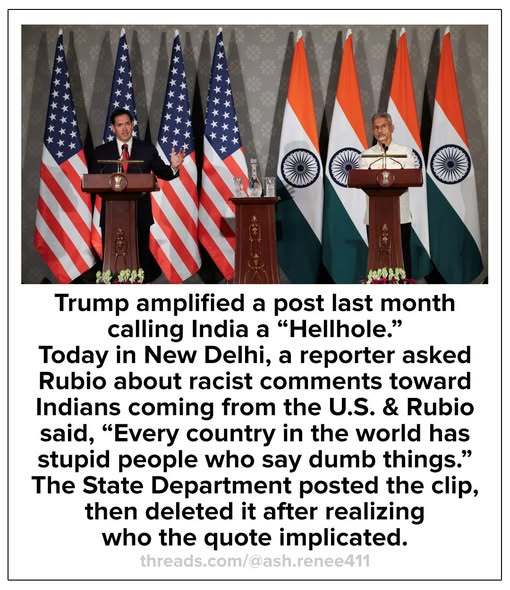
Recently, a social media image circulated widely, showing a distorted view of a scene from the Oval Office. The image, accompanied by text, alleged that a former U.S. leader, reminiscent of Donald Trump, Amplified a post from last month calling India a “Hellhole.” While the authenticity of this specific claim remains uncertain, it ignited a wave of criticism across diplomatic and social spheres.
This controversy re-emerged publicly when Florida Senator Marco Rubio was questioned at a press conference in New Delhi. A reporter asked Rubio about racist comments circulating online and attributed to American officials or political figures regarding India. Rubio, visibly uncomfortable, responded cautiously, emphasizing the importance of respectful international relations while avoiding direct references to the viral social media posts.
These remarks drew sharp reactions from Indian officials and citizens alike, many condemning any form of racism or derogatory language directed at their country. The incident underscores ongoing concerns about the proliferation of inflammatory rhetoric on social media and its potential to undermine diplomatic ties.
During the exchange, Rubio reiterated that the United States has a longstanding tradition of diplomatic decorum and that the U.S. remains committed to fostering positive relationships with India. However, critics argue that such comments, whether real or exaggerated, reflect a broader issue of insensitivity among some U.S. politicians toward other nations.
This controversy arrives at a delicate time, as India and the U.S. continue to expand their strategic alliances, including trade, defense, and technological cooperation. Diplomats warn that even unintentional disrespect fueled by social media misinformation can jeopardize these efforts.
Experts suggest that the incident serves as a reminder of the importance of holding public officials accountable for their language, especially regarding international relations. It also highlights the vital role of responsible social media usage and fact-checking to prevent misinformation from escalating into diplomatic crises.
As conversations about race, respect, and diplomacy intensify, this episode reflects a larger need for mutual understanding and civility on the global stage. Both countries face the challenge of addressing misinformation while promoting respectful dialogue in an increasingly interconnected world.
Where to Learn More
- The New York Times – U.S.-India Relations Under Strain Amid Social Media Controversies
- BBC News – Rising Tensions Between India and U.S. Over Diplomatic Conduct
- CNN – Social Media and Diplomacy: The Impact of Racial Comments on US-India Relations
- Foreign Policy – The Role of Misinformation in Diplomatic Challenges