
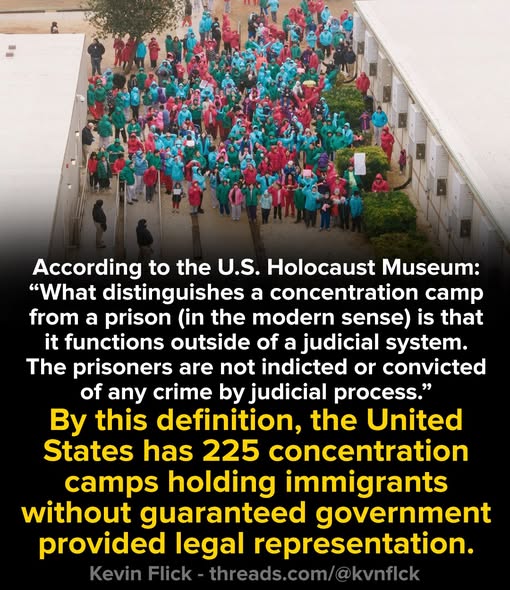
Amid ongoing global discussions about human rights and historical atrocities, a recent social media post has sparked widespread interest and reflection. It references a profound statement from the U.S. Holocaust Memorial Museum: “What distinguishes a concentration camp from a prison (in the modern sense) is that it functions outside of a judicial system.” This simple yet powerful assertion invites us to reconsider how we define and differentiate detention facilities across different eras and contexts.
Historically, concentration camps are known primarily for their roles during the Holocaust, where millions of Jews, Romani people, political dissidents, and others were detained, exploited, and exterminated without due process. Unlike modern prisons, which operate within a judicial framework — with charges, trials, and legal rights — concentration camps functioned as tools of terror and genocide, often established outside the rule of law.
The key distinction highlighted by the Holocaust Museum emphasizes that a concentration camp’s existence outside the bounds of judicial oversight renders it a space of coercion, brutality, and moral atrocity. Detainees in such camps were often imprisoned arbitrarily, without formal charges or hearings, and subjected to inhumane treatment and extermination policies. This structural absence of judicial authority is central to understanding their unique brutality.
Modern prisons, in contrast, serve a judicial purpose. They are institutions founded upon legal authority, with procedures for arrest, trial, sentencing, and appeals. This framework aims to uphold human rights and ensure justice, even in the confinement of offenders. While the prison system is imperfect and subject to criticism, it operates within established legal systems designed to protect individual rights and prevent arbitrary detention.
Understanding these differences is crucial, especially as discussions about detention practices, government overreach, and human rights violations continue worldwide. It serves as a reminder that the systematic removal of judicial oversight, especially when coupled with state-sponsored violence and dehumanization, can lead to some of history’s darkest chapters.
The statement from the Holocaust Museum provides a stark lens through which to examine current issues related to detention centers, refugee camps, and even controversial policies like mass deportations or internment. Recognizing the importance of judicial processes underscores the necessity of legal protections and oversight to prevent the abuse of power.
As we reflect on history and continue to strive for human rights and justice globally, this distinction reminds us why legal frameworks are fundamental to safeguarding dignity and preventing atrocities. It challenges us to remain vigilant and committed to ensuring that detention practices respect human rights and operate transparently within the rule of law.