
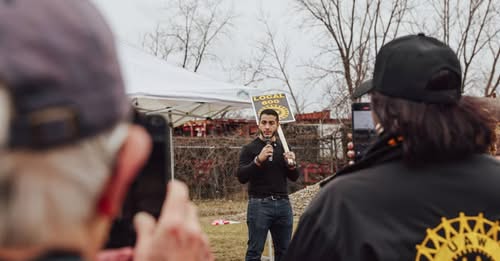
In a move resonating throughout Michigan’s political landscape, the United Auto Workers (UAW), the state’s largest and most influential union, has officially endorsed Abdul El-Sayed for upcoming statewide office. This endorsement signals a clear shift towards a platform centered on a strong working-class agenda with moral clarity, emphasizing support for workers, economic justice, and equitable policies.
The UAW’s endorsement underscores El-Sayed’s reputation as a staunch advocate for labor rights and social equity. In a statement that captured the union’s confidence, the UAW declared that El-Sayed was “someone we can trust to have our backs”. This endorsement comes amid a broader national conversation about the importance of labor unions in shaping fair economic policies and fighting for the rights of the working class.
El-Sayed, a former health care executive and public health professor, has gained recognition for his progressive platform that prioritizes economic opportunity and social justice. His campaign emphasizes rebuilding manufacturing industries, protecting workers’ rights, and ensuring healthcare access for all. These priorities align closely with the core values championed by the UAW, which has historically been a powerful force in advocating for auto workers, manufacturing employees, and urban communities across Michigan.
Michigan, long considered a pivotal battleground state, has faced economic shifts that have left many working families struggling. The union’s endorsement aims to rally working-class voters and highlight candidates who are committed to tangible economic reforms. UAW President Shawn Fain remarked, “Our union supports leaders who understand that rebuilding our economy starts with protecting and empowering workers.”
This endorsement also signals a strategic alignment between organized labor and progressive political figures seeking to reshape state policies. El-Sayed’s platform advocates for a living wage, stronger workplace protections, and green industry investments—stances that resonate with UAW’s mission to create sustainable jobs and secure economic fairness.
Observers say this moment could signal a broader shift within Michigan politics — from traditional industry-centric policies to a more inclusive, socially conscious approach rooted in moral clarity. As campaigns heat up, labor unions like the UAW continue to play a decisive role in shaping electoral outcomes and policy directions.
Overall, the endorsement of Abdul El-Sayed by the UAW marks a significant step in championing a working-class agenda that prioritizes fairness, dignity, and moral integrity in governance. Voters and stakeholders alike will be watching closely as this progressive vision seeks to transform Michigan’s political landscape for years to come.