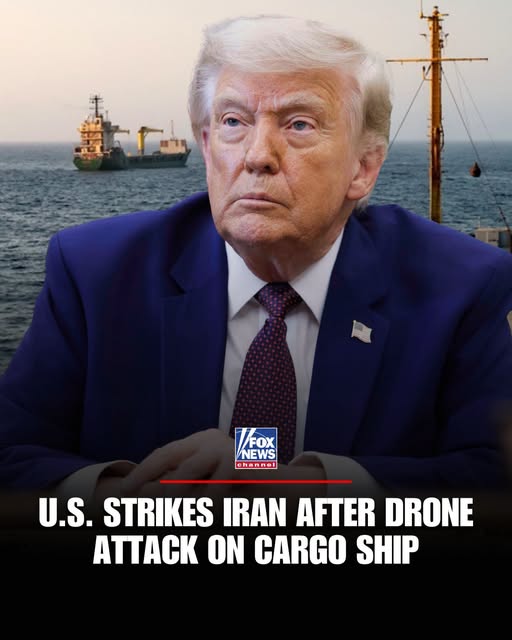
In a decisive move, the United States has launched military strikes against Iran following an aggressive attack on a commercial cargo ship in the strategically vital Strait of Hormuz. According to U.S. Central Command (CENTCOM), American forces targeted Iranian missile and drone storage facilities, as well as radar sites, in retaliation for what they described as an “unwarranted” attack that breached previously established ceasefire agreements.
The incident in question occurred earlier this week when an unidentified drone reportedly targeted a commercial vessel, raising alarm over Iran’s escalating military activities in the region. The Strait of Hormuz, a narrow waterway through which roughly 20% of the world’s oil passes, remains a flashpoint for regional tensions and international security concerns.
In a statement released by CENTCOM, officials emphasized their commitment to safeguarding commercial shipping and regional stability. “The United States will continue to protect commercial vessels transiting the Strait of Hormuz,” a Pentagon spokesperson declared, underscoring Washington’s stance that any attack on civilian ships threatens global economic security.
The targeted strikes involved precision attacks on Iranian military sites believed to be responsible for missile and drone stockpiles, as well as radar installations crucial for Iran’s surveillance and defense systems. CENTCOM’s statement described the operation as a proportionate response aimed at deterring future aggression and preventing Iran from further disrupting the vital maritime route.
Iran’s government has yet to issue an official statement regarding the U.S. strikes, but regional analysts warn that escalating military actions could worsen already tense relations between the two nations. The incident also raises concerns among allies and trading partners about the potential for broader conflict in the Persian Gulf region.
Security experts note that Iran’s recent activity in the region appears to be part of a broader pattern of posturing, which threatens to destabilize an already volatile landscape. Meanwhile, international calls for de-escalation have grown louder, urging both sides to prioritize diplomacy over military confrontation.
As the situation develops, the U.S. reaffirmed its commitment to protecting commercial traffic and regional stability. Naval escorts and increased surveillance are expected to continue in the strategic waterway, with defense officials warning that Iran’s military capabilities remain a significant threat.
Observers worldwide are watching how Iran responds next, as tensions in the Persian Gulf could have far-reaching implications for global energy supplies and international security. The incident underscores the fragile state of diplomacy in the region and the importance of maintaining open channels to prevent further conflict.