
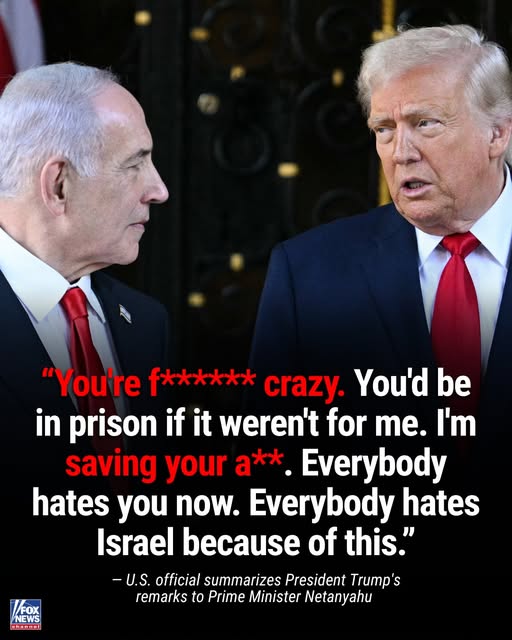
In an eye-opening report that has sent shockwaves through political circles and social media, a leaked transcript reportedly reveals a heated exchange between a U.S. official and Israeli Prime Minister Benjamin Netanyahu. According to sources, during a tense phone call, the American official unleashed a barrage of angry messages, accusing Netanyahu of reckless military conduct in Lebanon that puts U.S. diplomatic efforts at risk.
The conversation, reportedly obtained by Axios, is said to include a profanity-laden tirade from the American side. An excerpt circulating on social media states: “You’re f****** crazy. You’d be in prison if it weren’t for me. I’m saving your a***. Everybody hates you now. Everybody hates Israel because of this.” This leaked message highlights the apparent frustration felt by the U.S. official regarding Israel’s recent military maneuvers.
According to sources, the U.S. official was furious over Israel’s latest actions in Lebanon, which are perceived to have destabilized an already fragile regional environment. The concern is that the escalation could undermine ongoing peace efforts and broader diplomatic relations, especially amid a complex geopolitical landscape involving multiple regional actors.
At one point in the call, the official reportedly asked Netanyahu: “What the f*** are you doing?”—a stark indication of the high tension and clear dissatisfaction with Israel’s conduct. The exchange has raised eyebrows in diplomatic circles, emphasizing the strain in U.S.-Israel relations amid recent military developments.
While both the U.S. and Israeli governments have yet to publicly confirm or deny the authenticity of the transcript, the leak underscores the growing frustration within parts of the U.S. administration over Israel’s strategic decisions. Critics argue that such aggressive military actions risk alienating allies, complicating U.S. diplomatic efforts in the Middle East, and fueling anti-Israel sentiments worldwide.
Analysts suggest that this fervent exchange exposes internal disagreements about the handling of regional conflicts and the delicate balance of supporting Israel’s security while maintaining broader diplomatic goals. As tensions simmer, the incident underscores the complexity of U.S.-Israel relations, especially in moments of crisis.
The incident also highlights the volatile nature of regional diplomacy in an era marked by rapid information leaks, social media-driven outrage, and shifting alliances. Many are left questioning what impact such revelations might have on future U.S. foreign policy strategies and Israel’s military plans.
Where to Learn More
- Axios Coverage of U.S.-Israel Tensions – Axios
- Analysis of Middle East Diplomatic Strains – BBC News
- U.S.-Israel Relations and Regional Security – CNN
- Expert Insights on Middle East Diplomacy – Foreign Policy