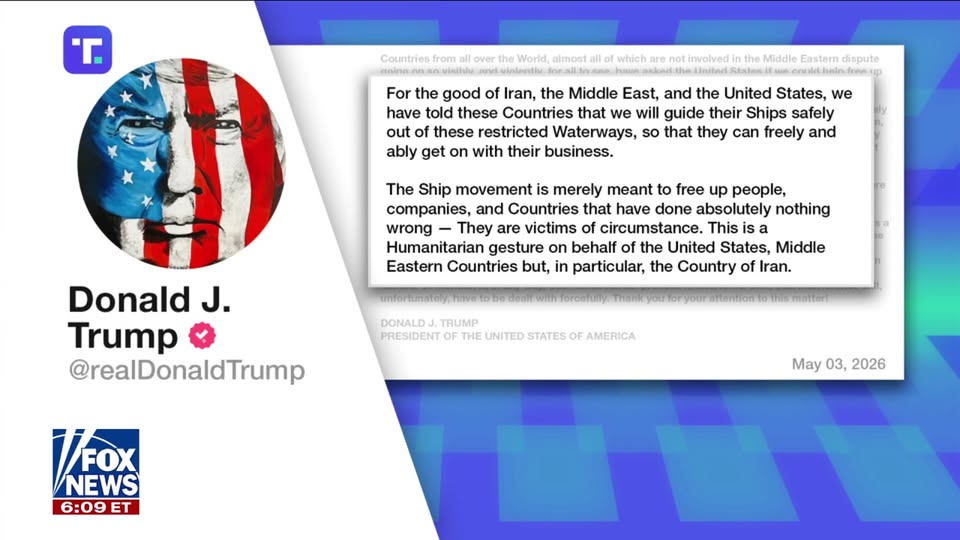
In a bold move aimed at addressing a growing humanitarian crisis, the United States has announced the launch of Project Freedom, a new initiative designed to guide stranded commercial ships out of the increasingly tense Strait of Hormuz. The operation, unveiled earlier today, seeks to alleviate the suffering of hundreds of vessels caught amid escalating regional tensions and supply shortages.
President Donald Trump characterized the mission as a humanitarian gesture, emphasizing that the ships being assisted are primarily neutral and innocent commercial vessels running out of essential supplies. During a press briefing, Trump stated, “These ships are not involved in any conflict. They’re just trying to get their cargo safely to port, but due to unsafe navigation conditions and geopolitical blockades, they’ve been stranded. It’s our duty to ensure their safety and uphold the principles of free maritime passage.”
The Strait of Hormuz, a strategic chokepoint through which approximately 20% of the world’s oil passes, has become strained amid rising tensions between Iran and Western powers. Several commercial ships have been forcibly diverted or halted due to Iranian military presence, increased maritime patrols, and maritime security threats. This has led to hundreds of vessels being stranded, With some running low on food, water, and fuel, raising fears of environmental and humanitarian crises.
Operation Project Freedom involves deploying U.S. naval assets, including auxiliary ships and patrol vessels, to assist these stranded ships in safe navigation through the hotspot. The operation is coordinated with international partners and maritime agencies to ensure maximum efficacy and safety. The U.S. Navy has emphasized that the mission is strictly neutral, focusing solely on humanitarian assistance and safe passage.
Experts see the move as a critical step to de-escalate tensions in the region and ensure open maritime commerce. Former officials have noted that the initiative could set a precedent for how the international community responds to maritime crises in volatile regions, emphasizing the importance of balance between security interests and humanitarian needs.
Critics, however, caution about the broader geopolitical implications, warning that increased U.S. naval presence might escalate regional tensions. Critics also stress the importance of diplomatic solutions alongside military aid, urging dialogue and negotiation to resolve the underlying conflicts fueling the crisis.
As Project Freedom unfolds, all eyes will be on how effectively the U.S. Navy can navigate the complex geopolitics of the Middle East while ensuring the safety and well-being of vulnerable civilian vessels. The move underscores a renewed focus on humanitarian concerns amid the ongoing geopolitical tensions in one of the world’s most strategic waterways.