
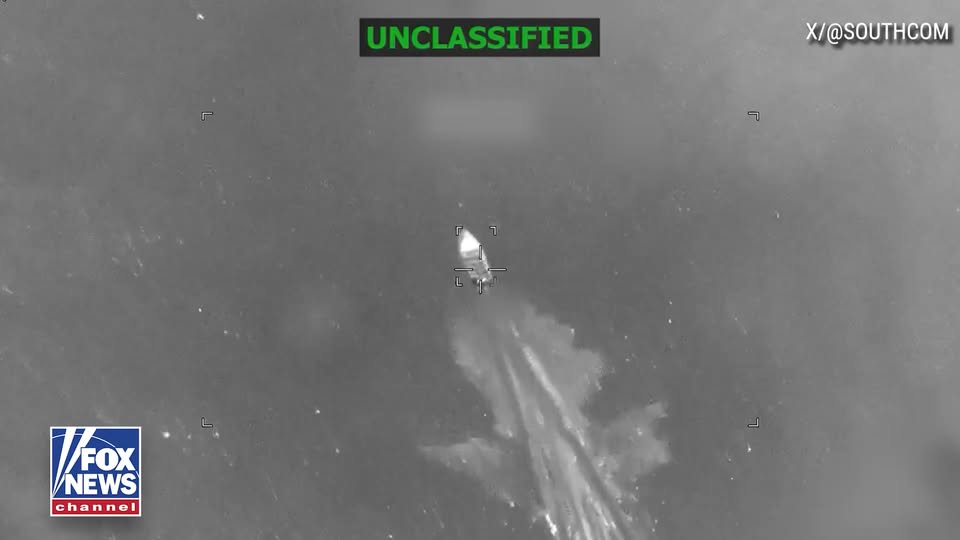
In a decisive military operation, U.S. forces executed a lethal kinetic strike against an alleged narco-trafficking vessel in the Eastern Pacific, marking a significant move in ongoing efforts to combat drug trafficking and related criminal activities in the region.
The operation was carried out under the auspices of the U.S. Southern Command’s (SOUTHCOM) Joint Task Force Southern Spear. According to officials, intelligence had tracked the vessel along well-known drug trafficking routes prior to the strike, leading to a precise and targeted action designed to disrupt illicit operations at sea.
SOUTHCOM announced that all three individuals onboard the vessel, suspected narco-terrorists involved in drug smuggling and organized crime, were killed during the strike. The agency referred to these individuals as “suspected narco-terrorists,” underscoring the complex nexus between drug trafficking, violence, and regional security threats in Latin America and the broader Pacific theater.
Details about the operation are still largely classified, but officials indicated that the strike was meticulously planned to minimize collateral damage while ensuring the neutralization of key figures linked to transnational narcotics networks. The vessel, believed to be a vital component of a larger smuggling network, was targeted as part of a broader strategy to choke off the movement of illegal drugs toward the U.S. and its allies.
This recent strike highlights the continued commitment of the United States to combat drug trafficking in the region, where maritime routes remain a critical pathway for traffickers seeking to evade law enforcement and border controls. It also demonstrates the expanding scope of military engagement in counter-narcotics operations, blending intelligence, surveillance, and kinetic military action to target high-value targets.
Experts note that these operations are part of a layered approach that includes diplomatic efforts, law enforcement cooperation with regional partners, and advanced surveillance technologies. “Disrupting these trafficking routes is crucial for regional stability and security,” said one security analyst. “Such strikes send a clear message that the U.S. is actively neutralizing threats along key maritime corridors.”
As the region continues to grapple with the interconnected issues of organized crime, violence, and drug trafficking, the importance of coordinated efforts between military, intelligence, and law enforcement agencies remains paramount. The impact of this strike may also set a precedent for future operations aimed at dismantling complex transnational criminal networks operating in the Pacific and beyond.