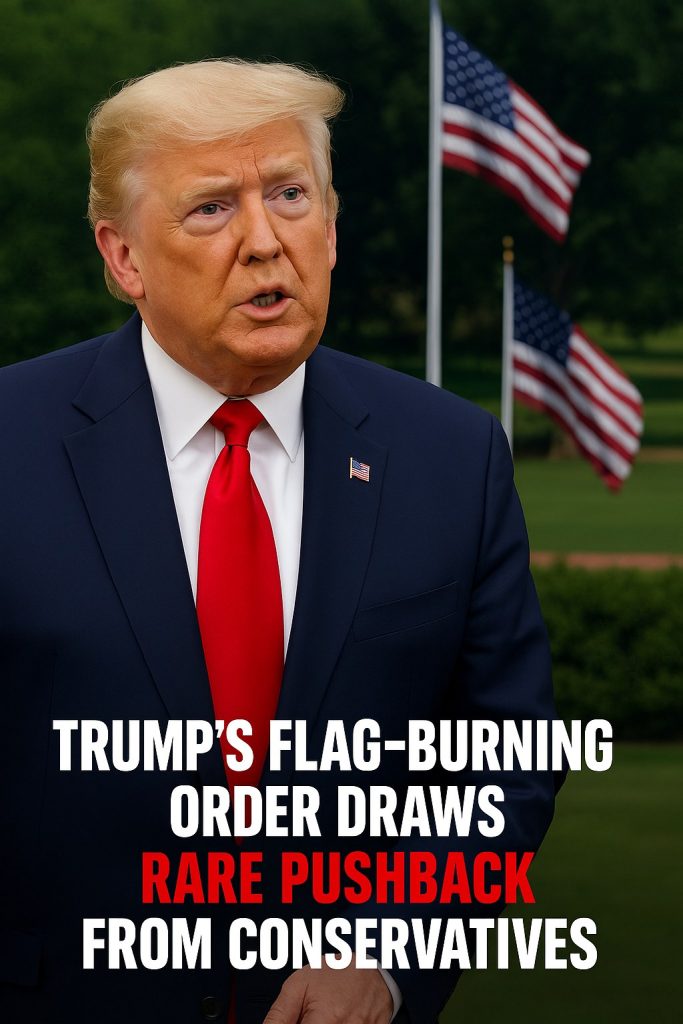
Former President Donald Trump’s recent signing of an executive order targeting flag burning has ignited an unexpected wave of pushback from some conservative circles, who argue that despite the act’s perceived disrespect, it remains firmly protected under the First Amendment.
The executive order, announced earlier this month, aims to bolster penalties and expand federal jurisdictions regarding the desecration of the American flag. Trump framed the move as a measure to protect a symbol deeply ingrained in national pride and patriotism. However, this stance has led to an unusual rift within conservative ranks, with many expressing unease about what they see as government overreach and a potential threat to constitutional freedoms.
Flag Burning and Free Speech: A Constitutional Debate
Flag burning has long been a flashpoint in American political discourse, marked by its status as a deeply symbolic yet polarizing form of protest. Since the Supreme Court’s landmark 1989 decision affirming that flag burning is a form of protected speech, legal experts and advocates for civil liberties have underscored the difficulty in restricting such acts without infringing upon First Amendment rights.
Conservatives critical of Trump’s order highlight this precedent, emphasizing their belief in upholding free speech—even when that speech takes the form of acts they find “disgraceful” or offensive. Several commentators and legal analysts from the right have publicly stated that protecting constitutional principles must come before symbolic expressions of patriotism, warning that government attempts to legislate flag desecration risk setting a dangerous precedent for curbing dissent.
“The flag means a great deal to all Americans, but preserving free speech is paramount,” one prominent conservative legal voice explained. “We shouldn’t undermine the Bill of Rights simply because the expression is unpopular or offensive.”
Political and Public Reaction
The backlash stands out because criticism of Trump’s policies typically flows from the political left, but in this case, it comes from factions within his own support base who prioritize constitutional conservatism. This dissent was particularly visible on social media and in opinion pieces where many conservatives expressed disappointment and called for a reassessment of the order.
Supporters of the executive order argue that flag burning goes beyond pure free speech, framing it as an act of desecration that can incite violence or social unrest, and therefore warrants a unique legal status. They claim that protecting the flag sustains national unity and respect for American values.
Nevertheless, legal scholars caution that federal executive orders aimed at criminalizing flag burning face substantial constitutional hurdles. The Supreme Court’s decisions have made it clear that the government cannot prohibit expression simply because society finds it offensive or disagreeable. As such, the executive order may face significant challenges if challenged in courts.
The Broader Implications
This divide within conservative ranks highlights an ongoing tension in the United States regarding patriotism, protest, and constitutional rights. It raises questions about how political leaders should balance symbolic gestures with enduring legal protections, especially in a polarized environment where interpretations of patriotism vary widely.
As the conversation evolves, many legal experts anticipate further debates around the limits of executive power and the safeguarding of fundamental freedoms—issues that remain central to American democracy.
For now, the controversy surrounding Trump’s flag-burning executive order serves as a powerful reminder that even within ideological groups, the line between nationalism and constitutionalism can be a delicate and contested one.