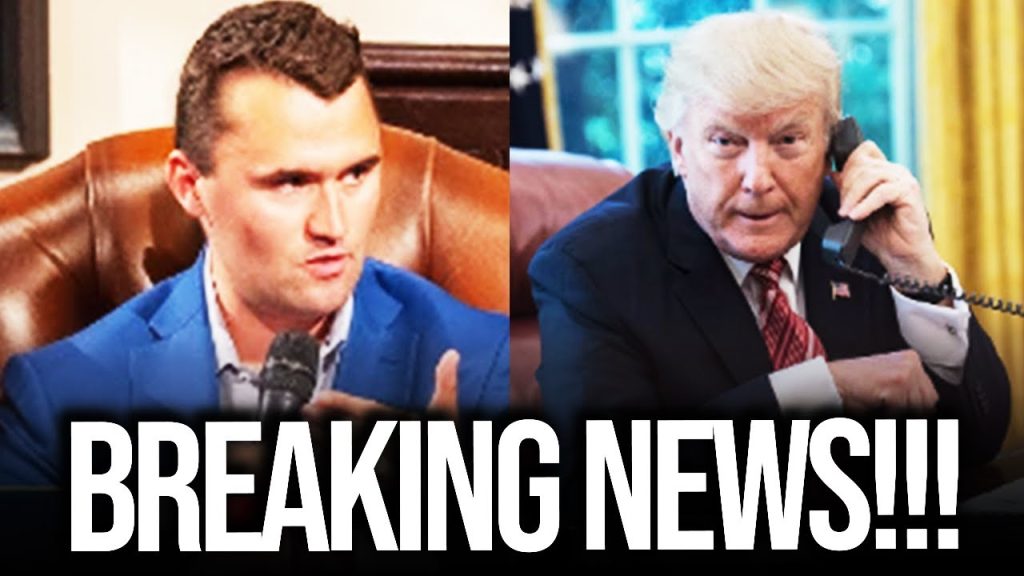
In a recent development that has stirred significant controversy, former President Donald Trump publicly celebrated the cancellation of Jimmy Kimmel’s late-night show, implying a broader agenda of censoring media personalities he deems unfavorable. This sentiment was bolstered during remarks made about Charlie Kirk, a prominent conservative commentator associated with Turning Point USA, from a platform that many consider a cornerstone of the far-right media landscape.

The remarks stem from Kimmel’s recent comments about Kirk, which were described in the video as “innocuous” and “not even harmful.” Trump’s celebration of Kimmel’s show’s cancellation has ignited discussions about the implications of political figures leveraging their influence to impact media programming. “Great news for America,” Trump stated, lauding ABC’s decision to end Kimmel’s show, claiming it reflected a lack of talent on Kimmel’s part, underscored by his weaker ratings compared to competitors like Stephen Colbert.
In the video, the speaker argues that Trump is not just acting as a casual observer but is actively applying pressure on television networks to impose his version of “cancel culture.” The call to eliminate not just Kimmel’s show but others, including those hosted by Seth Meyers and Jimmy Fallon, raises critical questions about artistic freedom and the relationship between politics and media.
Moreover, the situation reflects a deeper trend of polarization in American media, where figures on both ends of the ideological spectrum engage in attempts to silence their opposition. Right-wing media voices are now reportedly aiming to install pro-Charlie Kirk content where Kimmel’s program once aired. This raises substantial concerns regarding freedom of expression and the role of media conglomerates like Sinclair Broadcasting in shaping public discourse.
Critics label these actions as “fascistic,” contending that they represent a denial of the principle of free speech. Advocates for media independence argue that these moves endanger the diversity of viewpoints that are essential to a democratic society. As the debate continues, the implications of Trump’s comments and the response from corporate media illustrate a fracturing landscape where accountability, censorship, and artistic freedom collide.
The once-clear boundaries between entertainment and political discourse have blurred, leading to questioning of where the responsibility lies for either upholding or undermining the principles of free speech. Opinions are sharply divided; some view Trump’s actions as a necessary pushback against a perceived liberal bias in mainstream media, while others perceive it as a troubling precedent for government interference in private media operations. As this narrative unfolds, it invites ongoing scrutiny and discussion among political analysts, media figures, and the American public.
Where to Learn More
- The New York Times – Comprehensive coverage of media and politics.
- Politico – In-depth articles on political developments.
- The Washington Post – News and analysis of current events in government and media.
- BBC News – Global perspective on American media and political matters.
- CNN – Timely updates and investigative reporting on media and politics.